
Many procurement teams compare all-in-one and split solar street light systems side by side. The specs look close. Yet the quotes, structures, and real-world output can differ widely.
Picking the wrong one costs you. You either pay for capacity you never use, or your lights go dark after two cloudy nights.
I have worked on dozens of solar street light projects. This guide shows when an all-in-one light is enough and when your project truly needs a split system.
The Core Difference in One View
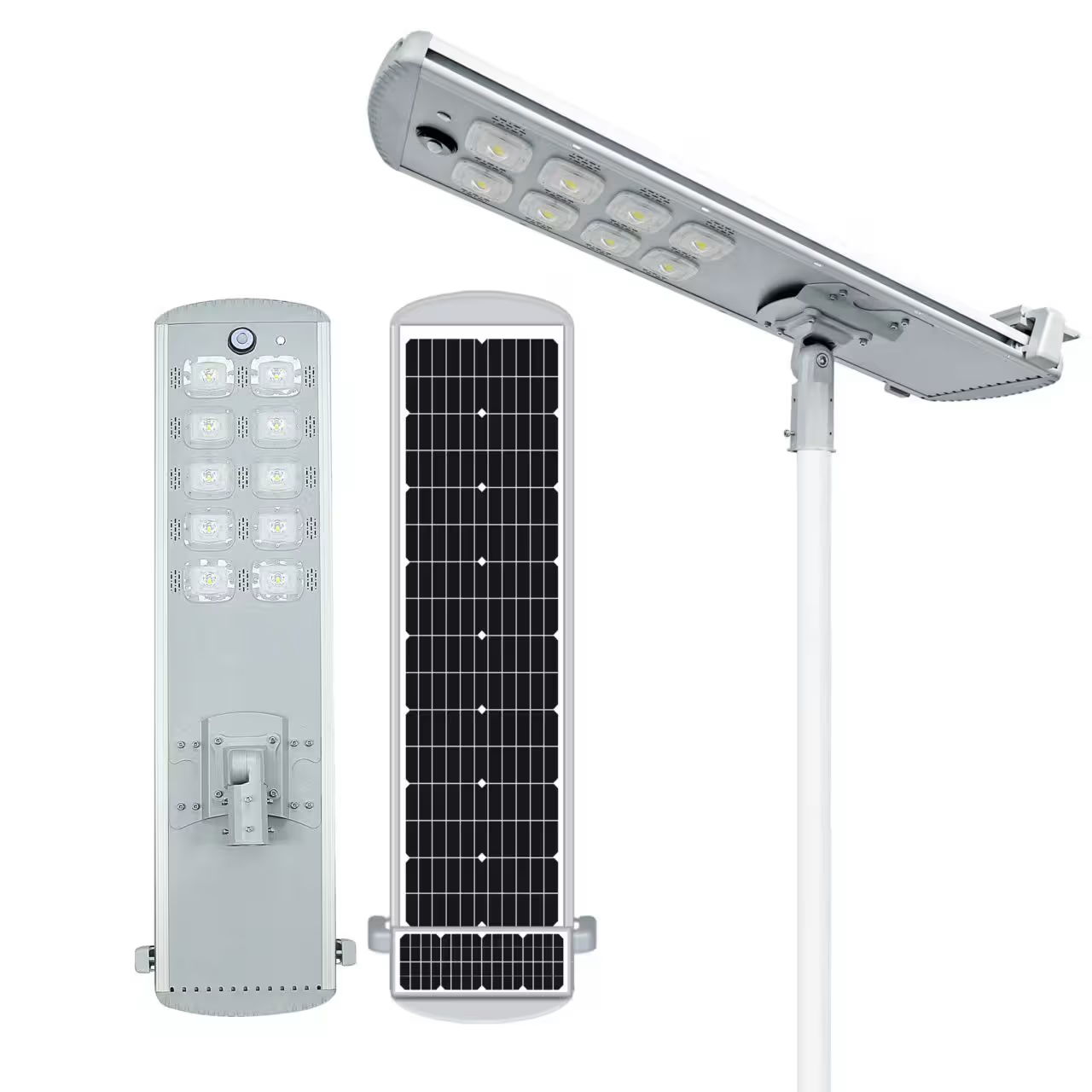
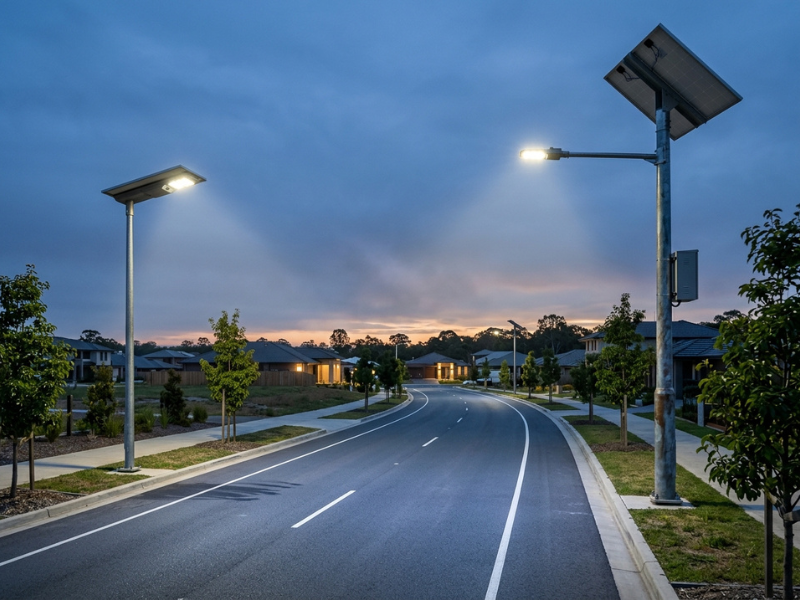
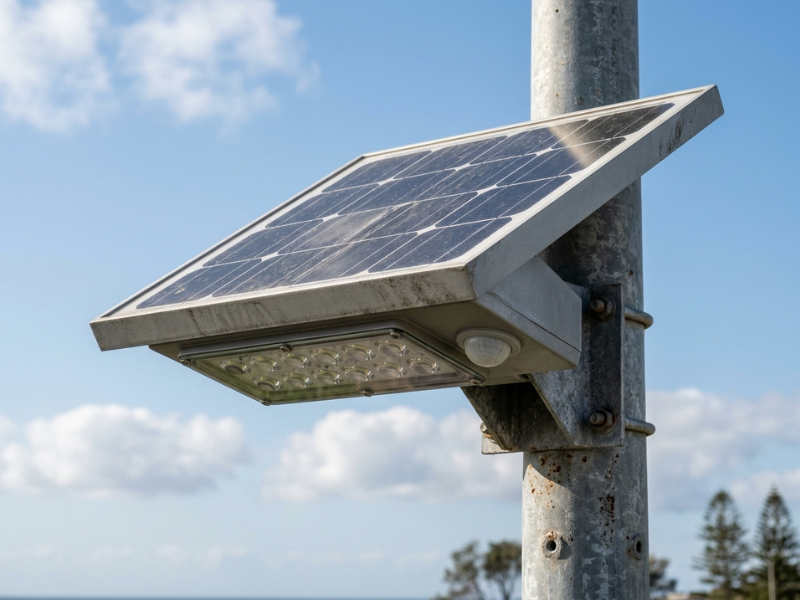
An all-in-one solar street light packs everything into a single fixture. The solar panel sits on top. The lithium battery, LED module, and controller live inside the same housing. Your crew lifts one unit, bolts it to the pole, and moves on.
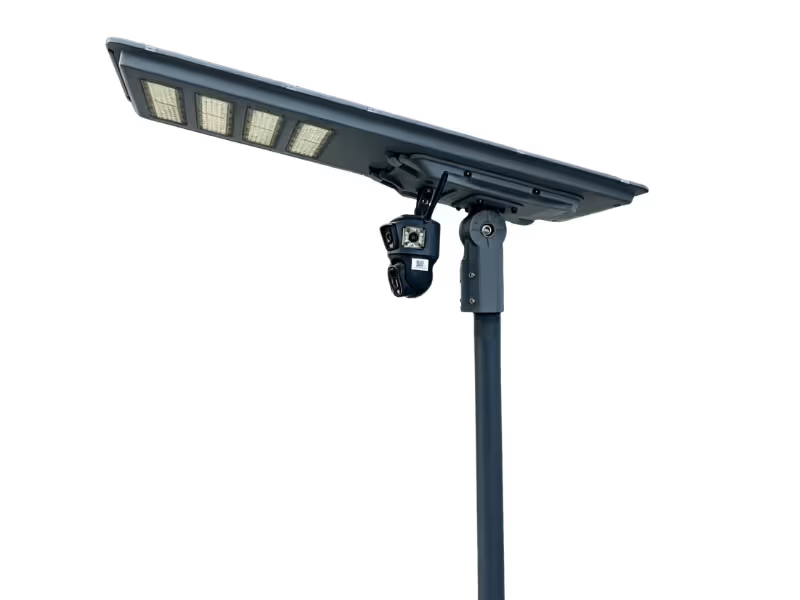
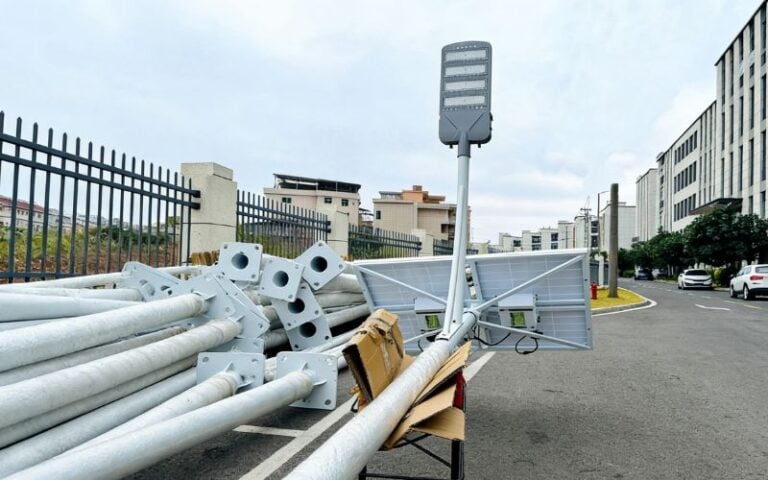
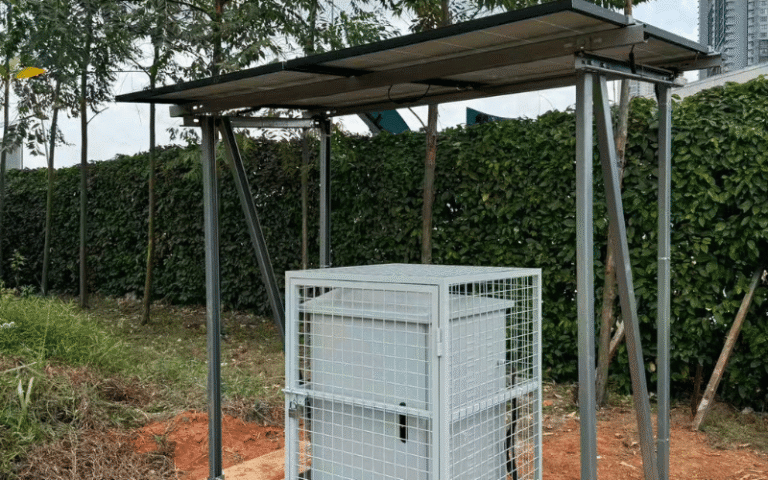
A split system spreads those parts out. The panel mounts on its own bracket. The battery rides in a separate box on the pole or sits buried at the base. The lamp head hangs on its own arm, and cables tie everything together.
Many buyers treat this as a question of looks. That’s a mistake. When I review a project, four things matter far more:
- Configurability. Split systems let you size the panel and battery to fit the site. All-in-one units lock you into whatever fits inside the housing.
- Energy ceiling. A fixture body can only hold so much panel area and battery capacity. A split design removes that cap.
- Serviceability. With separate parts, a technician can swap a battery or controller without taking down the whole light.
- Tolerance for tough conditions. High wattage, long nights, and weak winter sun push compact units to their limits sooner.
All-in-one lights win on installation speed and suit moderate-load jobs. Split systems win on performance headroom and long-term serviceability. Your site conditions decide which advantage matters more.
What Actually Determines the Right Choice
When a client asks me which type to buy, I ask about the site first. How bright does the road need to be? How long must the lights run each night? How much sun does the location get in December, not June?
Those answers settle the debate faster than any brochure. Five factors usually decide it. Here they are in the order I check them.
1. Brightness and Runtime Set the Baseline
Start with the light you need on the ground, not the wattage on the label. I look at four numbers: target lumens, coverage width, pole height, and nightly operating hours.
A garden path on a 4–6 m pole might need 2,000–4,000 lumens for 10–12 hours with motion dimming. A modern all-in-one unit handles that easily.
A four-lane road on a 10–12 m pole is a different job. You may need 12,000 lumens or more at full output for much of the night. That load quickly outgrows a compact fixture.
My rule is simple. Moderate brightness and dimmable schedules suit all-in-one. High output and long full-power hours point toward split.
2. Solar Harvesting and Battery Capacity Decide Stability
This is the factor I spend the most time on with clients. A solar street light only stays reliable when its panel and battery have enough margin. Fixture wattage tells you very little about that.
Here’s a quick example. A 40W lamp running 12 hours uses 480 Wh per night. Smart dimming might cut that to about 280 Wh. Add three backup days, and you need roughly 850 Wh of usable battery capacity.
Now the panel. With 3 peak sun hours and about 75% system efficiency, you need around 125W of panel just to refill one night’s use. Recovering after a cloudy stretch takes more.
This is where housing size becomes the limit. Many all-in-one units can only fit a panel and battery that match their body. Push the load higher, and the margin shrinks fast.
A split system removes that ceiling. You can pair a 150–300W panel with a LiFePO4 battery box sized for your exact load. Before comparing quotes, ask for three figures: panel wattage, battery Wh, and runtime at target brightness.
3. Climate and Latitude Change the Math
A system that works well in Arizona can fail in northern Germany. Location matters that much.
At higher latitudes, winter sun hours can drop to half of summer levels. Rainy regions may see five or more overcast days in a row. If you size from sunny-season data, the lights will dim exactly when nights are longest.
I always design for the worst month of the year. For tough climates, I plan for 3–5 days of autonomy. Even near the equator, rainy seasons shape the sizing, as you can see in our solar street light project in Tanzania.
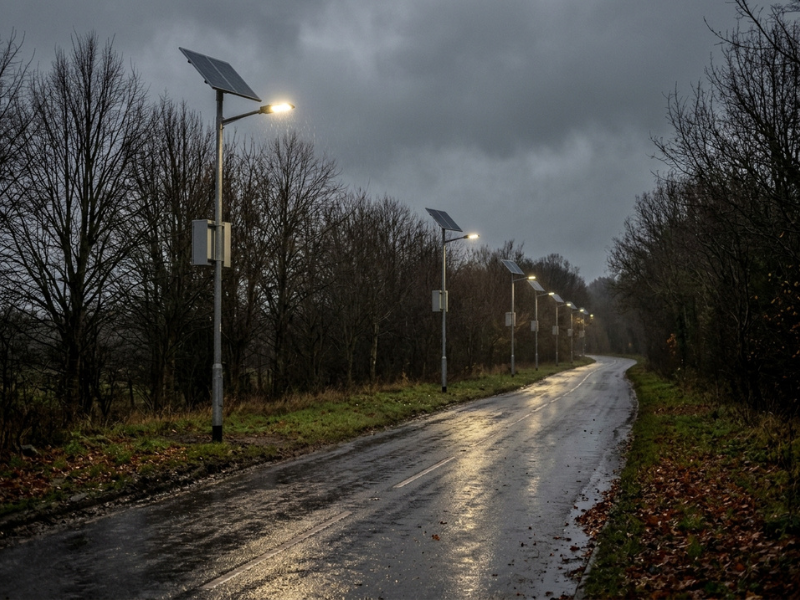
Split systems handle this better for two reasons. They allow bigger batteries. They also let you tilt the panel to match the site’s latitude, which can boost winter harvest noticeably. Many all-in-one units sit at a fixed, shallow angle.
People often tell me solar doesn’t work in cloudy places. That’s not quite true. Undersized solar doesn’t work in cloudy places. With the right panel and battery sizing, solar lighting runs reliably far from the equator.
4. Installation Speed vs. Long-Term Service Access
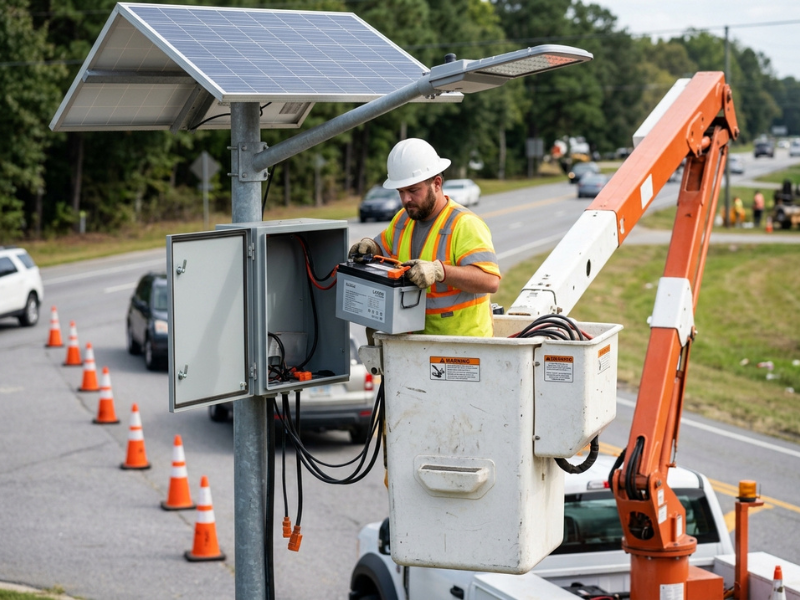
All-in-one lights install fast. A two-person crew with a bucket truck can mount one in under 30 minutes. That helps when deadlines are tight, cable runs are awkward, or skilled labor is scarce.
Split systems take longer. Your crew mounts the panel, battery box, and lamp head separately, then seals every connection.
But think about year six. When a split system’s battery wears out, a technician swaps the battery box and leaves. With many all-in-one units, the battery sits inside a sealed housing. You may need to take down the whole fixture.
Panel cleaning adds to the workload too. On dusty roads, dirt cuts the daily harvest and brings crews back more often. In those conditions, a self-cleaning solar street light can ease routine maintenance.
For municipal and commercial contracts with long maintenance obligations, I rank easy servicing above install speed. You install once. You maintain for ten years or more.
5. Total Cost Over the Project Life
The unit price is only the first line on the bill. My cost comparisons include:
- Equipment cost for the same real-world output
- Shipping volume and weight
- Installation labor and equipment rental
- Routine maintenance visits
- Battery replacement, typically every 5–8 years for LiFePO4
- Downtime risk, including complaints, safety issues, and penalty clauses
All-in-one often wins on upfront cost and shipping. For light-duty jobs, it usually stays cheaper overall.
On high-spec projects, the numbers often reverse. An undersized all-in-one fleet may need early replacements or extra poles. A split system costs more on day one, but it holds output longer and costs less to service.
All-in-One vs. Split Solar Street Lights: Side-by-Side Comparison
Clients often ask me for a one-page summary they can share with their team or attach to a bid review. This is the version I give them. If your project lands mostly in one column, you already have a strong lead.
|
Factor |
All-in-One |
Split |
|---|---|---|
|
System Structure |
Panel, battery, LED, and controller in one housing |
Panel, battery box, and lamp head mounted separately |
|
Installation Speed |
Fast: one lift, one mount |
Slower: several parts plus wiring and sealing |
|
Panel/Battery Scalability |
Limited by fixture size |
Sized freely to match the load and site |
|
High-Output Adaptability |
Moderate; best for low to mid wattage |
Strong; handles high lumens and long full-power hours |
|
Rainy-Day Backup Potential |
Moderate; usually 1–3 days |
Strong; 3–5+ days with a larger battery |
|
Maintenance & Part Replacement |
Harder; parts often sit inside a sealed body |
Easier; swap the battery or controller on its own |
|
Initial Cost |
Usually lower |
Usually higher |
|
Lifecycle Flexibility |
Low; upgrades often mean a new fixture |
High; you can upgrade parts as needs change |
|
Best-Fit Applications |
Pathways, residential streets, campuses, standard parking lots |
Main roads, highways, large parking areas, high-spec public projects |
Treat this table as a starting point, not a verdict. The final call always comes down to proper sizing and the real conditions on site.
When All-in-One Makes Sense
All-in-one lights get a bad reputation in some engineering circles. In my experience, that comes from using them on the wrong jobs. On the right site, they’re often the smartest buy on the table.
The first sign is a moderate lighting load. If your site needs roughly 2,000–6,000 lumens on a 4–8 m pole, an integrated unit can usually carry it. Motion sensors stretch that capacity further. The light idles at around 30% and jumps to full power when a car or person approaches.
Tight timelines are the second sign. I’ve watched a two-person crew light an entire subdivision street in one day with a single bucket truck. When a bid hinges on a handover date, that speed can win the contract.
Limited site resources point the same way. Rural roads and remote villages often lack skilled electricians. In my projects, wiring faults cause a large share of early failures in split systems. Fewer parts and no field wiring remove most of that risk.
Finally, check your backup needs. If the site rarely sees more than one or two overcast days in a row, an all-in-one’s 1–3 days of autonomy covers you comfortably.
These conditions show up again and again in the same places:
- Residential streets and gated communities
- Campus and park pathways
- Rural roads and village lanes
- Standard parking lots with moderate traffic
- Temporary sites, such as construction zones or event areas
- Retrofit jobs where you reuse existing poles
Retrofits deserve a quick note. Many older poles can’t handle the extra weight and wind load of a separate panel bracket and battery box. A lighter integrated unit often fits where a split system won’t.
If your goals are fast deployment, reliable “good enough” lighting, and tight control over upfront cost, an all-in-one solar street light is a sound choice. Just check the panel and battery sizing against your worst month before you sign.
When Split Is the Better Investment
Split systems cost more on day one. I never hide that from clients. But on demanding sites, that extra money buys real energy headroom.
The clearest sign is a heavy lighting load. If your road needs 12,000 lumens or more from a 9–12 m pole, you need a bigger panel and battery than most fixture bodies can hold.
Long full-power hours push the same way. Highways and busy junctions rarely allow deep dimming after midnight. In winter, that can mean 14–16 hours near full output.
Weather comes next. Some sites see four or five rainy days in a row. Others sit far from the equator. In both cases, a split design lets you size the battery for your worst week and tilt the panel toward low winter sun.
Then look at the maintenance contract. Many municipal tenders tie the contractor to 5–10 years of service. With a split system, a technician swaps a worn battery box or controller in minutes while the lamp head stays on the pole. Repair costs stay low and road closures stay short.
Performance over time matters just as much. Public projects often must meet a set lighting class for the full contract term. A larger battery discharges more shallowly each night, so it ages more slowly. That helps the lights hold their rated output in year eight, not just year one.
These conditions cluster in the same types of projects:
- Municipal main roads and arterial streets
- Highways, expressways, and major intersections
- Large parking areas at malls, ports, and logistics hubs
- Perimeter roads around industrial parks and factories
- Public projects with strict lighting specs and inspection clauses
Every one of these sites shares a trait: a dark night costs a lot. It might mean a traffic accident, a wave of complaints, or a contract penalty.
Here’s the line I draw with every client. When failure carries a high price, don’t chase the lowest unit price. Pay for enough energy margin and service access to stay lit through the toughest month. A cheap light that fails in its third winter often becomes the most expensive option on the job.
Common Buying Mistakes That Leave Roads Dark
Most failed solar street light projects I’m asked to fix didn’t start with a bad product. They started with a bad buying decision, usually at the quote stage. Four mistakes come up again and again.
Mistake 1: Comparing Only Fixture Wattage or Unit Price
A quote that says “100W solar street light” tells you very little. I’ve opened “100W” units with a 30W panel and a battery that barely lasted one night.
Treat a solar street light as a small power system, not just a lamp. Ask every supplier for the same five figures:
- Panel wattage
- Usable battery capacity in Wh
- Runtime at your target brightness
- Days of autonomy
- Dimming profile
Put those numbers side by side. The cheapest unit often has the smallest energy reserve, and that’s where the savings came from.
Mistake 2: Designing Around Summer Sun
Many spec sheets assume 5–6 peak sun hours a day. That might hold in July. In December, the same site might get 2.
Winter also brings the longest nights. So the system faces its heaviest load on its weakest charge. That’s when undersized lights dim by 9 p.m.
Size from your worst month: December, or June in the Southern Hemisphere. Then ask the supplier to show their sizing math against it.
Mistake 3: Trading Serviceability for a Faster Install
A quick install feels great on handover day. The problems show up years later.
LiFePO4 batteries usually need replacing after 5–8 years. If the battery sits sealed inside the fixture, your crew may need a bucket truck, a lane closure, and a full fixture swap. Multiply that by 300 poles, and the “fast” option gets expensive.
Before you sign, ask how long battery and controller replacement takes per pole. A vague answer is a warning sign.
Mistake 4: Assuming One Type Always Wins
Some buyers only trust all-in-one. Others won’t look at anything but split. Both groups end up with mismatched projects.
I’ve specified both types on the same job. All-in-one units lit the side paths. Split systems covered the main access road. Each worked because each matched its load.
Neither type is better in general. Define your brightness target, climate, and maintenance plan first, and the right type usually becomes obvious.
A Simple Project Decision Checklist
Before I quote any solar street light project, I run through this short list with the client. It takes about ten minutes and heads off most costly mistakes.
- What brightness does the site need? Write down the target lux or lumen level, not just a fixture wattage.
- How tall are the poles, and how far apart? Taller poles and wider spacing demand more output per light.
- How many hours must the lights run each night? Note whether you can dim after midnight.
- How many backup days do you need? Count the longest rainy stretch the site usually sees.
- What are winter sun conditions at your latitude? Use December data (June south of the equator), not yearly averages.
- How easy is maintenance access? Think about bucket trucks, lane closures, and crew availability.
- Do you judge the budget on upfront or lifecycle cost? A 10-year view often flips the answer.
- What happens if the lights fail? A dark garden path is an inconvenience. A dark highway junction is a safety risk.
Now read your answers as a group. If most point to moderate demand, a quick install, and lower upfront cost, choose all-in-one. If most point to higher reliability, a larger energy reserve, and easier servicing, choose split.
If your answers land in the middle, consider using both types on the same site.
FAQs
What is the main difference between all-in-one and split solar street lights?
An all-in-one light packs the panel, battery, LED, and controller into one housing. A split system mounts them separately and links them with cable. The bigger difference is energy capacity. A split design lets you size the panel and battery to match the load.
Which type performs better in cloudy or rainy climates?
Split systems usually do. Their larger batteries support 3–5 days of autonomy, while most all-in-one units offer 1–3 days. A well-sized all-in-one can still work in mild, mostly clear climates. Either way, size for your worst month.
Are split solar street lights always brighter?
No. A 40W split light and a 40W all-in-one can put out similar lumens at dusk. The gap shows up later in the night and after cloudy days, when a bigger panel and battery hold full output longer. Ask for runtime at your target brightness, not just peak lumens.
Can the battery be replaced in an all-in-one system?
Often yes, but it takes more work. Some newer designs have a battery compartment a technician can open on the pole. Many cheaper units seal the battery inside, so the whole fixture comes down. Ask the supplier for replacement steps and time per pole before you buy.
Which type usually costs less over the long term?
It depends on the load. For pathways and residential streets, all-in-one usually stays cheaper over 10 years. On high-spec roads, split often wins through slower battery aging and cheaper part swaps. Build a simple 10-year cost sheet before deciding.
Is all-in-one suitable for municipal road projects?
For some, yes. I’ve used all-in-one units on residential streets, park roads, and side lanes. For arterial roads and highways, I usually specify split. Many city projects work best with a mix: split on the main road, all-in-one on connecting streets.
Start With the Site, Not the Fixture
Most buyers open with one question: all-in-one or split? I’d turn that around.
Start with the job the light has to do. How bright must the road be? How many hours must the lights run? How many cloudy days must they ride out? And who will reach the pole when the battery wears out?
Answer those first, and the right fixture type usually picks itself.
Before you request quotes, ask every supplier for the same four numbers:
- Panel wattage
- Usable battery capacity in Wh
- Runtime at your target brightness
- Days of autonomy
Line them up side by side before you look at price. A low quote with a thin energy reserve isn’t a bargain. It leaves you with a dark street and a costly fix.