



Case Study · Off-Grid Power
Keeping Remote Telecom Base Stations Powered — Without the Grid
An integrated solar-storage-diesel system that delivers continuous uptime, lower fuel costs, and fully autonomous operation.
Updated on 29 August 2026The Challenge: Power Where the Grid Doesn't Reach
Telecom base stations don't stop working just because they sit hundreds of kilometers from the nearest power line. They still need clean, steady electricity every hour of every day. When one goes dark, entire communities lose their connection to the outside world.
That was the exact problem facing operators trying to serve remote regions. Their base stations sat in mountains, deserts, and rural stretches with no access to a reliable grid. The old answer—running diesel generators around the clock—came with a heavy price. Fuel costs kept climbing. Trucks had to make long, expensive trips to refill tanks. And every visit meant sending staff to sites that were hard to reach in the first place.
These operators needed a smarter way to keep their equipment powered. Something reliable enough to run without anyone on-site, tough enough to survive harsh field conditions, and efficient enough to slash the fuel bills that were eating into their margins.
The Solution: One Integrated Off-Grid System
The company answered with an integrated off-grid power supply system built specifically for telecom base stations in areas with no grid or a weak one. Instead of leaning on a single power source, the system brings three together and lets a smart controller manage them as one.
At its core sits a 20kWp monocrystalline solar array. During daylight hours, this becomes the main source of power, feeding the base station directly and storing any extra energy for later. Backing it up is a 48kWh LiFePO4 battery bank with a built-in management system. The battery holds surplus solar energy and takes over when the sun isn't available.
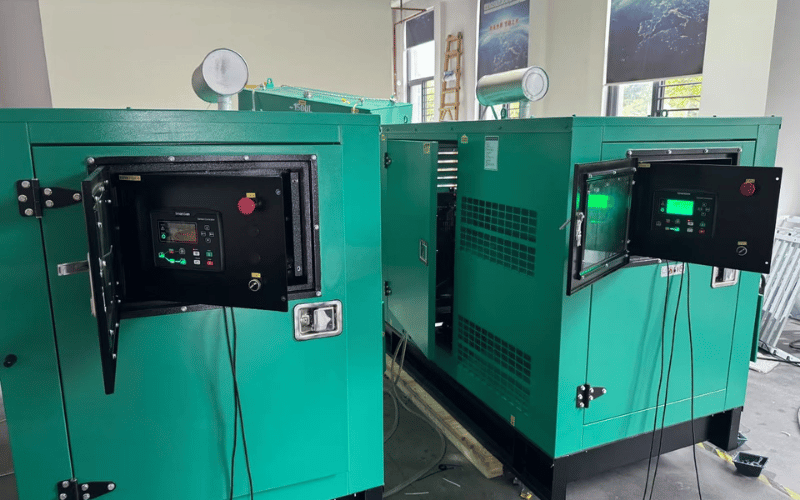
For the toughest stretches—days of heavy cloud or unusually high demand—the system includes two 20kW water-cooled diesel generators. They serve as automatic backup, not as the everyday workhorse. Tying it all together is an Energy Management System (EMS) with automatic transfer switching. The EMS watches conditions in real time and decides which source should carry the load, all without a person lifting a finger.
The result is a self-contained microgrid. It powers the RF units, switches, monitoring gear, and cabinet equipment a base station depends on, and it does so completely independent of the public grid.
- Solar Array: 20kWp monocrystalline — primary daytime source
- Battery Storage: 48kWh LiFePO4 with built-in BMS
- Backup Generation: Two 20kW water-cooled diesel generators
- Control: Energy Management System (EMS) with automatic transfer switching
How It Works in Practice
The intelligence of the system shows in how it handles a full day and night on its own.
When the sun is out, solar leads. The array powers the equipment directly, and any energy left over flows into the battery. As daylight fades or clouds roll in, the battery steps up and carries the full load, holding voltage steady so the sensitive telecom gear never notices the handover.
If the battery runs low—say, after several gray days in a row—the EMS starts one of the diesel generators automatically. The generator recharges the battery and supports the load until conditions improve, then shuts itself down. No phone call, no site visit, no manual switch.
The two generators also back each other up. If one needs servicing or fails, the other keeps the station running. That redundancy is what gives operators confidence during the harshest weather, when a single point of failure simply isn't an option.
The Outcomes: Reliability, Savings, and Peace of Mind
The impact showed up quickly across the sites where the system was deployed.
Zero Downtime
The layered design—solar first, battery next, diesel as a safety net—keeps base stations powered no matter the weather. Regulated voltage and frequency protect equipment from swings and momentary blackouts, so service stays online year-round.
Real Fuel Savings
By making solar the primary source and holding diesel in reserve, the system cut fuel consumption sharply compared with the old diesel-only setup. Fewer refueling trips followed, along with lower emissions and a noticeably lighter operating cost.
Hands-Off Operation
The system runs fully unmanned. It switches sources based on battery charge and sunlight, and it starts and stops the generators on its own. For sites that once demanded regular staff visits, that autonomy changed the economics entirely.
Built for Rough Conditions
Designed to handle high heat, dust, and remote field environments, the system keeps working where a lot of equipment would struggle. Multiple layers of protection—against overvoltage, overload, short circuits, and battery over-charge or over-discharge—guard the investment day in and day out.
The Takeaway
Powering a telecom base station in the middle of nowhere used to mean choosing between reliability and cost. This integrated solar-storage-diesel system removes that trade-off. Solar does the heavy lifting, the battery keeps things steady, and diesel stands ready only when it's truly needed.
For operators, tower companies, and integrators building networks in off-grid regions, the value is clear. They get continuous uptime, lower fuel bills, and a system that runs itself. Most importantly, the communities on the other end of those base stations stay connected—every day of the year.

