

Most street lighting bids don’t lose because the product is weak. They lose for simpler reasons.
Bidders misread the rules. They chase the wrong scoring priorities. They hand in files that are messy, incomplete, or hard to verify.
I’ve watched strong technical teams get cut early, while a rival with an average product wins just by reading the tender better.
That gap is what this article closes.
None of this is guesswork. It comes from watching bids win and lose on the same details, again and again. Read the rules the way the city does, and you stop giving away points you never had to lose.
What Really Decides a Street Lighting Bid
Ask ten bidders why they lost, and most will blame price. That answer is almost always wrong.
It’s Not Just Price
On the surface, a street lighting tender looks like a race to the lowest number. Cities set budgets. Bidders sharpen their pencils. Everyone assumes the cheapest offer takes it.
That’s not how the scoring works.
Evaluators check mandatory compliance first. Miss a required file or break a hard limit, and price never even gets read. You’re out before the real assessment starts.
Only after your bid clears that gate do reviewers weigh the rest. They look at technical quality and whole-life cost: efficacy, lumen maintenance, warranty terms, and how much the system costs to run over ten or twenty years.
Price still matters. It just matters last, and only among bids that already earned the right to compete.
The Three Layers That Decide the Outcome
I sort every tender into three layers. Miss one, and the others stop counting.
Get all three right, and price stops being your weakness. It becomes your advantage.
Street Lighting Project Guidelines: What to Check Before You Design
Read the guidelines twice before you draw a single pole layout. They set the boundaries your whole design has to live inside. Miss one, and you’ll redraw everything later, or lose the bid outright.
I keep these guidelines in four buckets. Bidders trip on each one at different moments, so it helps to know exactly which is biting you.
Lighting and Engineering Requirements
Start with the numbers the city ties to each road class. Illuminance targets, uniformity ratios, and glare limits drive everything else.
Get those first, then work backward. Pole height, spacing, and mounting all follow from the photometric goals. Widen your spacing to save on poles, and your uniformity collapses on the first check.
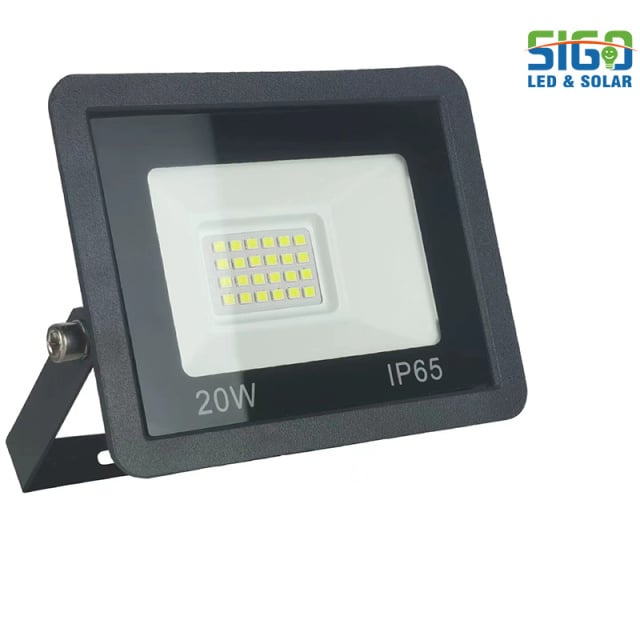
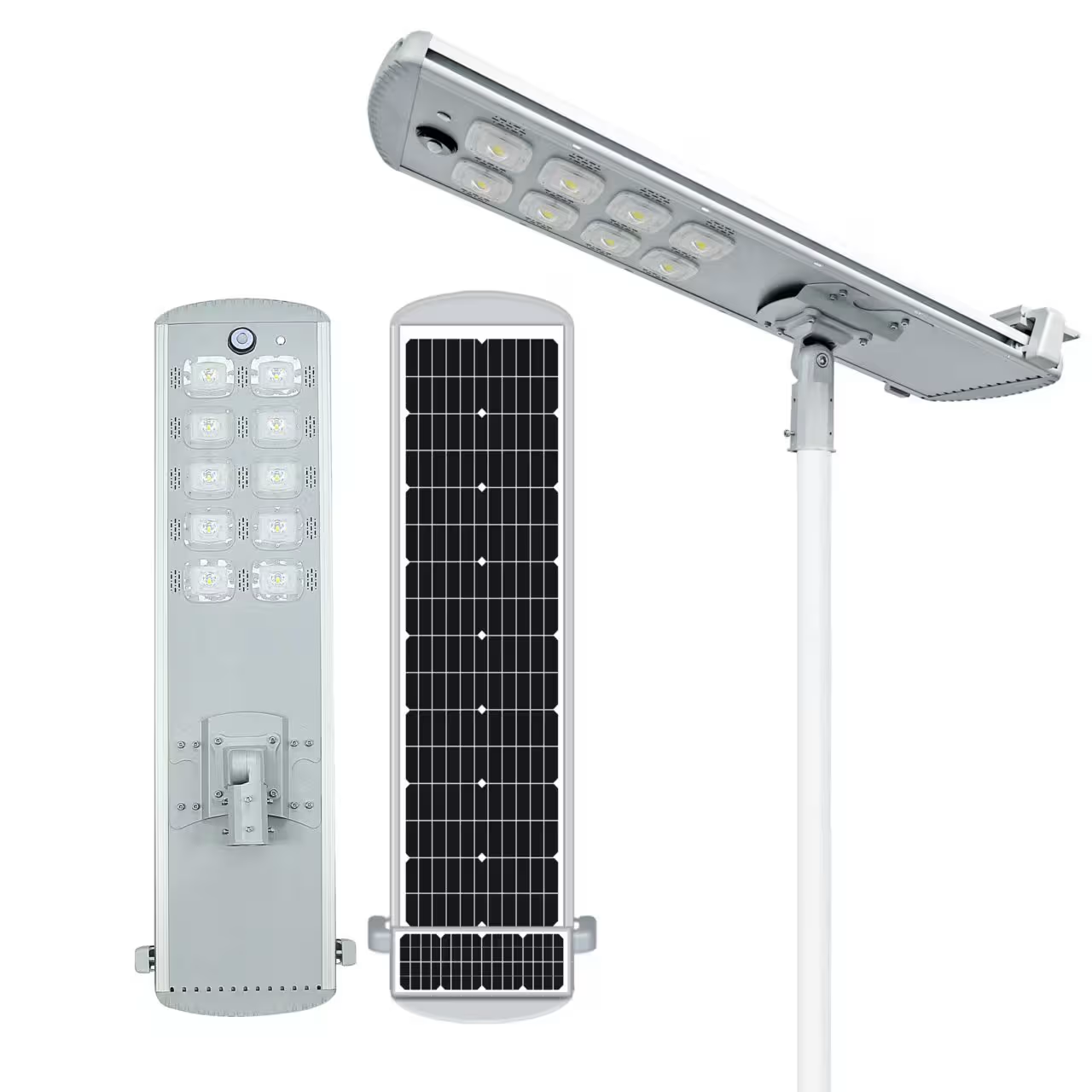
Your luminaire specs sit at the center. Confirm the required efficacy in lumens per watt, the color temperature, the CRI floor, and the IP and IK ratings. A 4000K spec won’t accept a 5000K product, no matter how bright it runs. When you compare fixtures against these targets, a well-documented LED street light range makes it far easier to prove efficacy and output on paper.
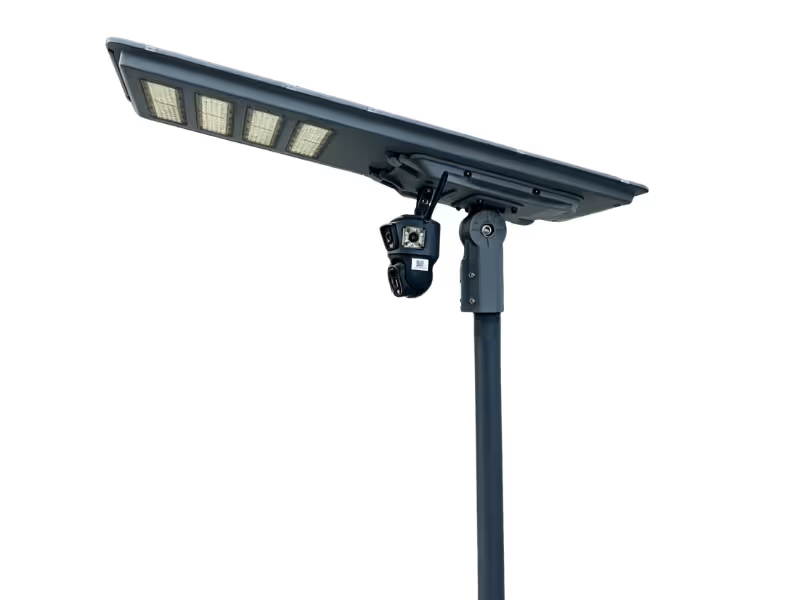
Controls matter just as much. Check the dimming profiles, photocell behavior, and whether the fixtures must join a network. If the city wants remote monitoring, a standalone luminaire fails on day one.
Construction and Compliance Requirements
Design and construction rules travel together. Whatever you install has to survive both the code inspector and the street.
Nail down electrical safety first. Grounding methods and surge protection levels are non-negotiable, and cities often name a specific standard for each.
Then plan around the site itself. Traffic control during install, allowed work windows, and the inspection and sign-off steps before energizing all shape your schedule and your cost.
Don’t overlook the people around the road. Pedestrian crossings, cycle lanes, and intersections carry their own lighting and accessibility rules. A crosswalk usually needs higher levels than the road it crosses.
Environmental and Operating Requirements
Cities increasingly score how a project behaves over its life, not just how it looks on opening night.
Watch the dark-sky and spill light limits near sensitive areas. These cap upward light and often restrict blue-rich spectrum, which can rule out a fixture you already priced.
Check the energy budget and the maintenance expectations too. Many tenders set a power density ceiling and ask how you’ll service the system for years. End-of-life rules for lamps, drivers, and batteries round it out, so confirm the recycling requirements early rather than at handover.
Submission Rules That Can Sink a Bid
This is where good designs die on paperwork. The city can reject a strong bid for reasons that have nothing to do with lighting.
Line up your deliverables first. Drawings, IES and photometric files, and full calculations usually top the list, and each one has to match the required format.
Then follow the fine print exactly. File naming, page limits, upload portals, and the deadline all count. A file named wrong or submitted a minute late can void the entire package.
Use the clarification window while it’s open. If a requirement reads two ways, ask the official question. Guessing here is a gamble you never need to take.
Read all four areas as one system, not a checklist. The table below shows what the city looks for and where bidders slip.

Before You Bid: 4 Guideline Areas to Verify
|
Guideline area |
What the city is checking |
Why it affects the bid |
Common bidder mistake |
|---|---|---|---|
|
Lighting and engineering |
Illuminance, uniformity, glare, pole spacing, luminaire specs, controls |
Sets whether your design meets the road class at all |
Widening pole spacing to cut cost, then failing uniformity |
|
Construction and compliance |
Grounding, surge protection, electrical safety, traffic control, inspections, accessibility |
Drives schedule, cost, and whether the system passes sign-off |
Under-lighting crosswalks and intersections |
|
Environmental and operating |
Dark-sky and spill limits, energy budget, maintenance, recycling |
Can disqualify a fixture and shape life-cycle scoring |
Specifying a blue-rich product near a sensitive zone |
|
Submission rules |
Drawings, IES files, calculations, naming, format, deadlines, clarifications |
Decides if the bid even gets opened and read |
Wrong file names or a late upload voiding the package |
Verify these before you optimize anything. A design that ignores the guidelines can’t win, no matter how sharp the engineering behind it.
Continuing in the next canvas block.
Canvas Block 2 continues below.
How Cities Usually Score Street Lighting Tenders
Once your bid clears the mandatory gate, the real contest begins. Here’s how evaluators assign points, and where the fight is actually won.
Mandatory Items vs Scored Items
Every tender holds two kinds of requirements, and mixing them up costs bids all the time.
I watch teams pour weeks into polishing a scored strength while a single mandatory box sits empty. They build a beautiful photometric model, then forget to sign a form. The reviewer never even reaches the good part.
Clear the pass/fail list first. Optimize points second.
Technical Performance
This is usually the largest scored block, so give it real attention.
Evaluators look at efficacy in lumens per watt, but they don’t stop there. They want lumen maintenance, the L70 or L80 figure that shows how long the light stays useful. They check driver lifespan too, because the driver fails long before the LED does.
Then they test your photometric calculations against the road class. A design that hits the illuminance target but flunks uniformity loses points fast.
Control compatibility counts as well. If the city runs a management platform, they want proof your system talks to it, not a promise that it “supports open protocols.”
Don’t overlook install and maintenance ease. Tool-less access, standard mounting, and simple driver replacement all score, because the city pays for every service visit for the next twenty years.
Common Street Lighting Tender Criteria and What They Mean
|
Criterion |
What evaluators actually look for |
Typical evidence |
Risk if weak |
|---|---|---|---|
|
Efficacy |
Real lumens per watt at operating temperature |
LM-79 test report |
Fails energy budget, loses technical points |
|
Lumen maintenance |
L70/L80 rating over rated hours |
LM-80 and TM-21 data |
Light drops below spec mid-life |
|
Driver reliability |
Rated lifespan and failure rate |
Driver datasheet, MTBF data |
Early failures drive up maintenance |
|
Photometric compliance |
Illuminance and uniformity per road class |
Full calculations with IES files |
Design rejected against road class |
|
Control compatibility |
Proven integration with the city’s platform |
Integration case, protocol certificate |
Scored as non-compliant on controls |
Price vs Whole-Life Cost
The lowest number rarely wins the price section outright. Smart cities compare whole-life cost instead.
CAPEX is only the opening figure. Whole-life cost adds energy over the evaluation period, scheduled maintenance, fault replacement, labor, and end-of-life disposal.
Build your price to win on total cost, not just the headline number.
Price vs Whole-Life Cost
|
Cost element |
Included in upfront price? |
Often included in evaluation? |
Why it matters |
|---|---|---|---|
|
Luminaire and pole hardware |
Yes |
Yes |
The visible number everyone compares first |
|
Installation labor |
Sometimes |
Yes |
Complex mounting inflates total cost |
|
Energy over contract life |
No |
Yes |
Poor efficacy quietly erases a low bid |
|
Scheduled maintenance |
No |
Yes |
Cheap parts mean more service visits |
|
Fault replacement and labor |
No |
Yes |
Weak drivers trigger repeat truck rolls |
|
End-of-life disposal |
No |
Sometimes |
Recycling and battery handling add cost |
Supplier Capability and Delivery Risk
Cities score the company, not just the product. They want to know you can actually deliver what you promised.
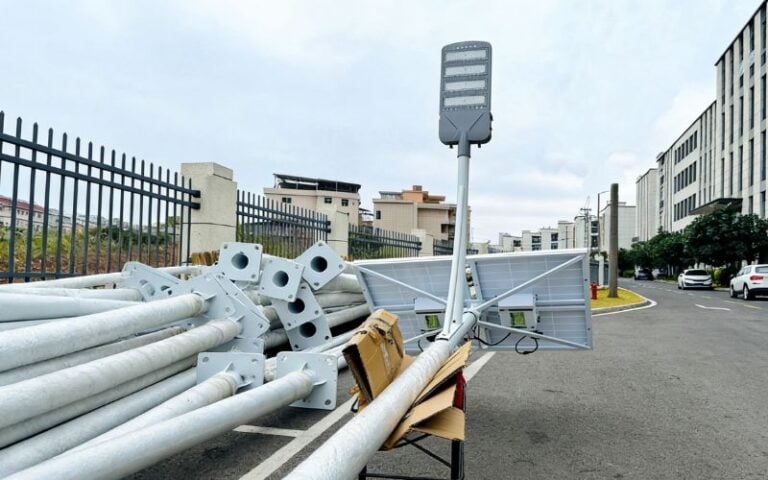
They look at reference projects of similar scale, your supply capacity, and realistic lead times. A brilliant product you can’t ship on schedule reads as a liability, not a strength. A track record like this solar street light project in Tanzania shows an evaluator you’ve delivered under real site conditions, not just on a spec sheet.
They also check after-sales response, financial standing, relevant certifications, and whether you have a service network near the site. A local presence often earns real points, because it means faster repairs when a fixture fails at 2 a.m.
Weak evidence here reads as risk, and reviewers price risk straight into your score.
Sustainability and Smart Controls
This block rarely carries the highest weight, but it decides close races more often than people expect.
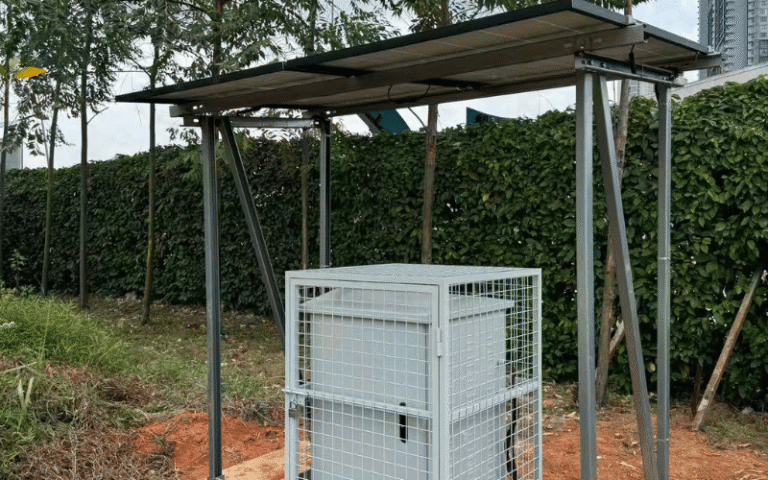
Evaluators reward dimming profiles, remote monitoring, and genuine compatibility with the city’s existing management platform. They also look at recyclable materials and embodied carbon where the tender calls for them. Smart city work like this solar bus shelter lighting solution is exactly the kind of proof that earns points in this block.
How Weighting Changes the Winner
The same bid can win one tender and lose another with identical numbers. The difference is how the city weighted its criteria. Read the weights before you build the bid, and you’ll know exactly where to fight.
Best Value vs Lowest Price
Two models run most street lighting tenders.
If the tender involves years of maintenance, remote monitoring, or a big pole count, expect best value. That’s your signal to invest in evidence, not just a low number.
A Sample Weighting Model
Here’s one illustrative split, not an industry rule:
Read it as a map of where the points live. With technical at 40%, a strong photometric design and reliable drivers can outscore a cheaper rival. With sustainability at 20%, controls and recyclable materials stop being extras and start earning real points.
Every city sets its own numbers. Pull the actual weights from the tender and let them tell you where to spend your effort.
Minimum Technical Thresholds
A high total score means nothing if you miss the technical floor.
Many tenders set a minimum technical mark you must clear before price even counts. Fall below it, and the city drops your bid, even if your price would have won.
I’ve watched teams chase the cheapest possible offer, then get cut for a technical score two points under the line. Hit the threshold first. Compete on price after.
Why Low Bids Still Lose
A rock-bottom price attracts scrutiny, not applause.
Match every assumption to the tender’s stated terms. That’s how a competitive price stays competitive.
How Different Weightings Change Bid Strategy
|
Weighting pattern |
What it favors |
Best bidder response |
|---|---|---|
|
Price-heavy (e.g., 60%+ price) |
Lowest compliant cost |
Trim cost without breaking mandatory specs; protect the technical floor |
|
Balanced (e.g., 40% technical / 40% price) |
Strong design at a fair price |
Sharpen efficacy and whole-life cost, then price tightly against it |
|
Technical-heavy (e.g., 50%+ technical) |
Proven performance and reliability |
Lead with test data, uniformity results, and driver reliability evidence |
|
Sustainability-weighted (20%+ sustainability) |
Controls, efficiency, recyclable materials |
Show platform integration and material credentials with real proof |
Score your own bid against the published weights before you submit. The weighting tells you where to win.
The Most Important Documents and Evidence in a Winning Submission
Two bids can promise the exact same thing. The one that proves it wins. Your submission is where claims turn into scored points, so treat every file as evidence, not filler. Compliance documents and score-improving documents do very different jobs, so it pays to keep them clearly apart.
Documents That Prove Compliance
These get you through the gate. Miss one, and your strongest design never gets read.
Documents That Improve Score, Not Just Eligibility
Clearing compliance keeps you in the room. This next set is how you climb the ranking.
Why Evidence Beats Claims
Here’s the pattern I see decide close bids.
Reviewers can’t award points for a promise they can’t verify. Every unsupported claim reads as risk. Every claim backed by a test report, a page number, or a third-party certificate reads as fact.
So do the reviewer’s job for them. Make each claim traceable. Cross-reference your proposal to the exact document and page. When someone can confirm your numbers in ten seconds, they score you with confidence, and confidence is what pulls you ahead of an equal rival.
Submission Document Checklist
| Document | Required or score-improving | What it supports | Frequent issue |
|---|---|---|---|
| Technical drawings | Required | Layout, pole spacing, mounting compliance | Drawings don't match the calculations |
| Photometric calculations + IES files | Required | Illuminance and uniformity per road class | IES files missing or wrong product version |
| Product datasheets | Required | Basic spec compliance | Specs conflict with the test reports |
| LM-79 test report | Required | Real efficacy and light output | Cited but not attached |
| LM-80 / TM-21 data | Required | Lumen maintenance over rated life | Extrapolated beyond valid limits |
| Standards compliance statement | Required | Proof each component meets named standards | Vague or blanket claims |
| Reference case studies | Score-improving | Delivery track record at similar scale | Projects too small or unrelated |
| Warranty terms | Score-improving | Coverage scope and response time | Length stated, coverage and response omitted |
| Maintenance plan | Score-improving | Whole-life cost credibility | Generic plan, no site specifics |
| Spare parts commitment | Score-improving | Long-term serviceability | No lead times or stock guarantee |
| Team qualifications | Score-improving | Delivery capability | Generic CVs, no relevant roles |
| Control integration evidence | Score-improving | Platform compatibility | Claimed, never demonstrated |
Build this file list before you write a word of the proposal. Then make every claim point straight to its proof.
Common Reasons Good Street Lighting Bids Lose
Strong bids don’t lose to weak ones. They lose to careless ones. The mistakes below show up again and again, usually from teams that had the better product but tripped on the process.
Designing Before Reading the Scoring Model
Plenty of teams start drawing before they know how the city awards points. That’s backward.
I once watched a bidder reuse one lighting parameter template across a main arterial and a quiet residential street. The main road passed. The residential street got over-lit, blew the energy budget, and lost points nobody saw coming.
Read the scoring model first. Then design to it.
Treating Compliance as Paperwork
Compliance is not admin. It’s the gate.
Teams that rush the compliance matrix miss a mandatory item and get cut before anyone reads their design. A single unchecked box, an unsigned form, a missing test report, and the whole package dies.
Give compliance the same attention you give the engineering. It carries the same power to end your bid.
Underestimating Maintenance and Operating Cost
A low upfront price feels safe. It rarely wins on a best-value tender.
Teams quote cheap luminaires, then quietly underquote maintenance. When the city runs whole-life cost, that “cheap” bid climbs above a rival that priced energy, fault replacement, and service visits honestly.
The subtler trap is quoting maintenance on your own assumptions instead of the tender’s stated terms. The evaluation resets your numbers to its own rules, and the gap you counted on vanishes.
Submitting Incomplete or Weakly Cross-Referenced Files
Close bids come down to whether the reviewer can verify your claims. Many good bids fail right here.
The classic case: a bidder claims the fixtures work with the city’s management platform, then offers no integration case, no protocol certificate, nothing. The reviewer scores it as non-compliant on controls. Compatibility you can’t prove counts as zero.
The warranty trap works the same way. “Five-year warranty” tells a reviewer almost nothing. State it without coverage scope or response time, and you lose points to a rival who spelled out exactly what’s covered and how fast they respond.
Then there’s the wrong file. Photometric calculations submitted in an outdated product version, so the numbers don’t match the fixture you’re actually offering. Or test reports buried in an appendix with no page reference. A reviewer who can’t confirm your numbers in seconds won’t award full marks for them.
Cross-reference everything. Point each claim straight to the document and page that backs it.
Ignoring Local Overlays and Site Conditions
National standards are the floor, not the finish line.
City ordinances often go further. Dark-sky zones cap upward light. Historic districts dictate fixture appearance. Coastal sites demand corrosion protection you didn’t budget for.
I’ve seen a technically sound bid lose because it ignored a dark-sky overlay and specified a blue-rich fixture near a protected area. The product was excellent. It just broke a local rule the team never checked.
Read the local overlays and walk the site conditions before you finalize anything. The requirements that sink good bids usually hide just outside the national standard.
Every failure here is avoidable. They share one root cause: the team focused on the product and skipped the rules that decide who actually wins.
How to Build a Bid Strategy Before Submission
A tender isn’t won at the deadline. It’s won in the quiet days before, when you treat your own bid the way the evaluator will. Here’s the process I run every time, in order.
Step 1: Separate Pass/Fail from Scored Items
Open the tender and split every requirement into two lists.
One list holds the mandatory items: signed forms, stated IP ratings, warranty floors, required test reports. These are pass/fail. Miss one, and nothing else counts.
The second list holds the scored items: efficacy, whole-life cost, controls, delivery capacity. These earn points on a scale.
Do this split first, on paper, before anyone touches a pole layout. It stops your best people from polishing a scored strength while a mandatory box sits empty.
Step 2: Build a Compliance Matrix
Turn that first list into a working table. This single tool saves more bids than any other.
Give every requirement its own row. Then add three columns: the exact document that answers it, the page number, and a status flag.
Fill the flag honestly. Green means covered and attached. Amber means partly there. Red means a gap.
The matrix does two jobs. It shows the reviewer you addressed each line, and it shows your own team where the holes are while there’s still time to close them. Chase every red flag to green before you move on.
Step 3: Score Your Own Bid Before the City Does
The weights are published. Use them.
Sit down with the scoring model and grade your bid line by line, the way an evaluator would. Be strict. If a claim has no test report behind it, mark it weak, not strong.
I ask a colleague who didn’t write the bid to score it cold. They catch the gaps the authors stopped seeing three drafts ago. That outside read beats another hour of polish.
When you finish, you’ll hold a realistic total and a clear map of where you’re bleeding points.
Step 4: Strengthen the Weakest Scoring Category
Most teams instinctively improve their strongest area. That’s the wrong move.
A bid sitting at 90% on technical and 55% on sustainability gains far more by lifting sustainability than by chasing the last few technical points. The math rewards fixing the low number.
So target your weakest scored category first. Add the evidence it lacks: a third-party report, a reference case at similar scale, a proper integration certificate, a maintenance plan with real site detail.
Spend your remaining effort against the actual points on offer, not against what feels comfortable to write.
Step 5: Check That the Price Is Competitive Without Creating Risk
A sharp price only helps if it survives scrutiny.
Build your whole-life cost model carefully. Include energy over the evaluation period, scheduled maintenance, fault replacement, labor, and disposal. Then check it against the city’s own assumptions and evaluation period.
Match every assumption to the tender. Quote maintenance on your own schedule instead of theirs, and the evaluation resets your number upward, erasing the gap you thought you had.
Watch the floor too. A price far below the field triggers an abnormally low bid review, and a weak explanation sinks you. Price to win on total cost, not on a number you can’t defend.
Pre-Submission Bid Review Checklist
| Step | What to check | What strong bids do | What weak bids miss |
| 1. Separate pass/fail from scored | Every requirement sorted into mandatory vs scored | Clear the pass/fail list before optimizing points | Polish a strength while a mandatory item stays open |
| 2. Build a compliance matrix | Each requirement mapped to a document and page | Flag gaps early and close them all to green | Discover a missing file after the deadline |
| 3. Score your own bid | Self-grade against the published weights | Have an outside colleague score it cold | Assume the bid scores well without checking |
| 4. Strengthen the weakest category | Points lost per scored category | Add evidence to the lowest scorer first | Improve an already strong area |
| 5. Check price and risk | Whole-life model against the city’s assumptions | Match every assumption to the tender terms | Quote low, then fail the abnormally low bid review |
Run these five steps in order, and you walk into the submission knowing your own score. That’s the difference between hoping you win and knowing where you stand.
Standards to Reference Without Turning the Bid Into a Code List
Standards belong in your bid for one reason: they show the evaluator the basis behind each design choice. They aren’t there to make you look professional. The reviewer already assumes you know your trade. What they want to see is the rule each decision rests on.
So cite standards to answer a question, not to fill a page.
Check all three levels, because they stack. International standards set the framework. National standards adapt it to your country’s practice. Local codes go further still, and they often carry the strictest requirements on the whole project.
The categories worth confirming:
Here’s what earns points: match each cited standard to the specific project. Tie your road lighting class to the actual road type, traffic volume, and speed. Tie your structural codes to the real wind and soil conditions on site. Tie your environmental references to the zone you’re building in.
A standard that maps cleanly to the requirement proves you understood the project. A standard listed with no context proves nothing.
That’s the trap to avoid. Don’t stuff the bid with a wall of code numbers. A long list reads like a reference database, and it quietly weakens your submission. The reviewer can’t tell which codes you applied and which you copied in. Four citations that clearly drive your design beat ten that just sit there.
Read the tender first. Let it tell you which standards matter, then prove you met them.
FAQ
Guidelines set the rules your design must follow. Award criteria decide how the city scores your bid against everyone else’s.
Think of guidelines as the boundaries: illuminance targets, pole spacing, safety codes, submission formats. Get one wrong, and your design breaks a rule.
Award criteria are the scorecard: efficacy, whole-life cost, delivery capacity, controls. They rank compliant bids and pick the winner. You have to satisfy the guidelines first, then compete on the criteria.
It varies widely, and reading the actual weights is the whole point.
On small, straightforward jobs, price can carry the bulk of the score. On larger projects with long service contracts or smart controls, cities lean on best-value models where price often sits around 30 to 40 percent, with technical quality and sustainability sharing the rest.
Don’t assume. Pull the published weights from the tender and let them tell you where to spend your effort.
Whole-life cost is the total the city pays across the contract, not just the price on day one.
It adds energy over the evaluation period, scheduled maintenance, fault replacement, labor for service visits, and end-of-life disposal on top of the upfront hardware and install cost.
This is why a cheap luminaire can score badly. A fixture that burns more energy, fails sooner, and needs a bucket truck twice as often costs more over twenty years, and the evaluation math sees it.
Yes, and it happens often on best-value tenders.
If technical quality carries real weight, a stronger design with proven efficacy, reliable drivers, and lower whole-life cost can outscore a cheaper rival. The city rewards the bid that costs less to own, not just less to buy.
There’s a floor, though. Most tenders set a minimum technical mark you must clear before price counts. Miss that threshold, and a low price won’t save you. Hit the technical floor first, and a well-justified higher price can still take the win.
Two groups matter, and they do different jobs.
The first group clears the gate: technical drawings, full photometric calculations with IES files, product datasheets, LM-79 and LM-80 test reports, and standards compliance declarations. Miss one, and your bid may never get read.
The second group lifts your score: reference case studies at similar scale, warranty terms with coverage and response time spelled out, a site-specific maintenance plan, spare parts commitments, and proof your system integrates with the city’s platform.
Across both groups, one rule holds. Every claim needs traceable evidence behind it. A reviewer who can verify your numbers in seconds scores you with confidence.
The city drops it, usually before anyone reads the technical detail.
Mandatory items are pass/fail. A missing signature, a fixture that breaks a stated IP rating, an absent test report, an upload that misses the deadline. Any one of these can void the whole package, no matter how strong the design or how sharp the price.
That’s why the mandatory list comes before anything else. Whether you get feedback depends on local rules; some cities offer a debrief, others just publish the result. Either way, the loss is final for that tender. Clear the pass/fail items first, every time.
Conclusion
A street lighting tender is not a race to the lowest price. The outcome is decided by three things: clearing every mandatory compliance item, scoring well against the published weights, and backing every claim with evidence a reviewer can verify.