
IDA lighting refers to fixtures and lighting designs that meet International Dark-Sky Association standards. These standards focus on full cutoff, warm color temperature, and controlled brightness. The fixture you choose decides whether your project meets the rules or leaves you guessing. This guide explains why dark sky standards matter, what compliant fixtures need, and how to choose the right option for a residential, commercial, or public project.
Why Dark Sky Lighting Is Now the Baseline
Dark sky lighting is no longer a niche idea for observatories and remote parks. It has become the baseline because most people now live under bright night skies, and in many regions they have not seen a truly dark sky in years.
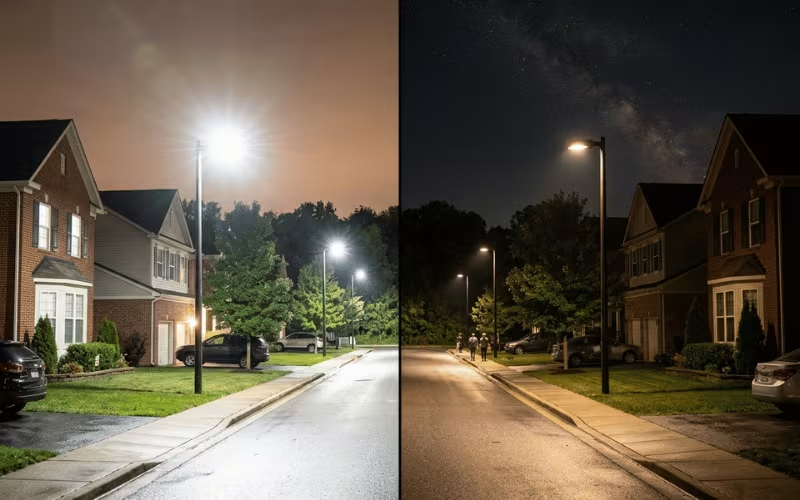
Roughly 80% of the world’s population lives under light-polluted skies, and in the United States and Europe the share climbs even higher. In large metro areas, skyglow can stretch far beyond city limits. I see this problem the same way I see a bad street light layout: once light spills upward and outward, the site starts paying for glare, waste, and complaints.
Wildlife, sleep, and wasted power all push this shift
The pressure comes from three places, and all three matter in real projects.
Migratory birds use natural light cues. Bright night lighting can pull them off course. Sea turtles face the same problem near coastal areas, where artificial light can confuse hatchlings and send them away from the water.
Human health adds another layer. Blue-rich light at night can suppress melatonin and interfere with sleep cycles. That matters more than many buyers expect, especially in residential streets, campuses, and mixed-use sites.
Then there is energy waste. Any light sent upward does no work on the ground. It only raises the power bill and creates glare. That is why I tell clients to stop treating dark-sky rules as a design extra. They are simply a smarter way to light a site.
What Dark Sky Approved Fixtures Must Do
If a fixture fails the core requirements, no branding can save it. The basics aren’t complicated, but they require discipline during selection and installation.
Here is the practical standard I use when reviewing Dark Sky Approved fixtures for real projects. This is also where many IDA lighting decisions go right or wrong.
The non-negotiables at a glance
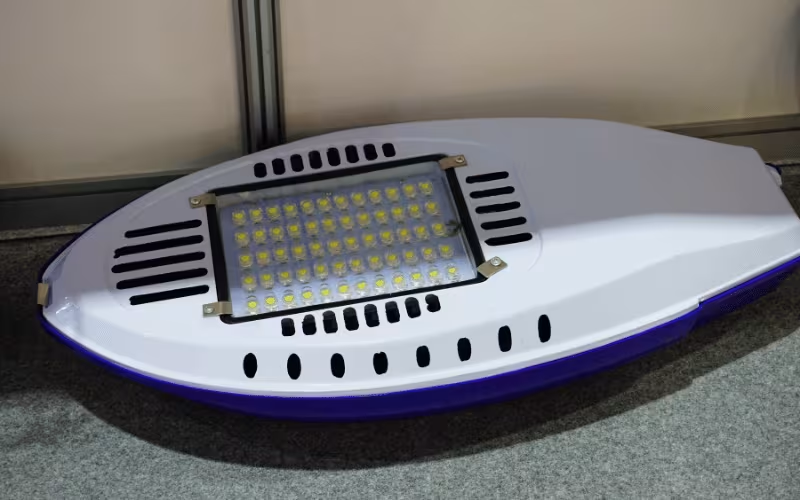
A simple way to read the requirements
| Requirement | What to check | Why it matters |
|---|---|---|
| Shielding | No uplight above 90° | Reduces skyglow |
| CCT | 3000K or less | Lowers blue light impact |
| Lumens | Match the site zone | Prevents over-lighting |
| BUG rating | Low uplight and controlled glare | Improves comfort and compliance |
| Mounting | Correct height and aim | Protects actual fixture performance |
IDA Compliant Fixture Types That Work Best
Not every site needs a custom solution. Most projects fall into a few common fixture types, and each one solves a different problem.
Practical fixture categories to know
-
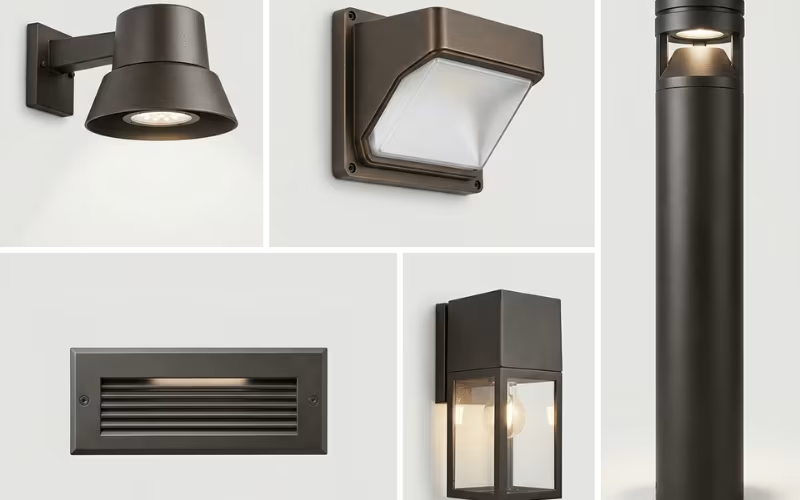
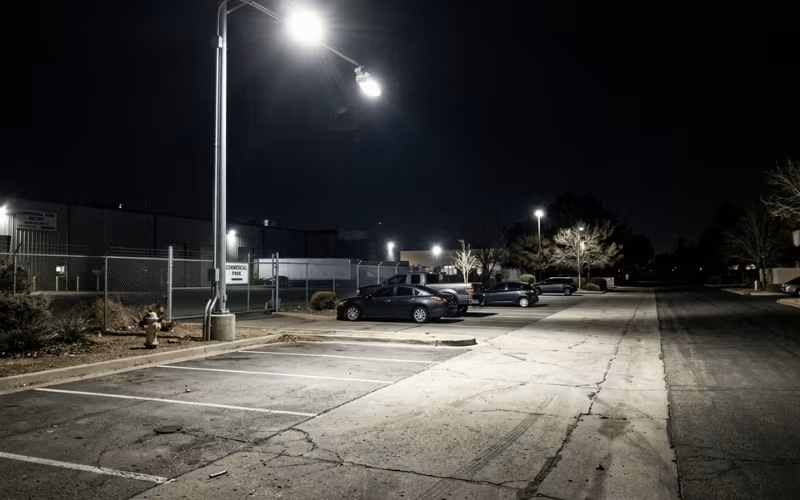
Area and parking lot lights
Best for larger open spaces. Watch distribution carefully so you light pavement, not the sky or neighboring property. -
Wall packs and security lights with motion sensors
Good for building perimeters. Motion control helps reduce burn time and cuts unnecessary output. -
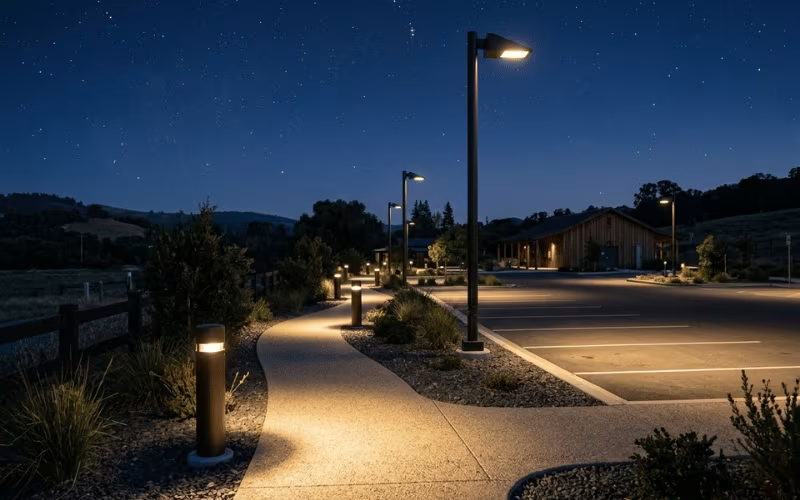
Bollards and pathway lights
Useful for walkways, but only when they control glare well. Poor bollards can shine straight into pedestrians’ eyes. -
Downlights and step lights
These work well in small circulation areas. They guide movement without flooding the whole space. -
Residential fixtures
Porch lights, garage lights, and garden fixtures should stay warm, shielded, and modest in output. Homes rarely need as much light as people think.
How to Choose the Right Dark Sky Fixture
This is where buyers often get pulled off course. The right fixture does not start with a catalog photo. It starts with the site and the task.
I always advise people to work through the choice in sequence. If you skip steps, you usually buy too much light, the wrong distribution, or a fixture that only looks compliant on paper.
Start with the space, not the fixture
Begin with the area you need to light and the footcandle target for that space. A residential walkway, parking area, and rural access road should not receive the same treatment.
Next, check the official DarkSky Approved Product List. Do not rely on phrases like “dark sky friendly” or “night-sky ready.” Marketing language is cheap. Verified listing matters.
Read the spec sheet like a buyer, not a browser
Check these items every time:
- CCT at 3000K or below
- Delivered lumens, not just input wattage
- BUG rating
- Distribution pattern
- Mounting height guidance
If the spec sheet hides these details, I treat that as a warning sign.
Weigh cost against payback
A cheaper fixture can cost more over time if it wastes light, fails early, or creates complaints that force a replacement. Compare purchase price with energy savings, service life, and maintenance needs.
For a simple one-for-one swap, the decision is usually straightforward. For parking lots, campuses, public streets, or mixed-use sites, bring in a lighting designer. That step can prevent expensive mistakes before they get installed on poles.
Common Dark Sky Lighting Mistakes That Cause Problems
Most failures do not come from bad intentions. They come from rushed choices, stock-driven purchases, or installers treating aiming as an afterthought.
Mistakes I see most often
-
The fixture is compliant, but the mounting height is wrong
Result: more glare and poor ground coverage.
Fix: follow the fixture’s intended pole height and spacing. -
Someone chooses 4000K or higher because it was cheaper or available
Result: harsher light and more blue-rich output.
Fix: hold the line at 3000K or lower. -
The site gets over-lit “for safety”
Result: glare can reduce visibility instead of improving it.
Fix: light only the task area to the required level. -
A product claims to be dark-sky friendly, but no one verifies it
Result: the project may fail compliance review.
Fix: confirm it on the official approved list. -
The fixtures are new, but the aiming stays poor
Result: light trespass and wasted output remain.
Fix: re-aim every fixture during commissioning. -
Interior light spill gets ignored
Result: windows keep pushing unwanted light outside at night.
Fix: use shades, controls, or lower nighttime interior output.
FAQs About IDA Lighting and Fixture Compliance
These are the questions buyers, contractors, and property owners ask when they move from interest to action. I’ll keep the answers short, but I won’t keep them vague.
Q: What is IDA lighting?
A: IDA lighting usually means fixtures and lighting layouts that follow dark-sky principles. These include full shielding, warm color temperature, and controlled brightness.
Q: IDA lighting vs. DarkSky Approved — what’s the difference?
A: IDA lighting is often a general term. DarkSky Approved means a product appears on the official approved list.
Q: What color temperature qualifies as dark sky compliant?
A: In most cases, 3000K or lower. Warmer light reduces blue-rich output and creates a softer effect at night.
Q: What are the certification requirements for a fixture?
A: A fixture must control uplight, reduce glare, meet color temperature limits, and pass the technical review standards of the approval program.
Q: Does dark sky lighting cost more?
A: Sometimes the upfront cost is higher. But lower wattage, better control, and fewer complaints often improve long-term value.
Q: Can existing fixtures be retrofitted?
A: Yes, in some cases. But poor housing design or bad aiming can still weaken the result.
Q: Does dark sky lighting compromise security?
A: No. Good lighting improves visibility by reducing glare and placing light where people actually need it.
Q: Are there residential-specific requirements?
A: Yes. Homes usually need lower output, warmer light, and tighter shielding than commercial spaces.
Q: How is compliance verified on a project?
A: Check the DarkSky Approved Product List, read the spec sheets, and confirm the installed height, tilt, and aiming on site.
Q: What is a BUG rating, in plain terms?
A: A BUG rating shows how much stray light goes backward, upward, and into people’s eyes. It helps you spot clean lighting and avoid messy lighting.
Conclusion
Shielding, color temperature, brightness caps, and aim are the four things that matter most in dark-sky lighting. If one fails, the whole fixture setup starts to fall apart, no matter how strong the product claims look. I always tell buyers to stop guessing and check these points first. Audit one site or project against all four, then cross-check every fixture against the DarkSky Approved Product List before you spend money.