
You submit a strong streetlight bid. The luminaire meets every wattage and photometric target. Then a reviewer spots a 5-pin socket where the spec called for a 7-pin. The bid gets rejected.
That single line can undo months of work. And here’s the catch: it’s not just a technical detail. It’s a documentation and compliance problem too.
The 7-pin NEMA socket shows up in more and more streetlight bid requirements. Miss it, and even the best fixture fails review.
So let’s break it down. This guide covers what a 7-pin NEMA socket actually is, why bid specs demand it, how it stacks up against 3-pin and 5-pin versions, and how to verify compliance before you submit.
What a 7-Pin NEMA Socket Actually Is
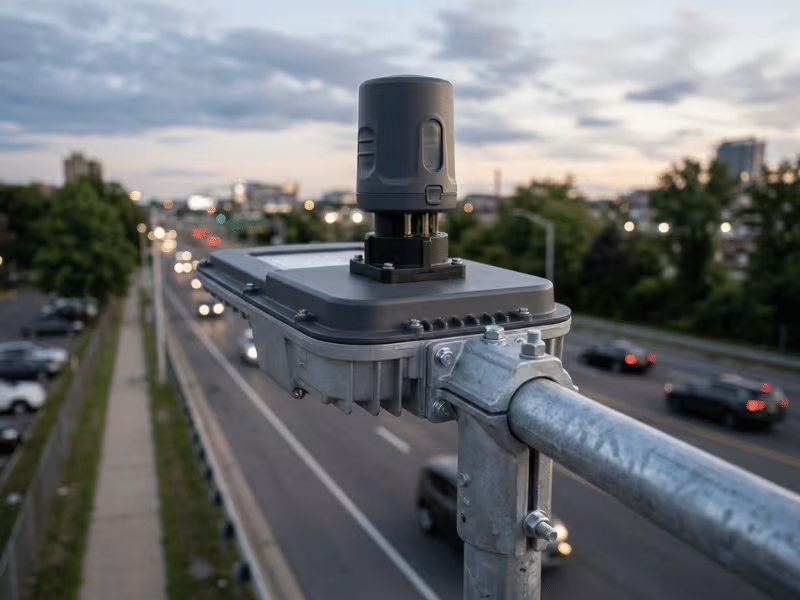
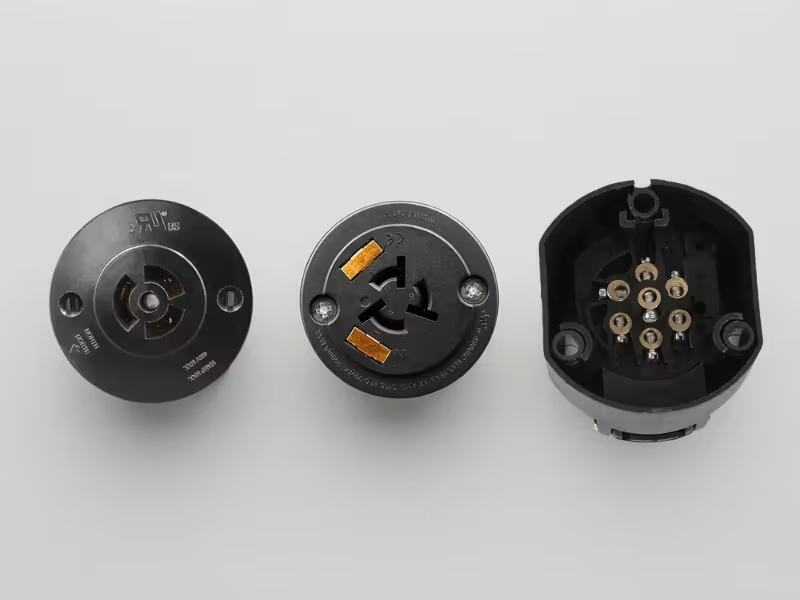
Under ANSI C136.41, a 7-pin NEMA socket is a twist-lock receptacle that sits on top of the luminaire. You’ve probably seen the round cap where a photocell or NEMA control device screws in. That’s the same spot. A control device drops in, twists a quarter turn, and locks into place against the weather.
The 7-pin version simply adds more contacts than older sockets. Those extra pins are what make smart streetlight control possible.
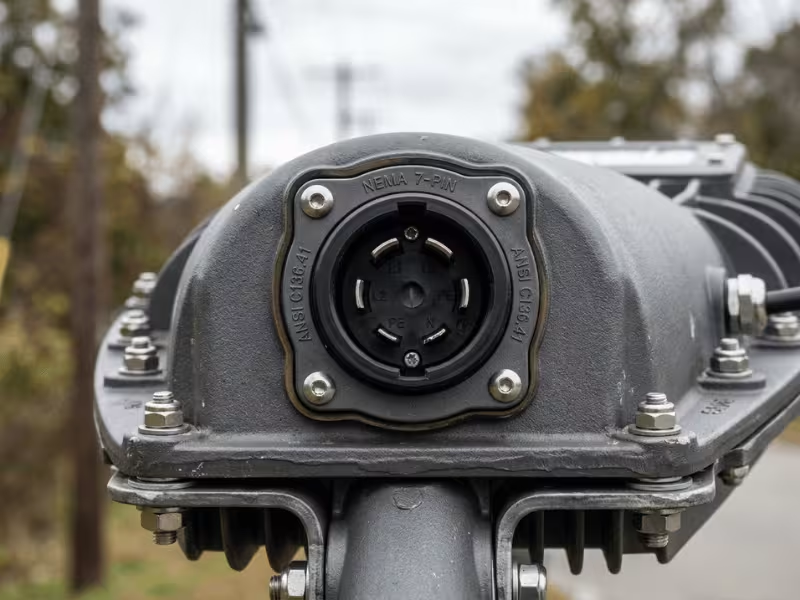
The physical receptacle
The socket is a standardized twist-lock fitting. It mounts on the fixture housing and faces the sky. Any ANSI C136.41 control node will seat into it the same way, no matter which brand you choose.
That twist-lock design does two jobs. It holds the control firmly in wind and vibration. And it seals the connection so moisture stays out.
Because the fitting is standard, the socket itself never needs to change. You swap the node on top, not the fixture below.
What each pin does
The seven pins split into two groups: power and control. Here’s what sits on each side.
Those last four contacts let a node do real work. It can dim the light, report energy use, and send back a fault alert when a lamp fails.
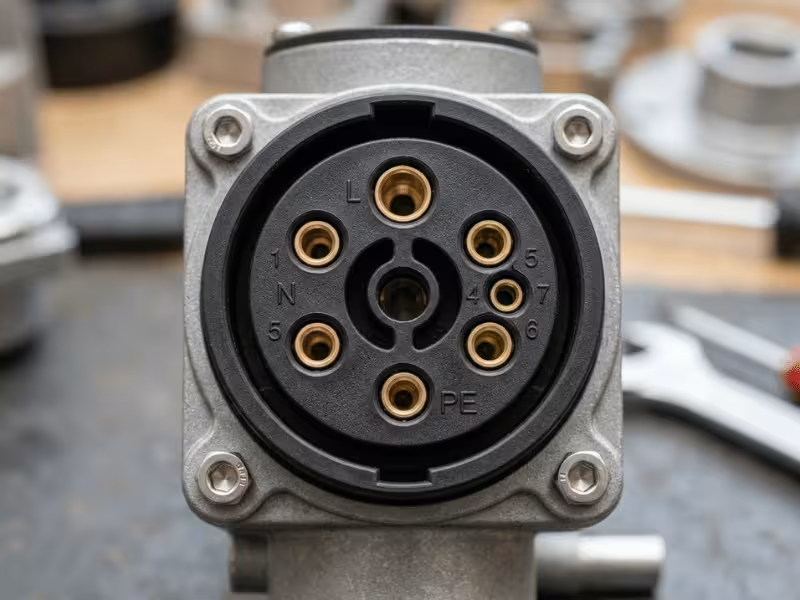
Why the extra pins matter
Earlier ANSI C136.41 sockets came with fewer pins. A 3-pin socket only carried power. A 5-pin socket added dimming, but nothing more.
The 7-pin socket goes further. Its two data contacts open the door to networked and wireless control nodes. This is the piece that turns a single streetlight into part of a managed system.
Think of it as building in the wiring before you need it. You may install a plain photocell today. But the contacts for full control are already there, waiting.
The interface that saves you a rewire
Here’s the part that matters most for your budget. The 7-pin socket is a physical interface. It separates the fixture from the control.
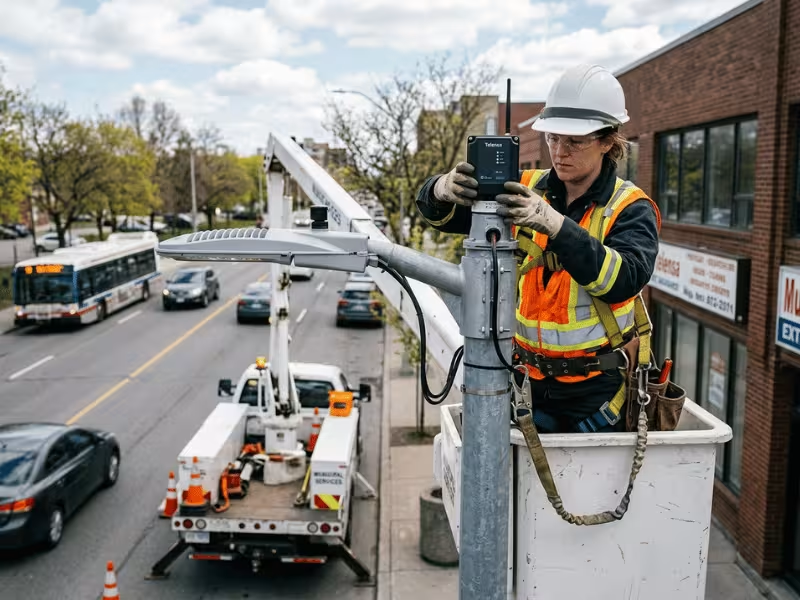
A city can install thousands of luminaires now and add smart nodes years later. Crews just twist the old cap off and twist a new node on. No ladders full of wiring work. No opening the fixture. No re-lamping.
That single trait is why the 7-pin socket shows up in so many specs. It keeps the fixture fixed and the controls flexible.
Why Bid Documents Require the 7-Pin Version
A 7-pin requirement almost never comes down to today’s needs. It comes down to what a city plans to do over the next 15 to 20 years. The socket is cheap insurance against a very expensive problem.
Let me walk through the real reasons buyers write it into their specs.
Future-proofing for smart controls
Most cities aren’t installing control nodes on day one. Budgets don’t allow it. But they know the future points toward networked lighting.
The 7-pin socket keeps that door open. It lets a city add adaptive dimming, remote monitoring, and fault alerts later, with a simple twist-on node. No rewiring. No fixture swap.
Energy codes and dimming rules
Many state and local energy codes now push for dimming or energy reporting. Some tie it to funding. Some make it flat-out mandatory.
You can’t dim a light without dedicated control pins. A 3-pin socket doesn’t have them. The 7-pin version does, which keeps the project on the right side of the code.
One standard across thousands of poles
Picture a maintenance crew managing 8,000 streetlights. If half use one socket and half use another, spare parts and repairs turn into a headache.
Procurement teams pick one socket type to avoid that mess. A single standard means any approved node fits any pole. Crews carry fewer parts and work faster. This kind of standardization matters most on large municipal rollouts, like the smart-city and municipal lighting projects where thousands of fixtures share one control plan.
Freedom to choose vendors
ANSI C136.41 is an open standard. That’s the whole point.
When every socket follows it, a city can invite bids from many control-node makers. No single supplier owns the system. Buyers switch vendors without touching the fixtures they already bought.
Grants, rebates, and warranty terms
Money often drives the spec. Some DOE and utility rebate programs list ANSI C136.41 7-pin compliance as a condition of funding. Skip it, and the rebate check may never arrive.
Warranties can hinge on it too. A non-standard socket sometimes voids coverage on the whole luminaire.
Put these threads together and the logic is clear. The 7-pin socket protects a city’s flexibility, keeps it code-ready, and safeguards the funding that pays for the project.
A Quick NEMA Socket Comparison: 3-Pin vs 5-Pin vs 7-Pin
When you’re weighing socket options for a bid, a side-by-side view clears things up fast. Here’s how the three common types stack up.
On/off photocell only
Older or basic streetlight installs
Limited — usually needs a full fixture replacement to add controls
On/off plus basic 0-10V dimming
Mid-tier retrofit projects
Partial — sometimes works with an interim adapter, but no true networked control
Full dimming plus networked and smart control nodes
New bids and smart-city projects
Direct — twist on a new node as control tech evolves
The pattern is easy to spot. A 3-pin socket locks you into what you buy today. A 5-pin gets you dimming, but stops short of a network.
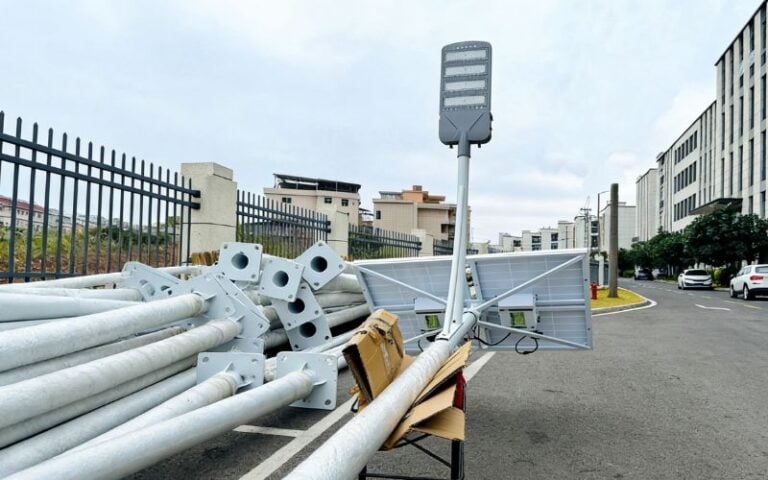
The 7-pin wins on one thing that matters most over time: the upgrade path. A city can add smart controls years later without ever touching the fixture wiring. That flexibility is exactly why most current specs land on the 7-pin, whether the project uses solar fixtures or grid-tied LED street lights.
What Happens When You Bid Without the 7-Pin Socket
Skipping the 7-pin socket rarely ends with a quiet warning. It ends with a rejection, a change order, or a bill that grows for years.
How to Verify 7-Pin Compliance Before You Submit
Catching a socket mismatch before you submit is far cheaper than fixing one after. A few minutes of checking saves a rejected bid. Here’s how I run that check.
Read the spec language word for word
Don’t skim. Look for exact phrasing like “ANSI C136.41 7-pin twist-lock receptacle.” Generic terms such as “photocell receptacle” or “NEMA socket” leave too much room for the wrong part to slip in. If the spec names a pin count, treat it as a hard number.
Confirm the datasheet, not the marketing
Pull the manufacturer’s datasheet and find the line that states ANSI C136.41 7-pin certification in plain words. “NEMA compatible” is not the same thing. If the sheet only hints at it, ask for the certification document.
Count the pins on a real sample
When you can, get a production sample in hand. Count the pins yourself. Check that the contact layout, keying, and locking collar match the standard. A photo won’t catch a subtle mismatch.
Build it into your submittal
Drop this checklist straight into your submittal package so reviewers confirm compliance at a glance.
That single page cuts back-and-forth and keeps your bid moving.
Common Objections and Straight Answers
I hear the same pushback on 7-pin specs all the time. Here’s how I answer each one.
FAQs
The Bottom Line
The 7-pin socket is one small line on a spec sheet. But it carries weight far beyond its size.
Get it right, and your bid stays in the running. Your fixtures stay ready for whatever controls a city adds next.
The math is simple. A few extra dollars per fixture today beats a rejected bid, a change order, or a bucket-truck retrofit tomorrow.