
Shoppers see “SMD” and “COB” on LED spec sheets all the time. Then the same question follows: which one is better?
That sounds simple, but in real lighting projects, people rarely compare SMD and COB as abstract technologies. They compare lighting effect, beam quality, fixture design, heat control, visual comfort, and cost. In other words, they want to know which option works better in the actual product they plan to buy.
I look at this question from the fixture level, not just the chip label. A good LED system is never just about the emitter. The housing, heatsink, driver, optics, and diffuser all step in and shape the final result.
This guide does not try to turn the topic into a textbook. It helps you make a practical choice. If you are choosing a downlight, strip, bulb, or photography light, this article will show what actually changes between SMD and COB, where each one performs well, and what you should check before you spend money.
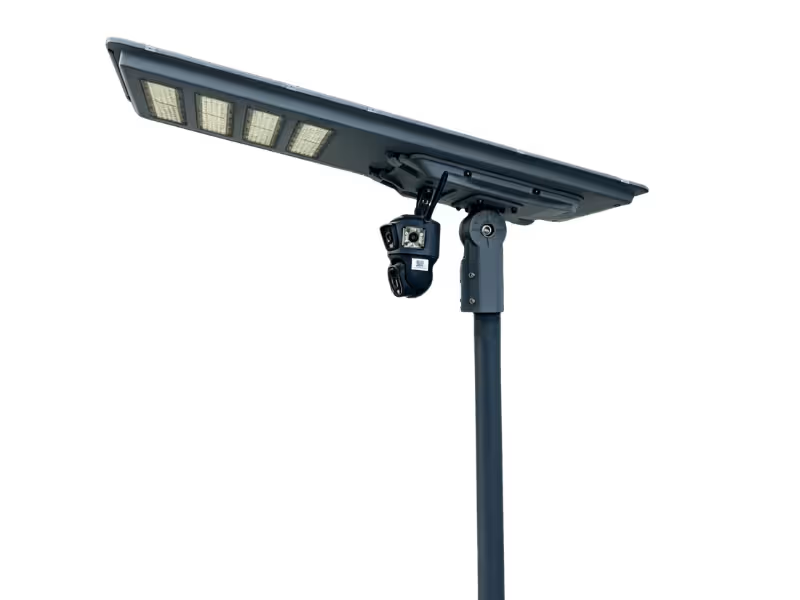
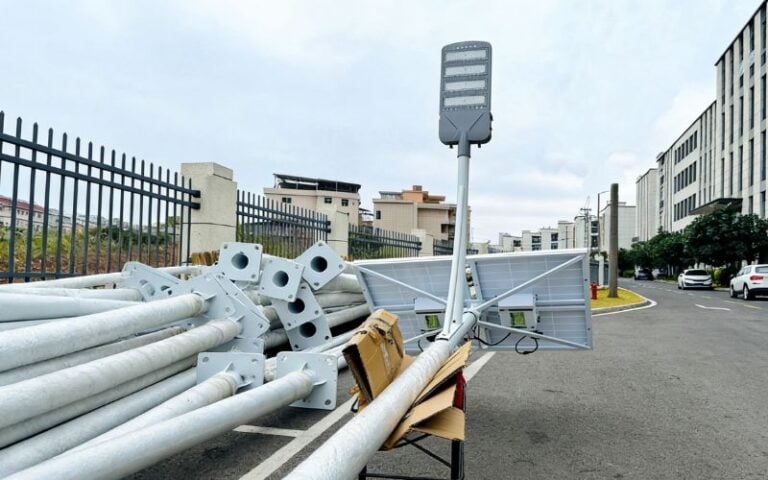
In outdoor and municipal lighting, this same logic applies. Whether you are reviewing a modern LED Street Light or comparing different fixture structures for a custom project, the chip type matters less than many buyers think. What matters more is how the full light performs once it is installed.
SMD vs COB: The Core Difference in Simple Terms
Strip away the jargon, and the comparison comes down to one thing: how the LED chips sit on the board.
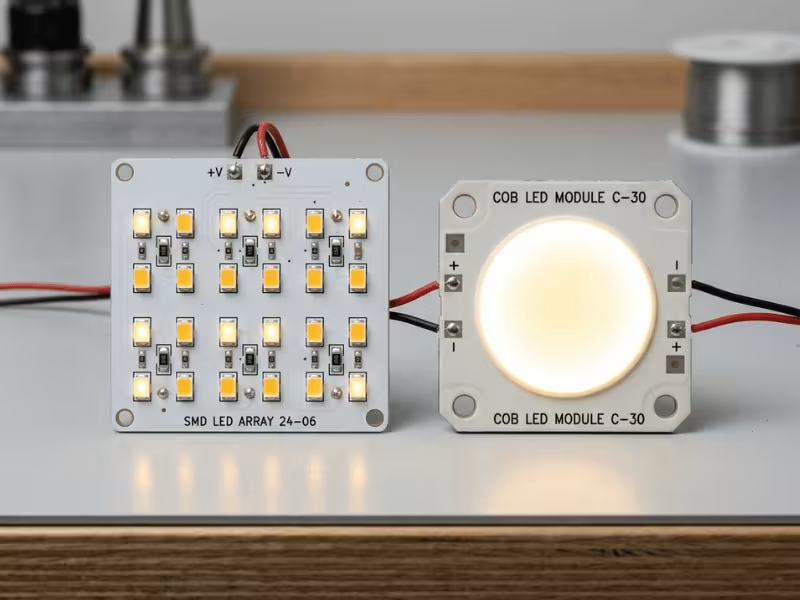
SMD stands for surface-mounted device. Each LED chip lives inside its own small package, and each package gets soldered onto the circuit board as a separate light point. When you look at an SMD array without strong diffusion, you can often see many individual dots.
COB stands for chip-on-board. Instead of using many separate packages, COB places many bare chips directly onto one substrate and covers them with a shared phosphor layer. The result looks more like one continuous light-emitting surface.
That structural difference changes several things at once. It affects how smooth the light looks, how easily the fixture controls the beam, how the heat spreads, and what type of fixture design makes sense.
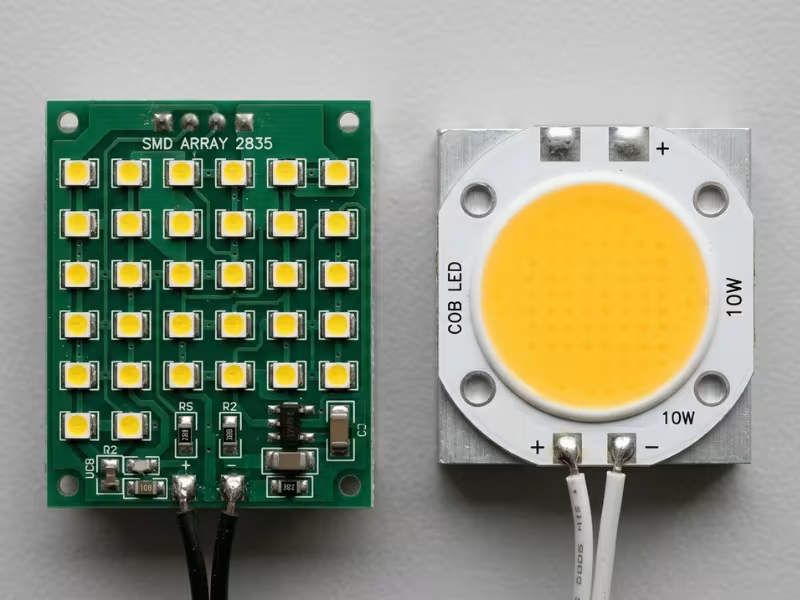
If you remember just one point, remember this: SMD builds light from many separate points. COB builds light from one tighter, more unified emitting area. Almost every practical difference grows from that.
If You Want a Quick Answer, Choose by Application, Not by Label
Many buyers ask, “Is SMD better or COB better?” I would not frame it that way. I would ask, “What am I lighting?”
That question gets you to a useful answer much faster.
Recessed Downlights and Spotlights
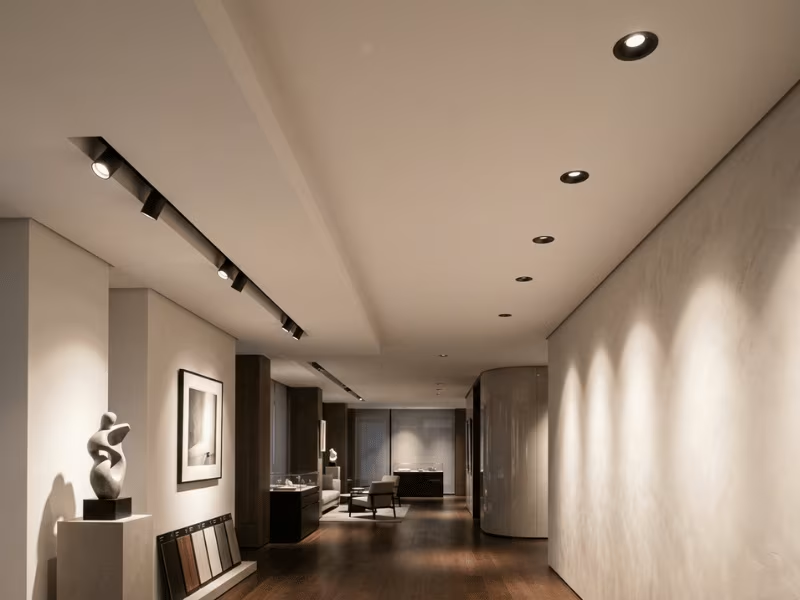
For recessed downlights and spotlights, I usually start with COB.
A spotlight wants a clean beam. It wants a source that works well with reflectors and lenses. COB fits that job well because it behaves more like one concentrated source. The beam looks cleaner. The cutoff often looks more controlled. Shadows look more natural and less messy.
That does not mean every COB downlight is good. I have seen many low-cost fixtures that use a decent COB chip but pair it with a weak driver and a thin heatsink. Those lights may look strong at first, then lose output early or shift in color after long use.
So if you are buying a downlight, do not stop at “COB.” Check the thermal design and driver quality too. The chip opens the door, but the fixture decides whether the light will perform well after months or years of use.
LED Strips
For LED strips, SMD still leads in the broader market.
Why? Because SMD strips are flexible, widely available, easier to price, and available in many densities, voltages, and color options. If the strip sits inside a deep aluminum profile or behind trim where no one sees the actual emitting points, SMD usually makes perfect sense.
But if the strip is visible, COB strip becomes much more attractive.
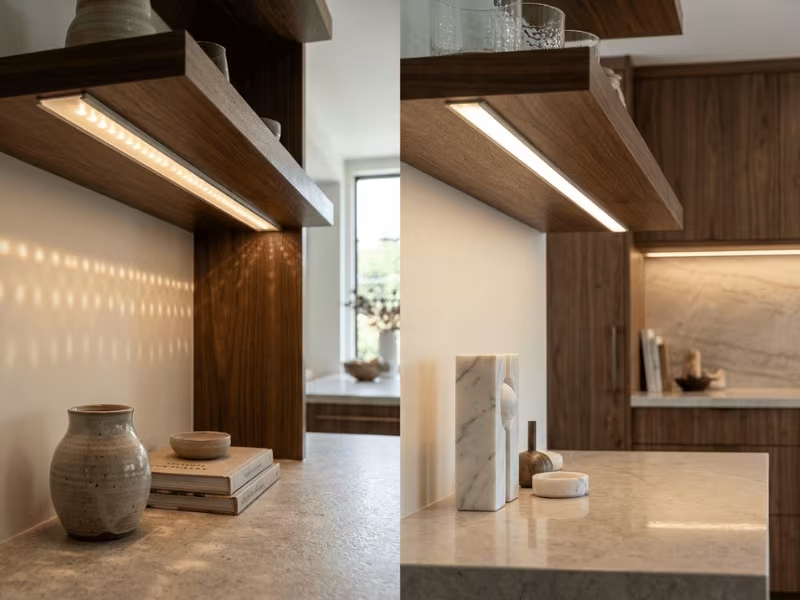
A COB strip places chips so densely and coats them so continuously that the eye sees a clean line of light instead of a dotted row. That matters in cove lighting, open shelving, display edging, under-cabinet runs with shallow channels, and architectural linear details.
This is one of the few places where the visual difference becomes obvious even to a non-technical buyer. A visible SMD strip can make a refined interior look cheap if the dotting shows. A COB strip often solves that immediately.
Bulbs and Retrofit Lamps
For common bulbs and retrofit lamps, SMD is the usual winner.
The reason is simple. Most bulbs already use a diffuser, frosted globe, or internal optical structure. That means the separate light points of SMD get blended before they reach the eye. Once the diffuser does its job, the visual drawback largely disappears.
At the same time, SMD bulb production is mature, scalable, and cost-effective. That makes it easier for manufacturers to produce large quantities at stable quality and competitive price points.
In this fixture class, paying extra for COB often brings little real benefit. The diffuser has already solved the dot problem, so the system does not gain much from a more unified source.
Photo and Video Lighting
Photography and video lighting often use both, but for different jobs.
COB commonly serves as a key light. It works well when the user wants to mount softboxes, reflectors, barn doors, projection attachments, or other modifiers. Because the source stays compact and more concentrated, it gives better control.
SMD panels do something else. They spread light more broadly and more softly right from the fixture itself. That makes them useful for fill lighting, background wash, or soft facial illumination.
So in studio work, the smarter question is not which one is better overall. The smarter question is what kind of light shape you want. If you want punch and control, COB often steps forward. If you want broad softness, SMD panels often make more sense.
What Actually Changes Between SMD and COB
Once you move past the label, five factors drive the real-world difference: brightness, heat, beam quality, cost, lifespan, and failure pattern.
Brightness and Efficacy
Many buyers assume COB is always brighter. It is not.
Brightness depends on chip count, drive current, optics, and driver efficiency. A strong SMD array can easily outperform a weak COB module. The emitter name alone tells you very little about final output.
That is why I always tell buyers to look at delivered lumens, not just the emitter label. Delivered lumens reflect the light that actually leaves the fixture. Two products may both say COB, yet one may produce far better useful output because it uses better optics and a better driver.
The same logic applies to efficacy. A manufacturer can push either SMD or COB harder to raise brightness, but that often hurts lumens per watt. A softer drive current can improve efficiency, but then the fixture may need more chips or more surface area.
- rated wattage
- delivered lumens
- beam angle
- test conditions
Those numbers tell a more honest story than any “high-power COB” claim on a sales page.
Heat and Thermal Management
This is one of the most misunderstood parts of the topic.
At equal wattage, SMD and COB generate roughly similar total heat. The important difference is not total heat. It is heat density and heat distribution.
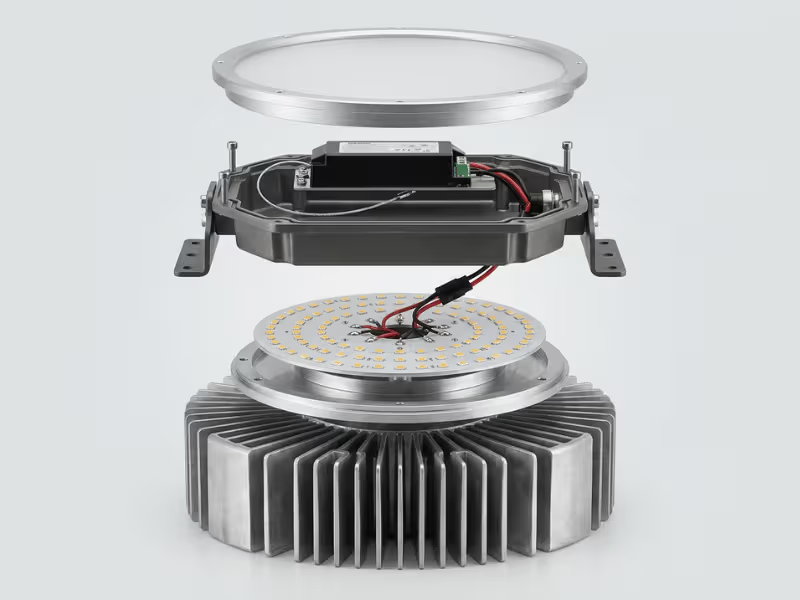
SMD spreads multiple packages across a wider area. COB concentrates many chips into a smaller zone. That means COB asks more from the heatsink in one local area, while SMD spreads the load across the board.
Neither design wins by default. A well-cooled COB fixture can run beautifully and last for years. A poorly cooled COB fixture can fade too quickly. An SMD array may spread heat better, but it also carries many solder joints and many individual package points that can age unevenly.
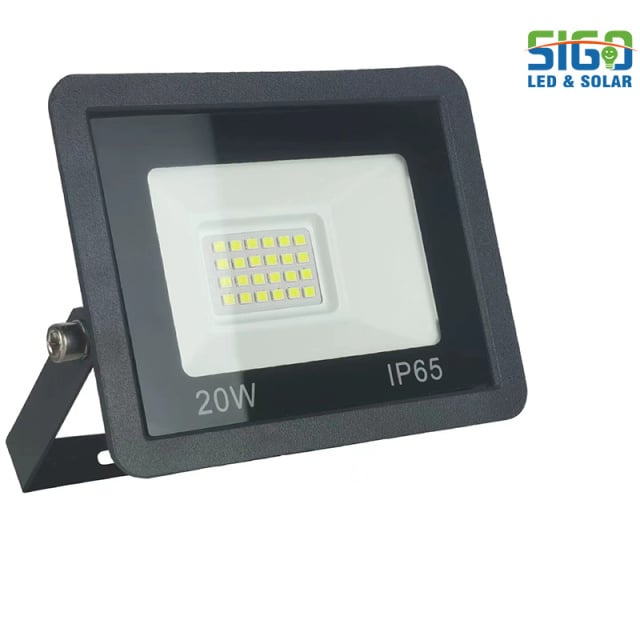
This matters in outdoor and infrastructure lighting too. A street or flood fixture may face high ambient temperatures, long nightly runtime, dust, and limited airflow. Under those conditions, the heatsink and driver do far more to protect service life than the words SMD or COB.
Beam Quality, Uniformity, and Glare
This is where many real projects separate good lighting from disappointing lighting.
SMD can look grainy because the chips sit apart. If the optical system does not blend them deeply enough, the eye catches the dots. That can create a cheap visual effect, especially in visible strips, shallow channels, or fixtures with minimal diffusion.
COB usually creates a smoother emitting surface. That helps the beam look cleaner and helps the fixture produce a more unified pattern. In spot and accent applications, this often gives better visual refinement.
You can see the difference clearly in real use:
Glare also enters the conversation. A poorly diffused SMD source can feel harsh because the eye sees small bright points. A COB source can still create glare if it is too intense or badly aimed, but it usually looks visually cleaner when the optics are done well.
So if the project depends on visual finish, source appearance, or polished beam quality, COB often gains an edge. If the project values flexibility and broad diffuse output more than beam refinement, SMD remains very competitive.
Cost at the Fixture Level
A cheaper emitter does not always mean a cheaper finished light.
Many buyers compare chip cost and stop there. That is too narrow. The real fixture cost includes the driver, heatsink, PCB design, optics, housing, diffuser, assembly labor, quality control, and expected replacement rate.
For example, a COB fixture may need a larger or better-engineered heatsink. That raises system cost. An SMD product may use a lower-cost chip layout, but if it also needs better diffusion or denser assembly, the final cost can rise there too.
So you should not ask, “Which emitter is cheaper?” You should ask, “Which full fixture gives me the best balance of performance, lifespan, and installed cost?”
That question becomes even more important in larger projects, where maintenance, labor, and replacement cycles can easily outweigh small differences in chip price.
Lifespan and Failure Modes
L70 and L90 ratings help, but they do not tell the whole story.
These ratings show how long the light takes to fall to 70% or 90% of its original output under test conditions. They are useful, but test conditions do not fully match real installations.
Real lifespan depends heavily on:
SMD and COB also tend to fail differently.
An SMD fixture may age unevenly. Some chips may dim faster than others. Solder joints may fatigue after repeated heat cycles. You may see partial failure, patchy light, or small zones shifting in output.
A COB fixture often behaves more as one unit. If the thermal design stays solid, it can age very evenly. If the cooling is poor, the whole source can depreciate faster as a group.
So when someone asks which lasts longer, my answer is direct: neither type wins without good thermal and electrical design. If the fixture handles heat badly, the chip type will not save it.
Common Myths That Confuse Buyers
This topic attracts a lot of oversimplified claims. Let me clear up the most common ones.
The pattern behind these myths is simple: the label describes construction. It does not guarantee performance.
What to Check Before You Buy
This is the section that saves buyers the most trouble.
Do not stop at SMD or COB. Use the following checklist to judge whether the fixture is actually right for your project.
Start with lumens, beam angle, and color temperature. These define what the light will do in the space.
Then look at CRI and R9 if the application involves skin tones, merchandise, food, or display work. Many buyers focus on brightness and ignore color quality, then wonder why the light looks flat or unpleasant.
Next, check dimming and flicker. A light may look acceptable at full output but perform poorly when dimmed. In video work, flicker can become a direct problem. In commercial interiors, poor dimming can damage user comfort.
After that, study the thermal design. I pay close attention here because it often predicts long-term performance better than marketing language does. Heavy metal around the source, smart airflow design, and honest ambient ratings are good signs. Thin housings with high power claims deserve caution.
Also ask about batch consistency. If you are buying multiple fixtures, especially for one visible project, color consistency matters. Even a technically bright product can look poor if one unit runs warmer or greener than the next.
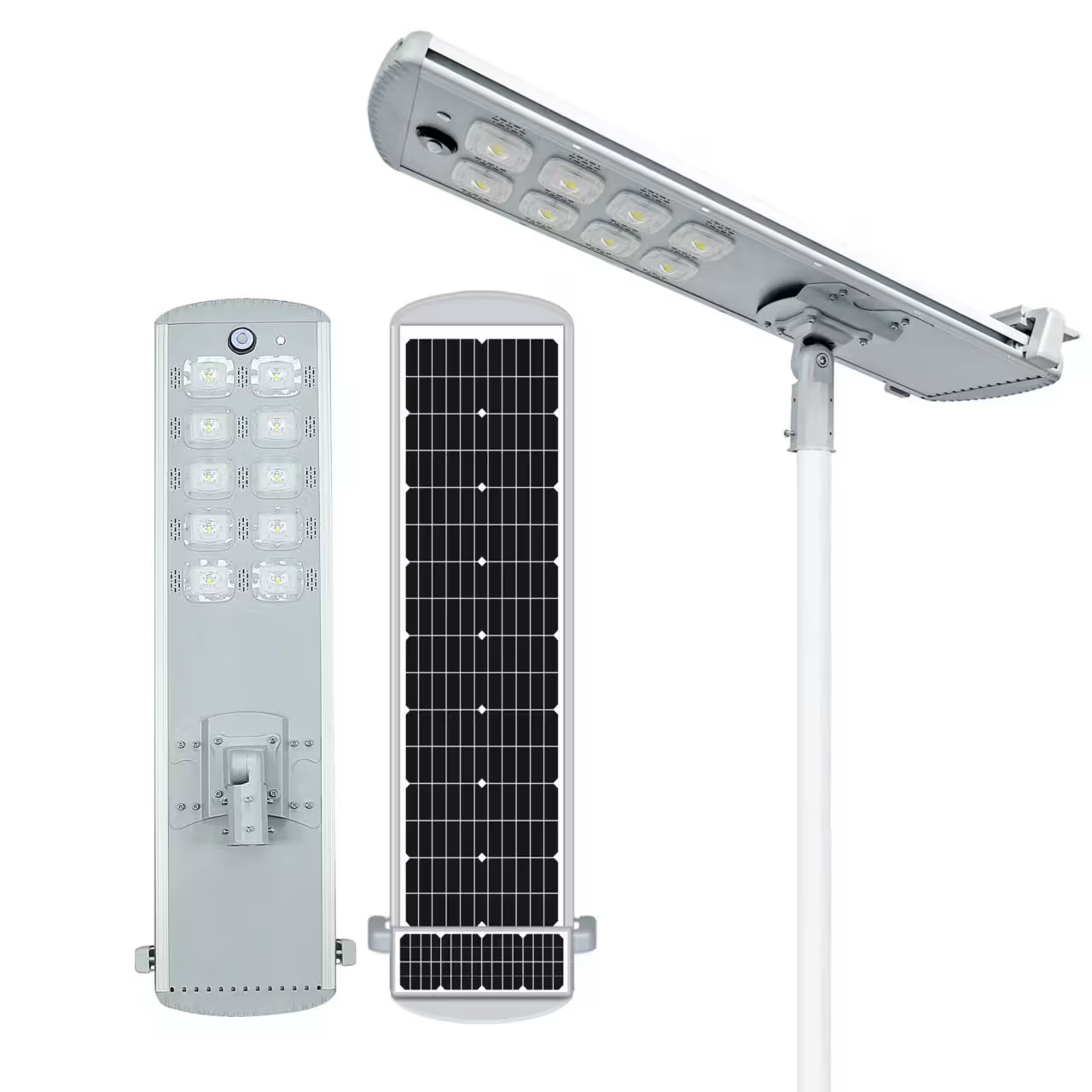
If your project involves off-grid or solar-powered systems, the same disciplined approach applies. Matching the light source to the full system matters more than the emitter label alone. That is especially true in products like Solar Street Light systems, where optics, battery strategy, runtime targets, and thermal conditions all interact.
Frequently Asked Questions
These are the questions buyers ask when they move from interest to action. I’ll keep the answers short, but I won’t keep them vague.