

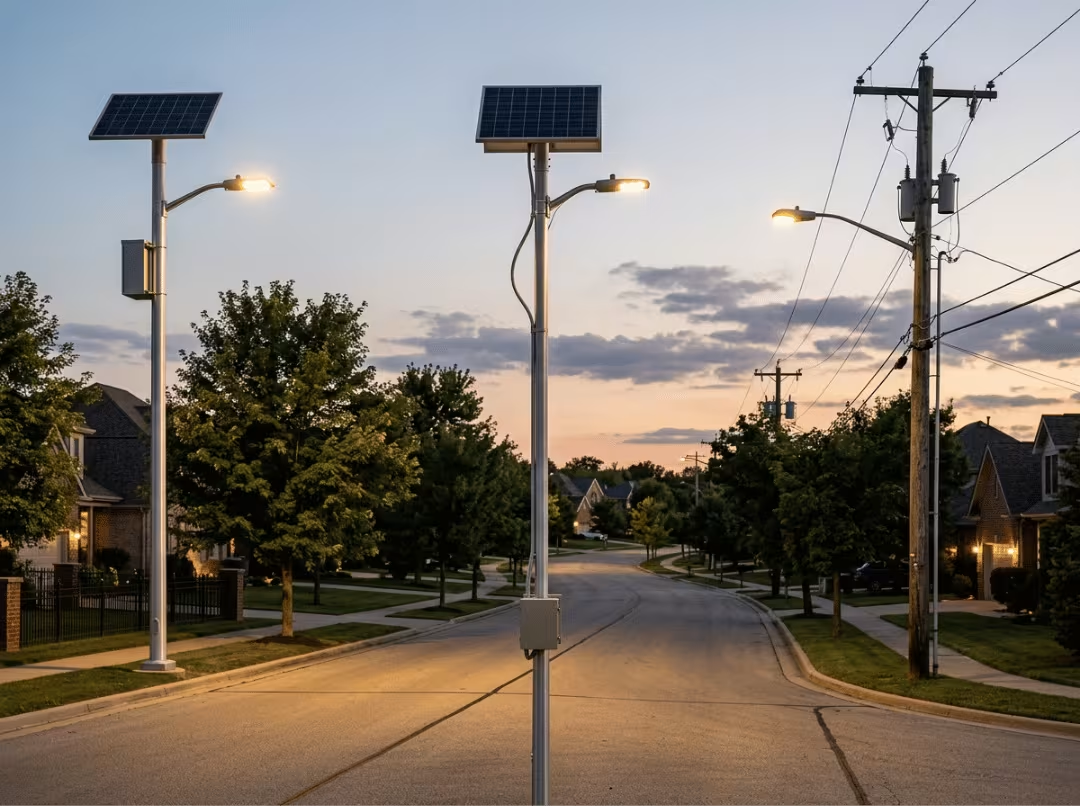
Choosing a street lighting system looks simple until you request three quotes and get three completely different price tags, runtime promises, and maintenance plans. The truth is, there’s no universal winner. The “best” system depends on your site, your weather, and how much downtime you can tolerate.
As a manufacturer, we see the same story repeat: buyers pick a system based on a brochure, then discover months later that the lights dim in winter or the electric bill never dropped. This guide fixes that. You’ll learn how each system actually behaves, how to evaluate them against real site conditions, and how to choose without falling for a one-size-fits-all pitch.
In this post: how to evaluate lighting options, an honest breakdown of all three systems, side-by-side comparison tables, and a decision guide built around real sites.
Start With How You’ll Evaluate, Not the Product
Before you compare anything, get clear on what your project actually values. The “winner” changes depending on which of these matters most to you.
- Total cost of ownership: Purchase, installation, electricity, and battery replacement over 20–25 years, not just the sticker price.
- Reliability tolerance: Can the lights go dark during a multi-day storm, or is uptime non-negotiable?
- Grid access: Is utility power already at the site, or will trenching cost you thousands per mile?
- Weather reality: How many consecutive cloudy or snowy days does your location get in the worst month?
- Maintenance capacity: Do you have a team for battery and panel service, or do you need a plug-and-play solution?
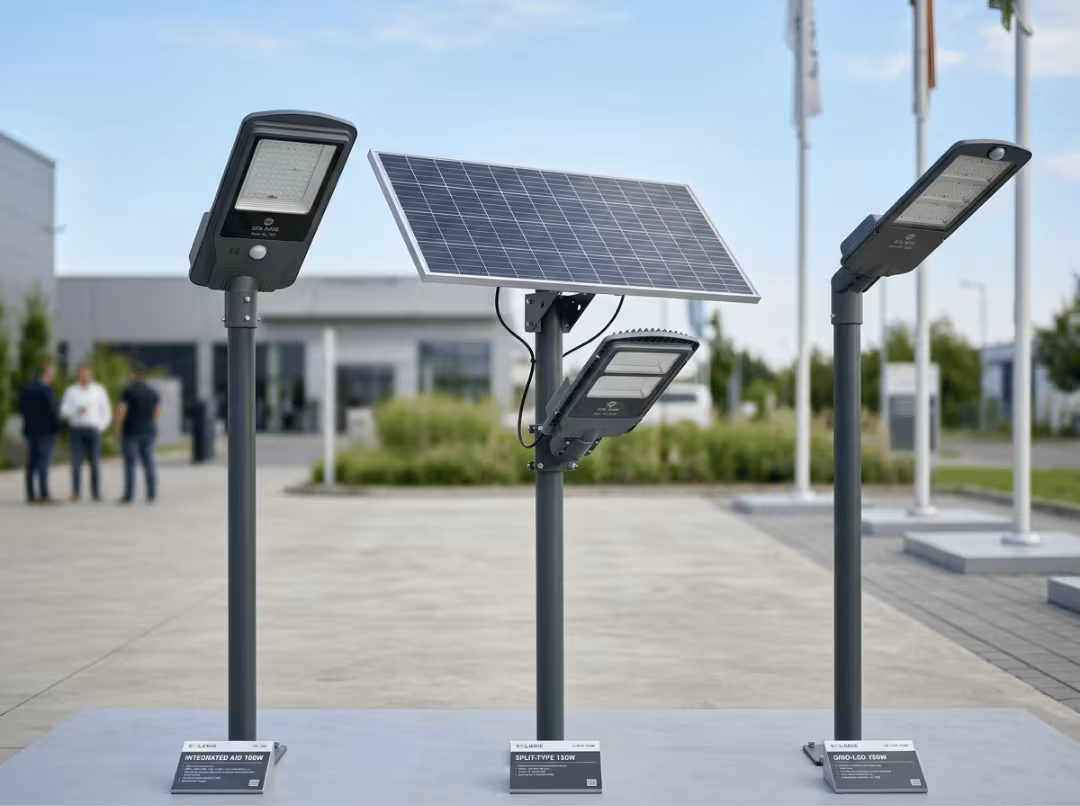
Nail these down first. Everything below becomes easier once you know your priorities. For a broader buying checklist, our guide on 10 things to consider when buying solar street lights complements this comparison.
The Three Systems at a Glance
|
Feature |
Grid-Only |
Pure Solar |
Hybrid |
|---|---|---|---|
|
Power source |
Utility grid |
Solar panel + battery |
Solar + battery + grid backup |
|
Energy cost |
Monthly bill |
$0 |
Low (grid only when battery is low) |
|
Behavior in outage |
Dark |
Lit if battery holds charge |
Lit until battery depletes |
|
Install cost |
High without nearby grid |
Moderate |
Highest |
|
Best for |
Dense urban, existing wiring |
Remote, sunny sites |
Harsh winters, critical uptime |
Hybrid Street Lights: Reliability Without the Full Grid Bill
Hybrid is the system most buyers underestimate. It runs on solar first, stores energy in a battery, and pulls from the grid only when the battery drops below a set threshold (often 30–40%). You get renewable savings without the outage risk that scares off pure-solar buyers.
Here’s where the real value lives:
Year-round reliability. When solar generation collapses in winter or during a three-day storm, the grid quietly keeps the lights on. You don’t gamble on the weather.
Grid consumption drops sharply. In sunny regions, a well-configured hybrid system can pull as little as 10–20% of what a grid-only fixture uses. Solar carries the load; the grid only fills the gaps.
You can spec a smaller battery. This is the part people miss. Because the grid backs you up, engineers don’t have to oversize the battery for the worst week of the year. A smaller battery means lower upfront cost and less to replace later.
Room to adapt. If rates climb or the grid gets shaky, you can add battery capacity or panel area instead of replacing the whole system.
The tradeoffs are real, though. You pay for both the solar hardware and the grid connection, so it’s the most expensive option at install. It also has more parts to troubleshoot. And if the controller is poorly configured and defaults to grid power too early, your savings evaporate. Commissioning matters here more than with any other system.
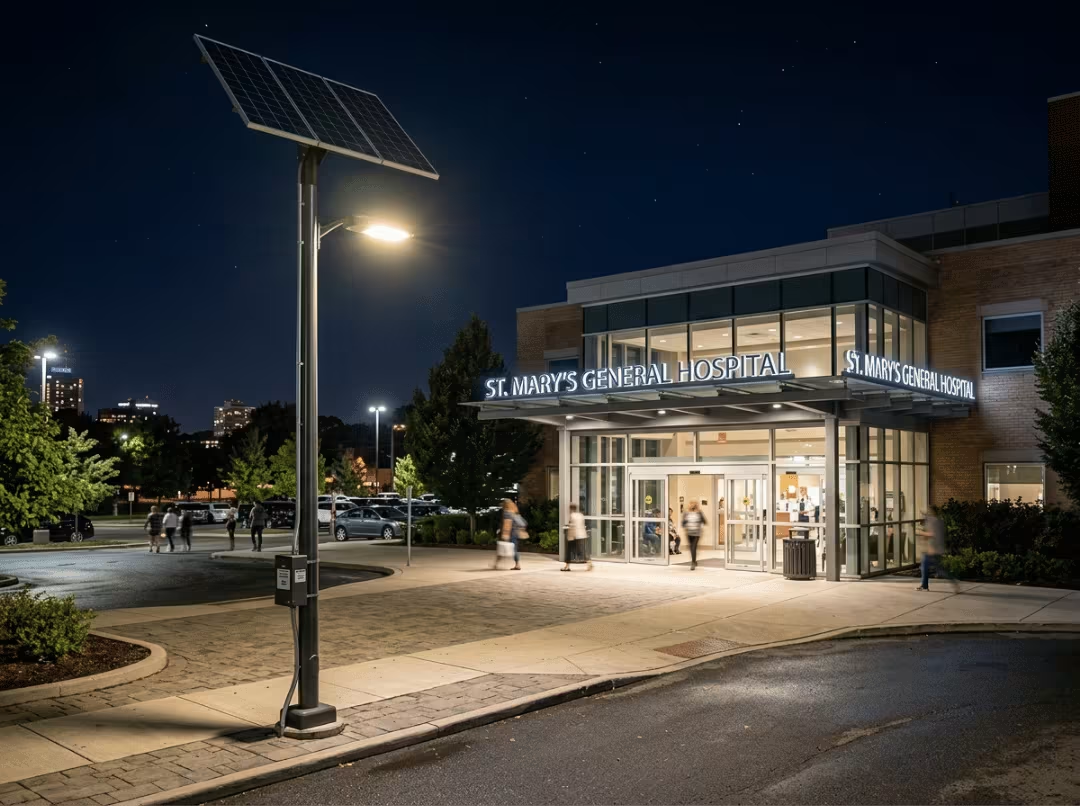
Choose hybrid when uptime is non-negotiable, and your climate can’t be trusted: emergency routes, hospital entrances, security perimeters, and regions with long winters or heavy seasonal cloud.
Pure Solar Street Lights: Great Freedom, Honest Limits
Pure solar is fully off-grid. A panel charges a battery by day; the battery powers the LED at night. No utility connection, no trenching, no monthly bill. For the right site, it’s unbeatable.

Where it shines:
- Zero electricity costs once installed.
- Fast deployment in remote areas, no wiring required.
- Independence from rate hikes and grid outages.
- Ideal for temporary or mobile use, such as construction sites and events.
Now, the honest part, because this is where projects go wrong.
Weather dependency is the whole game. Consecutive cloudy days drain the battery. If the system wasn’t sized for that, the lights dim or shut off exactly when you need them.
Size for worst-case, not averages. This single mistake causes most pure-solar failures. Engineers who size a battery around the annual average sunlight will get failures during the darkest week of winter. Use historical weather data for the worst month, then add margin. Oversizing costs money, yes, but an undersized system that goes dark costs more in liability and callbacks.
Batteries degrade. Expect replacement every 5–10 years, sooner in extreme heat or cold.
Theft and shading are practical risks. Panels and batteries have resale value, and a single tree or building can gut your generation. Run a shade analysis before you commit to a location.
For a fuller look at the upsides and downsides, see our breakdown of solar street light advantages and disadvantages.
Choose pure solar when there’s no utility power within reach, the site gets strong, consistent sun, and you can accept some outage risk in bad weather.
Grid-Only Street Lights: Still the Right Call Sometimes
Don’t write off grid-only. When utility power is already at the site, it’s often the most practical choice. A photocell or timer switches an LED fixture on at dusk, and modern LEDs cut energy use by 50–70% versus old sodium or metal halide lamps.
The strengths are straightforward: lowest upfront fixture cost, proven reliability where the grid is stable, no battery to maintain, and unlimited runtime. Engineers know exactly how to spec it, and most codes assume this setup.
The weaknesses are just as clear. You pay for every kilowatt-hour forever. When the grid fails, the lights go dark. And running utility power to a remote site can cost $10,000–$50,000 per mile of trenching, plus permitting delays.
Choose grid-only when the site already has power, budget prioritizes low upfront cost, you don’t want battery maintenance, or the climate makes solar generation unreliable.
Head-to-Head: Cost, Reliability, and Maintenance
Cost Over 20 Years
|
Cost factor |
Grid-Only |
Pure Solar |
Hybrid |
|---|---|---|---|
|
Fixture and pole |
Lowest |
Moderate |
Highest |
|
Installation |
Low (with grid access) |
Moderate |
High |
|
Electricity |
Highest over time |
None |
Low to moderate |
|
Battery replacement |
None |
Every 5–10 yrs |
Every 7–12 yrs (smaller battery) |
|
20-year total |
High if rates rise |
Lowest in sunny climates |
Moderate to low |
How Each Behaves in the Real World
|
Scenario |
Grid-Only |
Pure Solar |
Hybrid |
|---|---|---|---|
|
Normal night |
Always lit |
Lit if charged |
Lit (solar first, grid backup) |
|
3-day heavy storm |
Always lit |
Dims or shuts off |
Lit (battery, then grid) |
|
Multi-day grid outage |
Dark |
Lit while battery holds |
Lit until battery depletes |
Note the tradeoff hiding in that last row. Pure solar wins during a grid blackout, but only as long as the battery lasts. Hybrid loses that specific scenario because its backup is the grid. Under normal conditions, the hybrid rarely fails.
Maintenance Load
- Grid-only: Fixture swaps, photocell checks, occasional wiring inspection.
- Pure solar: Battery monitoring, panel cleaning, charge controller diagnostics, theft prevention.
- Hybrid: All of the above, plus grid connection inspection and controller configuration.
Which System Should You Choose?
Match the system to your site’s realities, not to a supplier’s favorite product.
Go grid-only if: the site already has utility power, you want the lowest upfront cost, you’d rather skip battery maintenance, or your weather regularly kills solar output.
Go pure solar if: there’s no grid within a reasonable distance, you want zero electricity bills, the site gets strong, reliable sun, and you can tolerate outage risk during long cloudy stretches.
Go hybrid if: you need dependable light every night of the year, your region has harsh winters or heavy seasonal cloud, and you want to cut electricity and carbon without gambling on uptime. Budget for a higher installation cost in exchange for lower long-term costs.
Mistakes That Wreck These Projects
- Sizing pure solar for average weather. Use worst-month data, not annual averages, or the lights fail in winter.
- Ignoring battery replacement in the budget. A replacement can equal 30–50% of the original system cost.
- Skipping remote monitoring. Without it, you learn a light failed only when someone reports darkness.
- Buying hybrid without checking controller settings. Wrong thresholds mean the grid runs too often, and your savings vanish.
- Forgetting shade and pole placement. A nearby tree or building can slash solar output. Pole height also shapes coverage and panel exposure, covered in our guide on the best height for solar street lights.
- Assuming all fixtures are equal. Panel efficiency, battery chemistry, and optics vary widely. Spec tested components from established makers.
Frequently Asked Questions
How long does a solar street light battery last before replacement?
Most quality LiFePO4 batteries run 5–10 years. Extreme heat or cold shortens that, so factor in climate when forecasting replacements.
Can hybrid street lights stay on during a grid outage?
Yes, until the battery depletes. Hybrid runs on stored solar first, so a short outage often passes with no interruption. Extended blackouts are the one scenario in which a hybrid can eventually go dark.
Do solar street lights work in winter or heavy snow?
They can, if sized for it. Shorter days and snow-covered panels reduce charging, so worst-case sizing and a good panel tilt to shed snow are essential. In severe climates, hybrid is often the safer pick.
How much does a utility connection cost for a remote street light?
Trenching typically runs $10,000–$50,000 per mile, and transformer upgrades push it higher. This is often the number that makes solar or hybrid the cheaper long-term option.
Can I retrofit an existing grid-only light with solar or hybrid?
Often yes. A grid-only pole can become hybrid by adding a solar panel, battery, and controller, a practical way to reduce energy use without a full replacement.
What certifications should I look for?
Look for a minimum IP65 rating for weather sealing, plus tested battery and LED lifespan figures. Ask for real photometric and autonomy data, not marketing claims.
How do motion sensors affect battery sizing?
Dimming to around 30% when no one’s present and jumping to full brightness on detection significantly cuts the nightly draw. That lets you specify a smaller battery or extend the battery life of the same one.
Which system is cheapest overall?
In sunny climates with no nearby grid, pure solar usually wins on a 20-year cost basis. Where the grid already exists, grid-only can be cheapest upfront. Hybrid lands in the middle, with low running costs and high reliability.
The Bottom Line
No single system wins every project. Grid-only makes sense where power already exists, and budget rules the decision. Pure solar is unbeatable on remote, sunny sites with some tolerance for bad-weather outages. Hybrid is the strongest all-rounder when reliability can’t slip and you still want to cut electricity and carbon.
Run the numbers for your exact location, size for the worst week rather than the average, and don’t let a one-size-fits-all pitch make the call for you. If you want help matching a system to your site conditions, our team can spec the right configuration before you buy.