
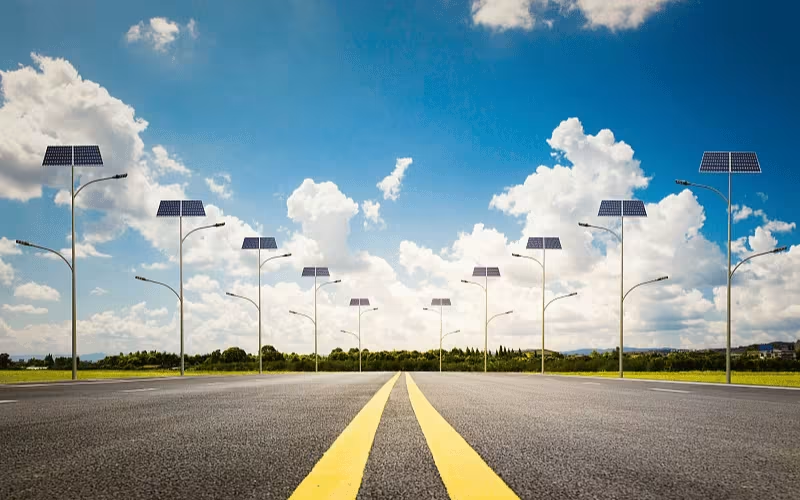
Solar street lights have rapidly become an absolutely essential component of modern outdoor lighting solutions, offering an incredibly eco-friendly, cost-effective, and highly versatile alternative to traditional grid-tied systems. By harnessing the abundant, renewable power of the sun, these innovative lighting fixtures drastically reduce electricity consumption and eliminate the need for complex, expensive underground wiring. Whether you are illuminating a bustling city street, a quiet residential neighborhood, a sprawling commercial parking lot, or a remote off-grid pathway, solar street lights provide reliable, brilliant illumination while significantly decreasing your overall environmental footprint and long-term operational expenses.
Navigating the diverse and rapidly expanding solar lighting market can feel overwhelming, but this comprehensive guide is designed to outline the 10 key factors you must carefully consider before making a purchase. We will break down everything you need to know, from understanding different solar panel technologies and battery capacities to evaluating smart features, weather resistance, and proper pole heights. By thoroughly examining these critical elements, you will be empowered to make well-informed, confident decisions tailored to your specific lighting requirements, ensuring that your investment delivers maximum performance, exceptional durability, and outstanding value for many years to come.
1. How Can Solar Street Lights Benefit You?
The environmental and economic benefits of transitioning to solar street lights are truly substantial, making them a brilliant investment for both public municipalities and private commercial enterprises. By relying entirely on clean, renewable solar energy, these highly efficient lights drastically reduce your monthly electricity costs, completely eliminating the hefty utility bills traditionally associated with massive outdoor lighting networks. Furthermore, using solar power significantly reduces your carbon footprint, contributing to global sustainability goals and promoting a greener, healthier environment. This profound shift toward renewable energy not only demonstrates a strong commitment to ecological responsibility but also protects organizations from the unpredictable, constantly fluctuating prices of conventional fossil fuel-based electricity grids.
Beyond the impressive financial and environmental advantages, solar street lights offer a wide array of highly practical benefits that dramatically simplify outdoor illumination projects. Because they operate entirely independent of the main power grid, these lights are exceptionally easy and incredibly fast to install, requiring absolutely no disruptive trenching or complicated underground wiring. This unique grid independence makes them the absolute perfect solution for remote, off-grid areas, rural pathways, or temporary construction sites where traditional electrical infrastructure is either unavailable or prohibitively expensive to install. Additionally, their self-contained design and highly durable components result in remarkably low ongoing maintenance requirements, saving facility managers countless labor hours and significantly reducing overall long-term upkeep expenses.
2. Types of Solar Street Lights
a. All-in-One Solar Street Lights

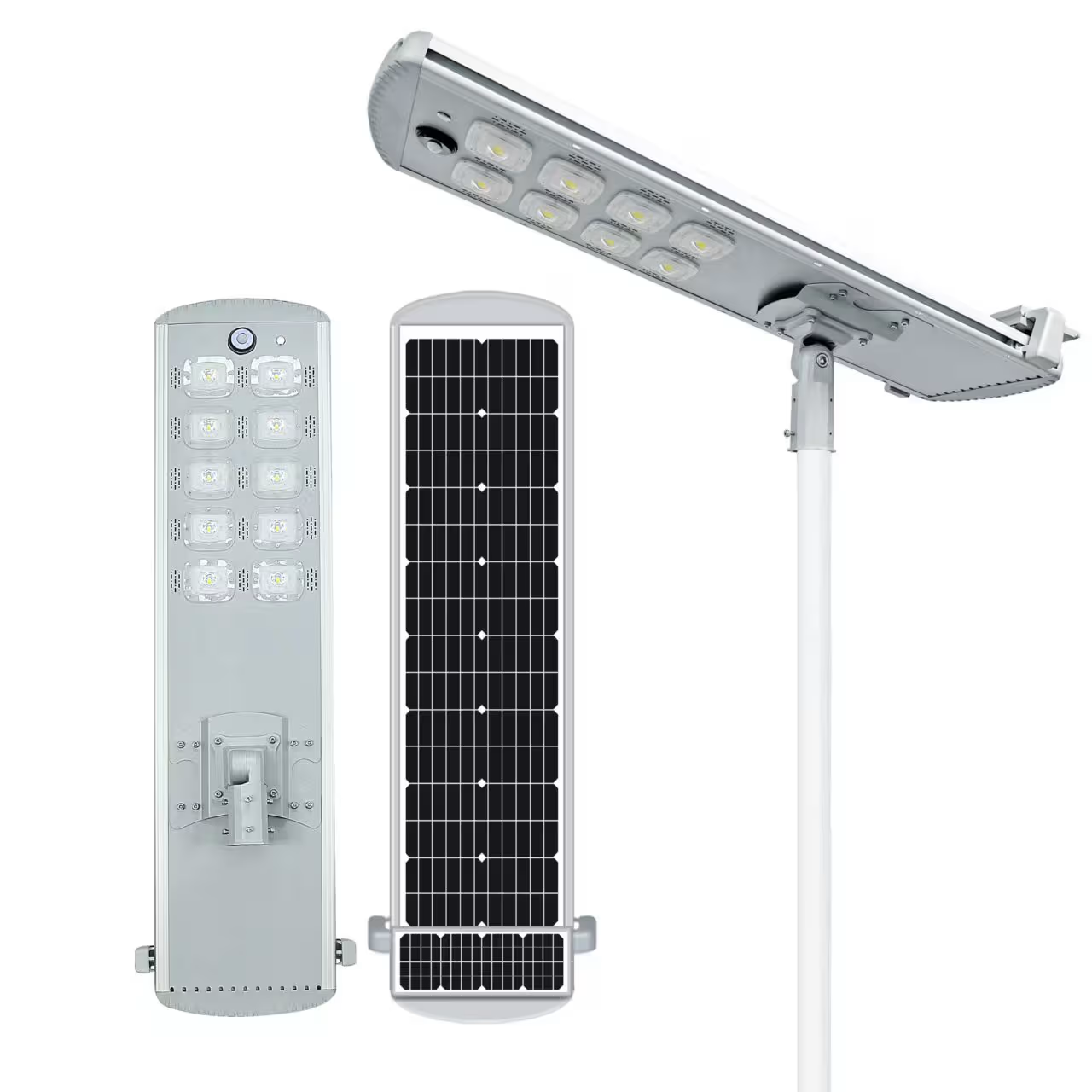
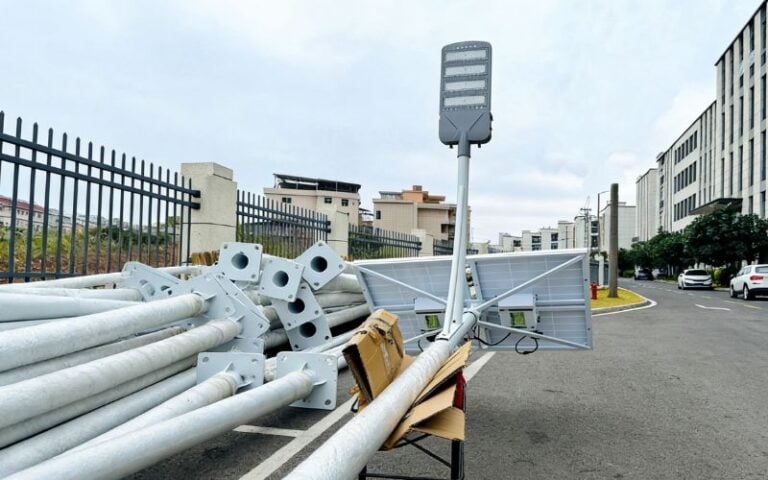
All-in-one solar street lights feature an incredibly sleek, highly compact design that seamlessly integrates the high-efficiency solar panel, the durable battery, and the bright LED light source into a single, unified casing. This streamlined construction makes them exceptionally easy to transport, handle, and install, significantly reducing labor costs and assembly time. Because all the delicate internal components are safely housed together, they require minimal ongoing maintenance, making them an incredibly popular, hassle-free choice for illuminating standard residential streets, local parks, and commercial parking lots.
Read more: A Comprehensive Guide to All-in-One Solar Street Lights – All You Need to Know
b. Split-Type Solar Street Lights
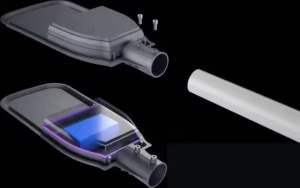
Split-type solar street lights are meticulously designed with entirely separate components, offering unparalleled flexibility in determining the optimal positioning for your lighting setup. Because the solar panel is completely detached from the main LED fixture, installers can easily adjust the panel’s angle and direction to maximize daily sunlight exposure. This highly adaptable configuration is ideal for heavily shaded environments or complex geographic locations where the light fixture must be positioned in a completely different orientation from the sun-facing solar panel.
c. Smart Solar Street Lights
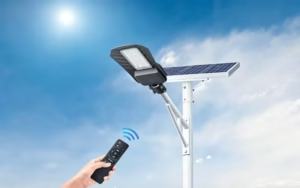
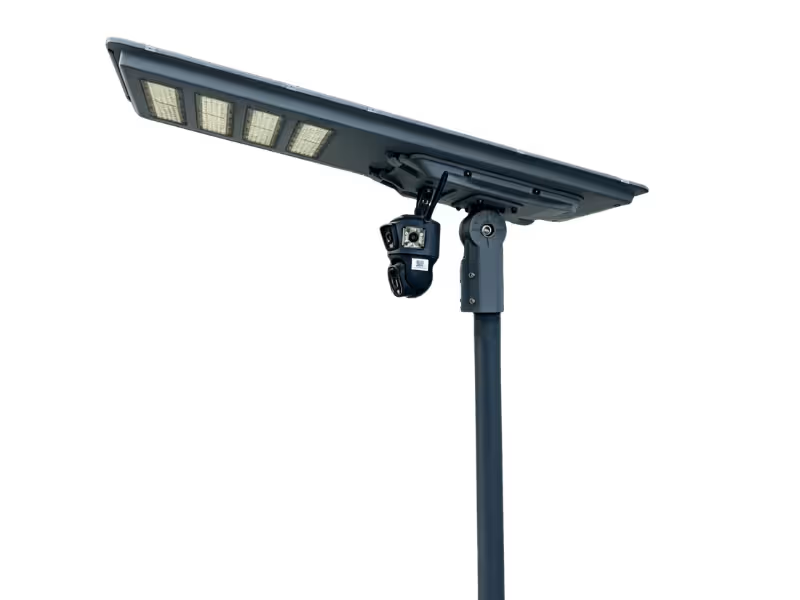
Smart solar street lights represent the absolute cutting edge of modern outdoor illumination technology, incorporating highly advanced features designed to maximize overall energy efficiency. These brilliant fixtures often feature sensitive motion sensors that automatically brighten the LEDs when pedestrians approach and dim them when the area is empty, thereby conserving valuable battery power. Furthermore, many smart models offer sophisticated remote control capabilities and seamless smartphone app connectivity, allowing facility managers to actively monitor performance, adjust lighting schedules, and instantly detect sudden hardware malfunctions from anywhere in the world.
d. Hybrid Solar Street Lights
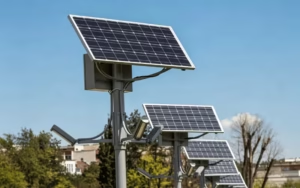
Hybrid solar street lights offer a remarkably reliable, fail-safe solution by seamlessly combining renewable solar energy with traditional grid power connections. During standard operation, these highly versatile lights run entirely on the solar power collected and stored within their internal batteries. However, during extended periods of severe, gloomy weather or prolonged winter storms, when sunlight is scarce, the system can automatically switch to the local electrical grid. This brilliant dual-power capability ensures perfectly consistent, uninterrupted nighttime lighting, making them essential for high-security areas and critical public intersections.
3. Solar Panel Types and Efficiency
a. Monocrystalline vs. Polycrystalline Panels
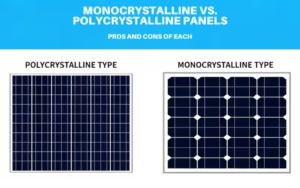
When evaluating solar street lights, understanding the crucial differences between monocrystalline and polycrystalline solar panels is absolutely essential for maximizing your system’s overall efficiency. Monocrystalline panels are manufactured from a single, pure silicon crystal, making them incredibly efficient at converting sunlight into usable electricity, even in slightly overcast or low-light conditions. While they command a higher initial purchase price, their exceptional durability, space-saving design, and superior energy conversion rates make them the absolute best choice for premium lighting. Polycrystalline panels, conversely, are made from melted silicon fragments, offering a much more budget-friendly alternative with slightly lower overall efficiency and a larger physical footprint.
Read More: Monocrystalline vs. Polycrystalline Panels: Pros and Cons of Each
b. Panel Size and Placement
The physical size and precise location of your solar panel directly determine the total energy your streetlight can absorb throughout the day. A larger, high-capacity panel naturally captures significantly more sunlight, quickly charging the internal battery to ensure the light remains brilliantly illuminated all night long. Proper placement requires installing the panel completely free of heavy tree shade or tall building shadows, and facing the optimal direction to ensure maximum daily sun exposure.
c. Weather Resistance
Because solar panels are constantly exposed to the brutal, unpredictable elements, emphasizing exceptional weather resistance is absolutely vital for ensuring long-term hardware durability. High-quality panels are meticulously coated with heavy-duty, tempered protective glass and tightly sealed with specialized waterproof resins to actively prevent severe moisture damage. This rugged construction ensures the delicate photovoltaic cells survive punishing hailstorms, blistering summer heat, and freezing winter snow, keeping your lighting system highly functional and reliable for decades.
4. Battery Types and Capacity
a. Lithium-Ion vs. Lead-Acid Batteries
Selecting the absolute best battery technology is a critical decision that profoundly impacts the lifespan and daily reliability of your solar street lights. Modern lithium-ion batteries have rapidly become the undisputed industry standard, offering spectacular energy density, incredibly fast charging times, and a significantly longer operational lifespan compared to older technologies. Furthermore, they are remarkably lightweight and highly resistant to extreme temperature fluctuations. Conversely, traditional lead-acid batteries represent a much older, cheaper alternative. While they offer a significantly lower upfront cost, they are incredibly heavy, have much shorter lifecycles, and require careful disposal, making lithium-ion batteries the vastly superior choice for commercial lighting.
b. Battery Capacity
The total capacity of your internal battery, accurately measured in amp-hours (Ah), directly determines the maximum duration your solar street light can remain brightly illuminated. A massive, high-capacity battery is absolutely vital for regions that frequently experience heavy cloud cover or have limited daily sunlight. By storing an immense amount of reserve power, these robust batteries guarantee your lights will easily survive three to five continuous days of rainy, sunless weather without suddenly going dark.
Read More: Changing Solar Light Battery: When, How, And At What Cost?
c. Charging and Discharging Cycles
Understanding the significance of a battery’s specific charge and discharge cycle life is crucial to ensuring the long-term performance and financial reliability of your investment. Every time a battery drains at night and recharges the following day, it completes one full cycle. Premium lithium batteries boast thousands of pristine cycles, ensuring they will power your lights flawlessly for many years before requiring an expensive replacement, drastically reducing your overall maintenance budget.
5. Light Source and Brightness
a. LED vs. Traditional Bulbs
The transition to advanced LED technology has completely revolutionized the solar street lighting industry, offering significant advantages over outdated incandescent or high-pressure sodium bulbs. LEDs are spectacularly energy-efficient, requiring only a tiny fraction of the electrical power to produce an incredibly bright, highly piercing beam of light. This minimal power draw allows the solar battery to last significantly longer throughout the night. Furthermore, commercial-grade LEDs boast an exceptionally long operational lifespan, often lasting over 50,000 continuous hours without sudden failure, drastically minimizing the frustrating need for frequent, expensive bulb replacements in hard-to-reach outdoor locations.
b. Lumens and Coverage Area
When evaluating the actual brightness of a solar street light, you must strictly look at the lumen output rather than the electrical wattage. Lumens accurately measure the total amount of visible light emitted by the fixture; a higher lumen count guarantees a vastly brighter, more intensely illuminated environment. Choosing the absolute right coverage area depends entirely on your specific application. A quiet residential pathway might require only a few thousand lumens for safe navigation, while a massive, high-speed commercial highway demands incredibly powerful, high-lumen fixtures with specialized optical lenses to cast a wide, uniform beam across multiple traffic lanes.
Read More: How Many Lumens Do You Need? A Guide to Street and Outdoor Lighting
6. Pole Height and Material
a. Height and Placement
The height of your mounting pole significantly affects the overall light distribution and the precise, uniform coverage of your illuminated area. Installing a highly powerful solar street light on an incredibly short pole will create a harsh, overly bright hotspot directly underneath the fixture while leaving the surrounding perimeter completely shrouded in dangerous darkness. Conversely, mounting the light far too high will severely dilute the brightness, making the area feel unsafe and poorly lit. Carefully calculating the optimal pole height ensures the light spreads evenly and perfectly, eliminating hazardous blind spots and maximizing the overall security of your outdoor space.
Read More: Choosing the Right Height for Street Light Poles: What You Need to Know
b. Material and Durability
Selecting the right structural material for your light pole is essential to ensuring it can withstand decades of harsh, punishing outdoor conditions. You must strictly prioritize highly durable, corrosion-resistant materials such as heavy-duty hot-dip galvanized steel or premium, thick-gauge extruded aluminum. These rugged, industrial-grade metals actively resist severe rusting, structural rotting, and physical degradation, easily surviving torrential rainstorms, coastal salt spray, and massive, high-velocity hurricane winds. Investing in premium pole materials prevents catastrophic structural failures, ensuring your expensive solar lighting fixtures remain safely and securely elevated for their entire operational lifespan.
Read More: How to Choose the Best Materials for Solar Lights
7. Weather Resistance and IP Ratings
a. IP Ratings
Understanding the significance of specific Ingress Protection (IP) ratings is absolutely critical when purchasing outdoor lighting, as it directly determines the fixture’s resistance to dust ingress and water intrusion. An IP rating consists of two distinct numbers: the first indicates protection against solid objects, such as blowing sand, while the second measures protection against liquid ingress. For highly reliable solar street lights, you must strictly demand a minimum rating of IP65. This exceptional certification guarantees that the delicate internal electronics and sensitive LED boards are fully sealed against severe dust storms and perfectly protected from high-pressure, torrential rain jets.
Read More: Beyond “Weatherproof”: A Guide to IP65, IP66, and IP67 Ratings for Solar Street Lights
b. Extreme Weather Performance
Beyond basic rain and dust protection, you must carefully evaluate how the solar street lights will perform under extreme, volatile weather conditions. Premium lighting fixtures are meticulously engineered to operate flawlessly in blistering, triple-digit desert heat without dangerous battery overheating and to survive freezing, sub-zero winter temperatures without sudden power failures. High-quality systems also feature intelligently angled solar panels designed to naturally shed heavy snow accumulation and thick, blocking debris, ensuring the photovoltaic cells remain perfectly exposed to the sun and completely capable of charging the batteries regardless of the harsh climate.
8. Smart Features and Controls
a. Motion Sensors and Dimming
Integrating highly sensitive motion sensors and intelligent dimming features into your solar street lights provides spectacular benefits for both daily energy efficiency and overall perimeter security. These advanced sensors allow the light to operate at a dim, highly energy-efficient 30% capacity when the street is entirely empty. The very second a vehicle or pedestrian enters the detection zone, the LEDs instantly blast to 100% brightness, providing exceptional visibility and startling potential intruders. This brilliant, adaptive capability drastically conserves valuable battery power, ensuring the light remains highly operational during the longest, darkest winter nights.
b. Remote Monitoring and Control
The massive advantages of utilizing remote control and advanced digital monitoring systems cannot be overstated for municipalities managing multiple lights efficiently. Modern smart solar networks allow facility directors to instantly access real-time performance data from a centralized computer or smartphone app. You can effortlessly monitor battery health, adjust specific lighting schedules, and instantly receive automated alerts the moment a single fixture experiences a hardware malfunction. This incredible connectivity completely eliminates the tedious, expensive need for physical, in-person maintenance patrols, streamlining your entire operational workflow and saving your organization a massive amount of valuable time and resources.
9. Installation and Maintenance
a. Installation Requirements
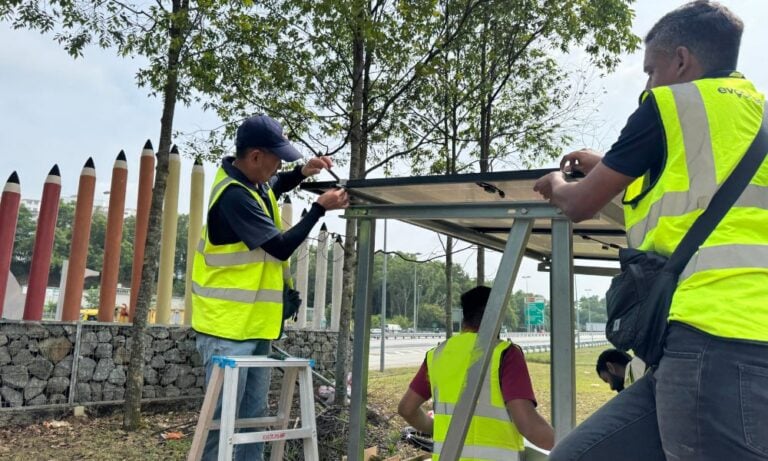
Emphasizing the incredible importance of easy, straightforward installation is absolutely vital when planning a massive solar street lighting project. Unlike traditional grid-tied systems that require expensive trenching, concrete pouring, and hiring licensed electricians to run dangerous high-voltage wiring, solar lights offer a miraculous plug-and-play solution. Most premium units require only a few basic, standard hand tools and a small, dedicated crew to securely mount the fixture directly onto the pole. This incredibly simplified, rapid installation process slashes your overall project budget and lets you instantly illuminate large outdoor areas in a fraction of the time it would take with conventional methods.
b. Maintenance Tips
While solar street lights are famously low-maintenance, providing your staff with effective tips for routine upkeep guarantees peak performance and maximum operational lifespan. You must schedule periodic visual inspections to thoroughly wipe down the glass solar panels, removing thick layers of accumulated dust, sticky bird droppings, or fallen leaves that severely block critical sunlight absorption. Additionally, maintenance crews should occasionally check the tightness of all mounting bolts and perform a rapid digital diagnostic to ensure the lithium-ion battery continues to hold a deep, powerful charge throughout the night.
Read More: How To Structure Your Solar Street Light Installation Business
10. Cost and Warranty
a. Initial Investment vs. Long-Term Savings
When evaluating the financial logistics of solar street lights, you must carefully balance the substantial upfront initial investment against the truly massive, long-term operational savings. While premium solar fixtures initially cost significantly more than basic, traditional grid-tied lamps, they eliminate ongoing monthly electricity bills and drastically reduce expensive trenching installation costs. Over the course of five to ten years, the spectacular savings from zero utility fees and virtually non-existent maintenance requirements far outweigh the initial purchase price, providing businesses and municipalities with a truly exceptional, highly profitable return on their investment.
Read More: How Much Does It Cost to Install Solar Street Lights in a Parking Lot?
b. Warranty and Support
Highlighting the absolute importance of choosing commercial products backed by highly comprehensive warranties and deeply reliable customer support is crucial for protecting your budget. You must strictly select solar street lights that offer multi-year guarantees covering the delicate LED boards, the expensive lithium-ion batteries, and the primary solar panels. Excellent, responsive manufacturer support ensures you receive swift, hassle-free replacement parts if a sudden mechanical failure ever occurs.
c. Comparing Brands
We strongly encourage all prospective buyers to thoroughly and meticulously compare industry-leading brands like Sigolight for unmatched quality, exceptional performance, and ultimate long-term value. By thoroughly researching reputable manufacturers, reading verified customer reviews, and analyzing technical data sheets, you can confidently secure a premium, highly durable solar lighting solution that fits your project budget and meets your strict illumination requirements.
Conclusion
In conclusion, successfully navigating the complex process of buying solar street lights requires a highly meticulous evaluation of ten absolutely critical factors to ensure you make the best possible investment. By deeply understanding the distinct benefits of different panel types, prioritizing robust lithium-ion battery capacities, and selecting the perfect pole heights and bright LED sources, you guarantee your outdoor spaces receive flawless, reliable illumination. Furthermore, carefully considering advanced smart features, rigorous weather resistance, and straightforward installation processes will drastically optimize your daily operational efficiency. We strongly emphasize the vital importance of choosing highly reputable, premium-quality products like Sigolight, ensuring you receive spectacular, long-lasting performance, unparalleled environmental sustainability, and truly exceptional financial value for all your modern outdoor lighting needs.