
As demand for sustainable municipal infrastructure increases globally, the need for advanced LED street lighting projects is growing rapidly. Cities, municipalities, and private businesses are actively replacing outdated high-pressure sodium fixtures with modern LEDs to achieve superior energy efficiency and secure substantial long-term cost savings. However, the initial capital required to build and upgrade this lighting infrastructure can be quite significant for local governments.
In this post, we will take a closer look at the detailed breakdown of LED street lighting project costs and explore the various factors that contribute to these financial investments. A successful public lighting upgrade involves much more than simply buying new bulbs. Project managers must carefully consider several key components, including the raw lighting equipment, specialized installation labor, ongoing electricity rates, and routine maintenance, to create a highly accurate budget.
How Much Does it Cost to Implement LED Street Lighting Projects?
Implementing a large-scale LED street lighting project requires a substantial upfront financial commitment from city planners, but it consistently yields significant long-term returns. For a standard municipal project focused on replacing existing fixtures on existing poles, the initial investment typically ranges from a few hundred to over a thousand dollars per individual light pole. While this capital expenditure might seem intimidating at first glance, the return on investment usually materializes rapidly, often within three to seven years. These impressive financial savings stem from drastically reduced daily electricity consumption and the minimal maintenance required by highly durable LED technology compared to legacy lighting systems.
Several critical factors heavily influence the overall costs of these infrastructure lighting projects. The physical scale of the upgrade plays a major role in pricing; a massive city-wide rollout often benefits from bulk purchasing and economies of scale, significantly lowering the per-unit cost of the fixtures. Location also dictates project pricing, as union labor rates, specialized equipment rentals, and material shipping fees vary wildly by geographic region. Additionally, specific project requirements, such as the need for decorative historic poles, custom mounting brackets, or specialized optical lenses to prevent light pollution in dense residential areas, will significantly adjust the final project budget.
Steps to Implement LED Street Lighting Projects
Building out a completely new LED street lighting infrastructure involves several essential steps, starting with incredibly detailed planning and system design. Project managers must first conduct a thorough, on-the-ground site assessment to evaluate the structural condition of existing poles and the capacity of the local electrical grids. During this crucial phase, electrical engineers determine precise roadway lighting requirements, calculate the necessary lumen output for optimal pedestrian and traffic safety, and ensure strict compliance with local illumination regulations. Securing the proper municipal permits, navigating zoning laws, and gaining necessary neighborhood approvals are also mandatory parts of this initial planning process.
Once the structural design is officially approved, the physical installation process begins in earnest. Professional construction crews and licensed electricians arrive on-site to carefully remove the old high-pressure sodium fixtures and properly dispose of any hazardous materials contained within them. They then mount the new LED equipment, secure the complex electrical wiring, and upgrade any necessary roadside breaker panels. After the LED fixtures are firmly bolted in place, technicians conduct rigorous nighttime testing to measure actual illumination levels, adjust the light distribution angles, and ensure every unit connects seamlessly to the power grid without flickering.
The final step involves establishing a highly reliable protocol for ongoing maintenance and system monitoring. Even though modern LEDs are incredibly durable, public works departments must implement a proactive schedule for routine lens cleaning, structural inspections, and rapid response repairs to maintain optimal performance and protect public safety.
Equipment and Installation Costs
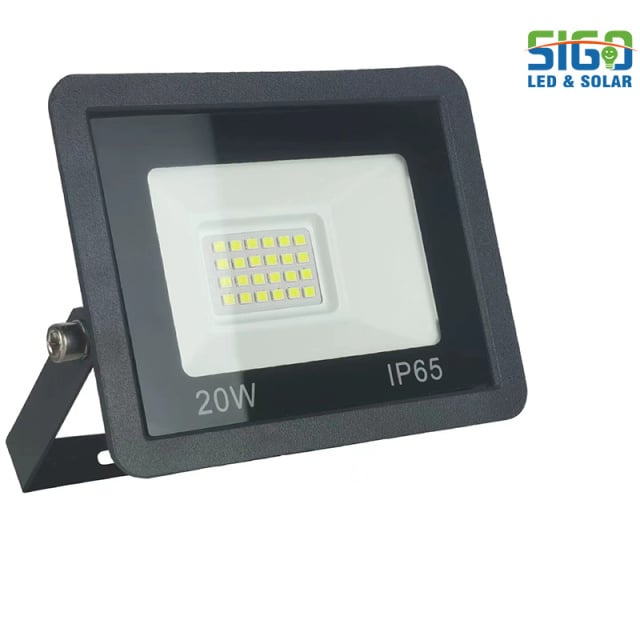
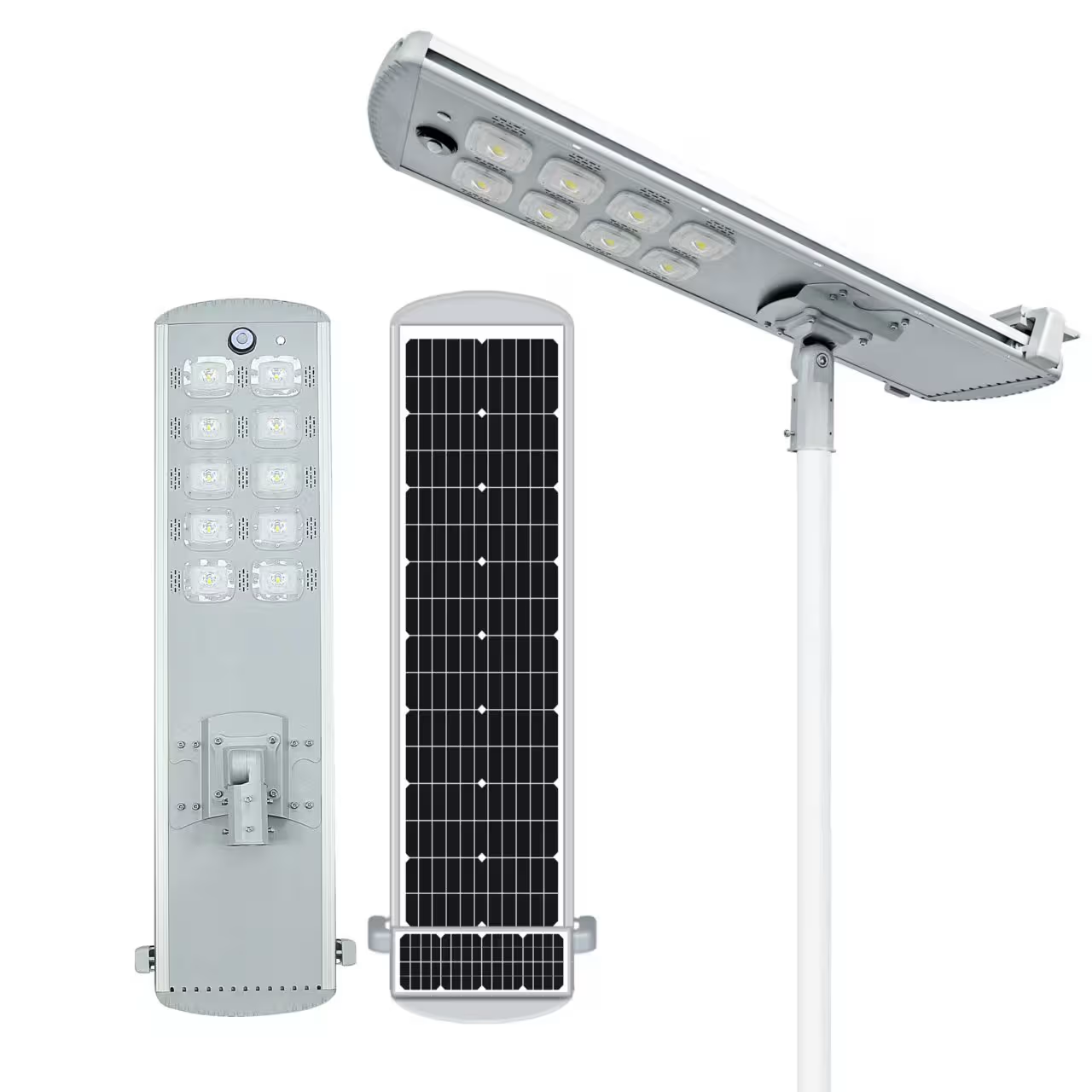
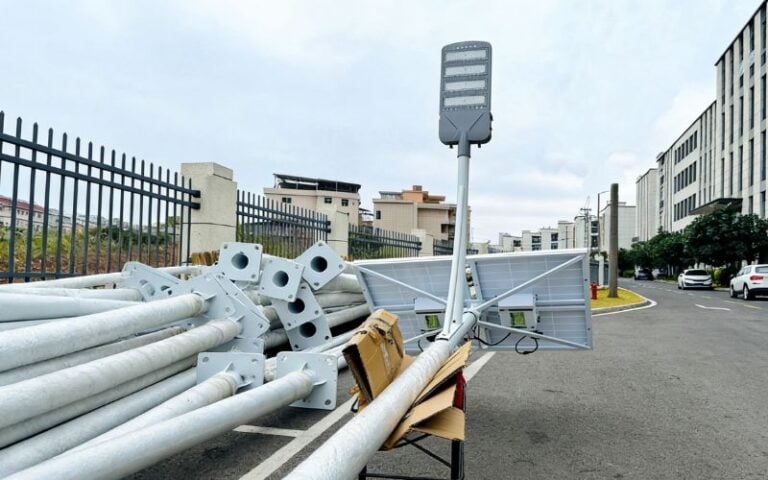
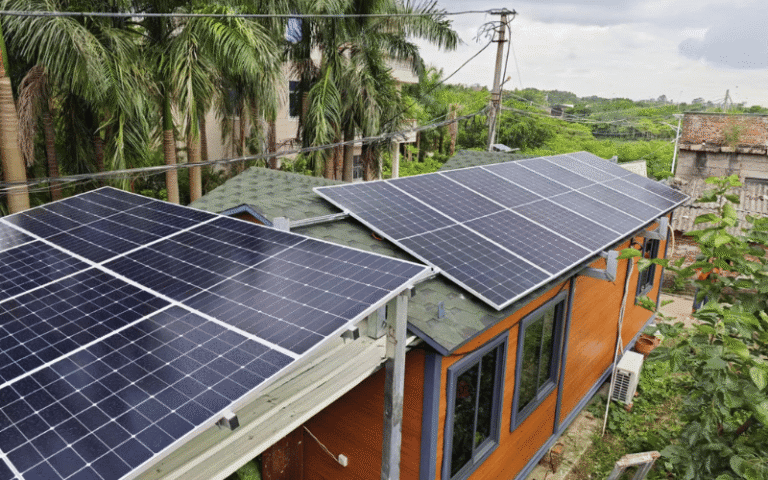
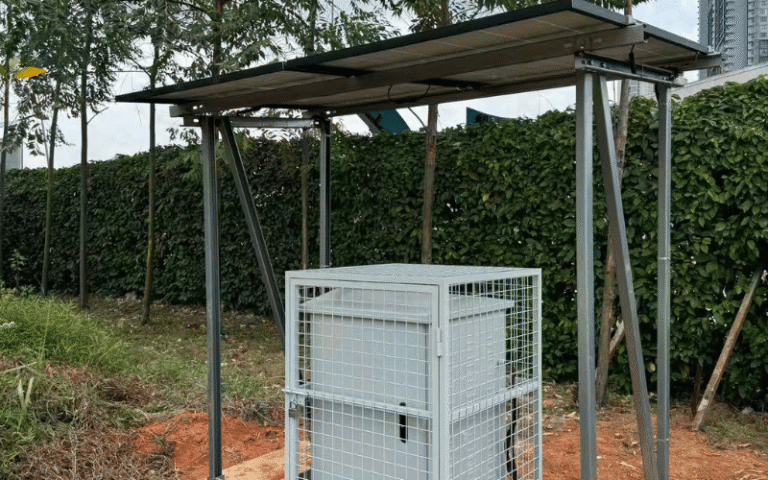
First, it is highly important to note that the cost of LED street lighting infrastructure varies widely depending on the specific type of equipment selected for the project. Standard LED cobra-head fixtures are the most basic and least expensive options available, with pricing typically ranging from $100 to $300 per unit. If a city opts for smart LED lights equipped with advanced dimming controllers and motion sensors, the price quickly rises to between $300 and $600 per fixture. Alternatively, completely off-grid, solar-powered LED street lights require no electrical grid connection but come with a much higher upfront equipment cost. These robust systems range from $1,500 to $4,000 per unit to cover the cost of the integrated photovoltaic solar panels, heavy-duty poles, and deep-cycle batteries.
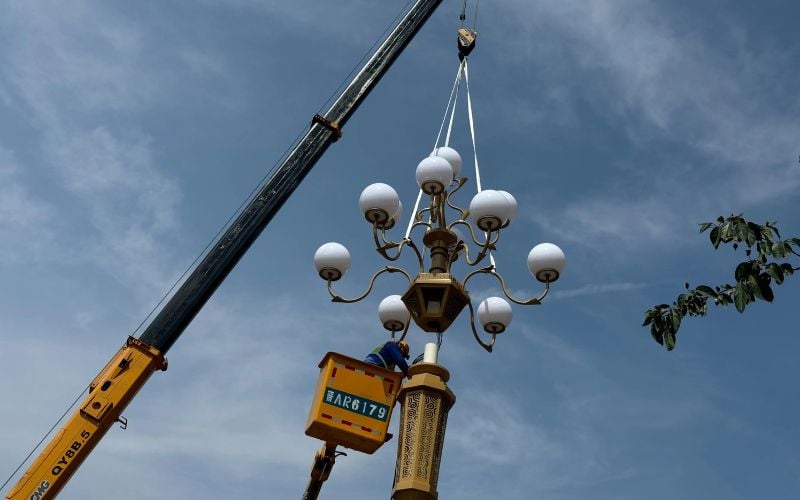
In addition to the physical cost of the lighting equipment, project managers must meticulously account for substantial installation costs. Labor charges for certified electricians and specialized construction crews account for a large portion of the overall budget. Installing a brand-new light pole often requires bringing in heavy machinery such as bucket trucks, cranes, and concrete augers. If the lighting project requires running new underground electrical wiring, construction crews must trench through concrete sidewalks and asphalt roads, dramatically increasing site preparation and manual labor costs.
Finally, urban planners must strictly factor in additional hidden costs required to safely and legally complete the project. Local governments regularly charge significant fees for construction permits, environmental reviews, and mandatory safety inspections. If the existing electrical infrastructure is severely outdated or failing, the project might require costly grid upgrades, new neighborhood transformers, or updated electrical distribution panels to ensure the modernized lighting network is securely connected.
Electricity Costs for LED Street Lighting
Another high financial cost of maintaining street lighting infrastructure is the ongoing electricity bill. Unlike off-grid solar alternatives that generate their own power, standard hardwired LED street lights must continuously draw electricity from the municipal utility grid to properly illuminate roadways every night. Fortunately, modern LED technology consumes 50 to 70 percent less electricity than legacy high-pressure sodium or dangerous metal halide lamps. This massive reduction in operating wattage translates directly into significantly lower monthly utility bills, freeing up critical capital for other essential city services.
The exact cost of this daily electricity can vary widely depending on the project’s geographic location and the time of year. In metropolitan areas with notoriously high energy costs, the financial savings from switching to energy-efficient LEDs accrue much faster. Furthermore, municipalities can often negotiate heavily discounted fixed flat rates or lower off-peak electricity pricing with their local utility providers. Because street lights operate exclusively during late-night hours, when overall consumer grid demand is at its lowest, utility companies are frequently willing to supply this off-peak power at a fraction of the standard daytime rate.
Innovative Solutions for LED Street Lighting Projects
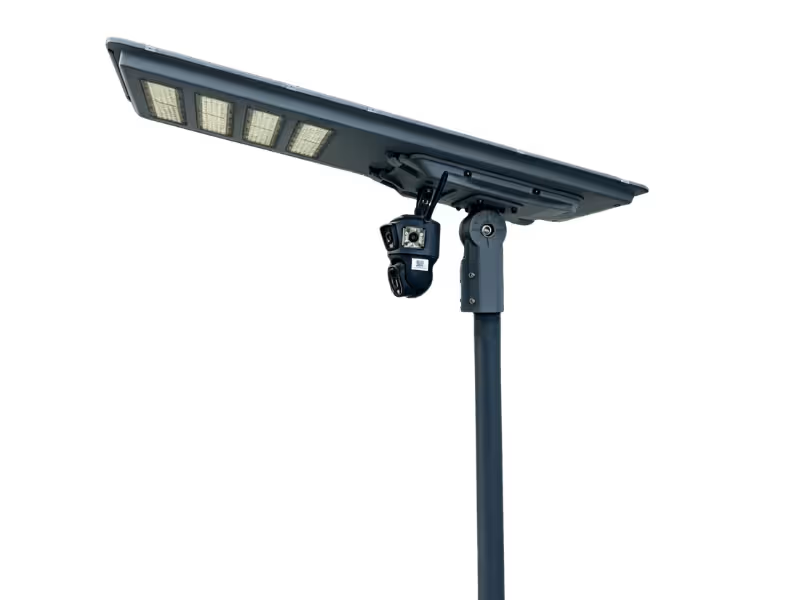
Traditional street lighting installation can be incredibly expensive and logistically time-consuming for growing businesses and municipalities. With new green incentives readily available, city planners are actively seeking innovative solutions that significantly improve energy efficiency without exceeding their tight operational budgets. Smart LED systems offer a highly dynamic alternative, utilizing programmable dimming schedules that automatically reduce light output during low-traffic hours to save power. Additionally, self-contained, solar-powered LED street lights provide an exceptional, fast-deploying solution for remote roads or brand-new housing developments, completely eliminating the need for expensive underground trenching and monthly grid electricity bills.
Integrating Internet of Things (IoT) technology further revolutionizes how we manage modern street lighting projects. Manufacturers now offer advanced wireless network nodes that easily attach to each LED fixture, creating a secure, city-wide digital mesh network. This breakthrough technology allows facility managers to utilize cloud-based remote monitoring software to closely track energy consumption, adjust brightness levels on the fly, and receive instant mobile alerts when a specific light fails. This highly proactive management approach slashes long-term maintenance costs by completely eliminating the need for expensive manual nighttime patrols and unnecessary truck rolls.