
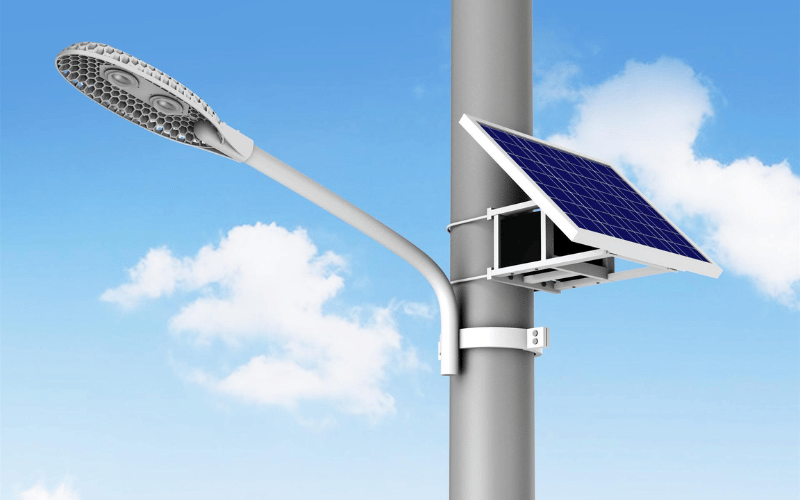
Quality control is essential to ensure solar street lights perform reliably and safely. Common issues such as short battery life, weak fixtures, and faulty wiring often result from skipped inspections. Addressing these early protects your investment and ensures long-term performance.
A structured approach, such as the MECE framework, simplifies the process. By focusing on component checks, assembly reviews, and final installation evaluations, you can ensure no detail is missed.
This guide offers practical checklists for procurement managers, engineers, and installation teams, helping you maintain high standards and achieve dependable results.
Section 1: Pre-Production and Component Quality Checklists
Ensuring component quality before production begins is the cornerstone of a reliable solar street light system. Each element plays a critical role, and even a minor defect can compromise the entire system. Let’s break down the key areas to inspect and evaluate.
Ensuring High-Quality Components
Batteries (Storage System)
The battery is the heart of your solar street light, storing energy for nighttime use. A thorough inspection ensures it meets performance and safety standards.
- Verify battery type and capacity (Ah): Match the battery’s capacity to the light’s runtime requirements. For example, a 100Ah battery may be ideal for systems requiring 10-12 hours of illumination.
- Inspect voltage stability and protection circuits: Check for overcharge and over-discharge protection to prevent premature battery failure. A stable voltage output ensures consistent light performance.
- Review manufacturer traceability and warranty: Ensure the battery comes with clear documentation, including warranty terms and manufacturer details. This helps track quality and secure replacements if needed.
Solar Panels (Photovoltaic Module)
The solar panel is the system’s energy generator, and its efficiency directly impacts performance. A detailed inspection ensures it can handle the job.
- Confirm rated wattage and efficiency: Verify the panel’s wattage matches the system’s energy requirements. For example, a 150W panel is suitable for medium-sized street lights. Efficiency ratings above 18% are ideal for reliable energy generation.
- Inspect for cracks, defects, or delamination: Even small cracks or signs of delamination can reduce energy output. Scrutinize the panel surface.
- Test Open Circuit Voltage (Voc) and Short Circuit Current (Isc): Use a multimeter to confirm the panel’s electrical output matches its specifications.
- Check framing integrity and sealing: Ensure the panel’s frame is sturdy and sealed to prevent moisture ingress, which can damage internal components.
LED Fixtures and Luminaires
LED fixtures determine the quality and intensity of light output. A detailed review ensures they meet both performance and durability standards.
- Verify lumen output and color temperature: Ensure the lumen output meets the lighting requirements. For example, 3,000 lumens is ideal for residential streets, while 6,000 lumens is ideal for highways. Confirm the color temperature (e.g., 4,000K for neutral white) aligns with the intended application.
- Inspect heat sink efficiency: A well-designed heat sink prevents overheating, which can shorten LED lifespan. Look for efficient thermal management systems.
- Confirm Ingress Protection (IP) rating: Ensure the fixture has an IP65 or higher rating for protection against dust and water.
- Assess driver quality: Check the power factor (above 0.9 is ideal) and the voltage range to ensure stable, efficient operation.
Charge Controller (MPPT or PWM)
The charge controller manages energy flow between the solar panel, battery, and LED fixture. Its performance is critical for system efficiency.
- Review charge algorithm settings: Confirm the controller’s settings match the battery type and system requirements. MPPT controllers are more efficient for larger systems.
- Test low-voltage disconnect and reconnect functions: These features protect the battery from deep discharge, extending its lifespan.
- Verify terminal sizing and labeling: Ensure terminals are appropriately sized and clearly labeled for easy installation and maintenance. Check for monitoring capabilities, such as LED indicators or digital displays, to track system performance.
By following these detailed checklists, you can ensure every component meets the highest standards before production begins. This proactive approach minimizes risks and sets the stage for a reliable and efficient solar street light system.
Section 2: Manufacturing and Assembly Quality Checklists
A well-assembled solar street light results from meticulous attention to detail during manufacturing. Each component must be integrated seamlessly to ensure the system performs reliably in real-world conditions. Let’s break down the critical areas to inspect during the assembly process.
Ensuring Reliable Assembly
Pole Structure and Mounting Hardware
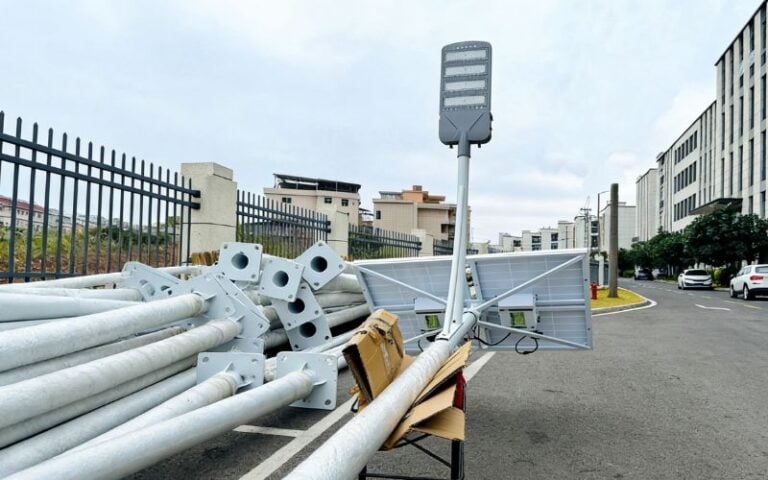
The pole and mounting hardware form the backbone of the solar street light system. Their strength and durability are non-negotiable.
- Verify material quality: Check the steel type and thickness to ensure it meets load-bearing requirements. For example, poles made from Q235 or Q345 steel are ideal for high-strength applications.
- Inspect galvanization or powder coating: Ensure the pole has been galvanized or powder-coated to resist corrosion, especially in coastal or humid environments. A uniform coating without bubbles or cracks is a good indicator of quality.
- Assess structural welding: Examine welds for uniformity and strength. Poor welding can compromise the pole’s ability to withstand wind loads.
- Check anchor bolt dimensions: Verify that anchor bolts match the template and are correctly aligned. Misaligned bolts can lead to installation issues and structural instability.
Wiring and Connector Integrity
The wiring and connectors are the lifelines of the system, ensuring smooth energy flow between components. Any weakness here can lead to system failure.
- Verify cable gauge and insulation: Ensure the cables are of the correct gauge to handle the system’s current. Look for UV-resistant insulation to protect against sunlight degradation.
- Inspect terminal connections: Check that all terminals are securely crimped and free of loose strands. Poor connections can cause voltage drops or overheating.
- Check polarity and watertight seals: Confirm that polarity is correct and that all entry points and connectors are sealed to prevent water ingress. Waterproof connectors with IP67 ratings are ideal for outdoor use.
Enclosure and Housing Assembly
The enclosures protect critical components, such as batteries and controllers. Their design and assembly must prioritize security and functionality.
- Inspect the battery box’s security: Ensure it is firmly secured and features a ventilation design to prevent overheating.
- Verify grounding connections: Ensure all grounding points are properly connected and labeled. This is crucial for safety and system longevity.
- Ensure component fit: Confirm that all components fit snugly within their housing without excessive movement. Loose components can lead to damage during transportation or operation.
Functional Bench Testing
Before packaging, every assembled unit should undergo rigorous functional testing to confirm it meets performance standards.
- Simulate darkness: Test the light’s automatic activation by simulating nighttime conditions. This ensures the system’s sensors and controllers are functioning correctly.
- Measure current draw: Compare the actual current draw to the system’s specifications. Significant deviations may indicate faulty components or wiring issues.
- Verify dimming profiles: If the system includes dimming or time-delay features, test these to ensure they operate as programmed.
- Run a duration test: Operate the light for a minimum test cycle to confirm it can sustain performance over time. This step helps identify any hidden defects before the product reaches the field.
By following these detailed checklists, you can ensure that the manufacturing and assembly processes produce reliable, high-quality solar street lights. Each step builds confidence that the system will perform as expected, even in challenging conditions.
Section 3: Final Inspection and Installation Quality Checklists
The final inspection and installation phase is where all the preparation and assembly come together. This stage ensures the solar street light system is installed correctly and ready to perform reliably. Let’s break down the critical steps to ensure a smooth installation.
Ensuring Proper Installation
Logistics and Receiving Inspection
Before installation begins, verify that all components have arrived in good condition and match the project requirements.
- Verify component count: Cross-check the received items against the packing list. Missing components can delay installation and compromise the system.
- Inspect for shipping damage: Examine solar panels, fixtures, and poles for cracks, dents, or other damage. Even minor defects can affect performance or durability.
- Confirm documentation: Ensure all manuals, warranties, and installation guides are included. These documents are essential for proper setup and future maintenance.
Site Preparation and Foundation Check
A solid foundation is critical for the stability and longevity of the solar street light system. Proper site preparation ensures the pole and components are securely installed.
- Verify pole location: Double-check that the pole locations align with the project specifications. Incorrect placement can affect light distribution and system performance.
- Inspect foundation curing: Ensure the concrete foundation has cured for the recommended time (typically 7–14 days) and shows no signs of cracking or instability.
- Confirm anchor bolt alignment: Check that anchor bolts are correctly aligned and oriented to match the pole’s base plate. Misalignment can lead to structural issues during pole erection.
Pole Erection and Alignment
Raising the pole and aligning the fixtures requires precision to ensure optimal performance and safety.
- Assess verticality and level: Use a plumb line or spirit level to confirm the pole is perfectly vertical. A tilted pole can compromise both aesthetics and functionality.
- Verify fixture orientation: Adjust the fixture’s aiming angle to ensure proper light distribution. For example, roadway fixtures should evenly distribute light across the surface without glare.
- Confirm secure connections: Tighten all bolts and connection points to meet torque specifications. Loose connections can lead to instability or system failure.
System Activation and Commissioning
The final step is to activate the system and confirm it operates as intended. This ensures the solar street light is ready for long-term use.
- Perform voltage checks: Measure the voltage at the solar panel and battery terminals to confirm they meet the system’s specifications.
- Activate and observe: Turn on the system and monitor its functionality at dusk. Ensure the light activates automatically and operates at the correct brightness levels.
- Check illumination uniformity: Walk the site to assess light distribution and uniformity. Adjust fixtures if necessary to eliminate dark spots or uneven coverage.
- File commissioning report: Document the final inspection, including voltage readings, alignment checks, and any adjustments made. Include warranty documentation for future reference.
By following these detailed checklists, you can ensure the solar street light system is installed correctly and performs reliably from day one. Proper inspection and commissioning not only enhance system efficiency but also provide peace of mind for all stakeholders.
Section 4: Post-Installation Quality Monitoring
Installing a solar street light is just the beginning. To ensure long-term performance and reliability, consistent monitoring and maintenance are essential. Let’s explore how to keep your system running smoothly and address any issues that arise.
Maintaining Long-Term Performance
Performance Benchmarking
The first step in post-installation monitoring is to establish a performance baseline. This data will help you identify deviations or potential issues early.
- Establish baseline data: Record key metrics such as daily charging current, battery voltage, and runtime during the first week of operation. For example, a system designed for 12 hours of illumination should consistently meet this target.
- Monitor consistency: Track performance over the first 30 days to ensure the system operates as expected. Look for patterns, such as reduced runtime or inconsistent charging, which may indicate underlying issues.
Routine Maintenance Schedule
Regular maintenance is critical to maximizing the efficiency and lifespan of your solar street light system. A simple, consistent schedule can prevent minor issues from becoming major problems.
- Clean solar panels: Dust, dirt, and bird droppings can reduce solar panel efficiency by up to 20%. Clean the panels every 2–3 months, or more frequently in dusty environments, using a soft cloth and water. Avoid abrasive materials that could scratch the surface.
- Inspect cables and connections: Check cable insulation for cracks or wear, especially in areas exposed to sunlight or sharp edges. Ensure all connections remain secure and free of corrosion. Damaged cables or loose connections can lead to power loss or system failure.
Troubleshooting Protocols
Even with proper maintenance, issues can arise. A straightforward troubleshooting process helps you quickly identify and resolve problems.
- Common failure modes: Watch for signs like flickering lights, early shutoff, or failure to activate at dusk. These symptoms often point to specific issues within the system.
- Diagnose key components:
- Batteries: If the light shuts off early, test the battery voltage. A low reading may indicate insufficient charging or a failing battery.
- Charge controllers: Check the controller’s settings and indicators. Incorrect configurations or faulty controllers can disrupt energy flow.
- Wiring: Inspect for loose or damaged wires, especially at connection points. Faulty wiring can cause intermittent performance or complete failure.
By establishing benchmarks, maintaining a routine schedule, and following a structured troubleshooting process, you can ensure your solar street lights deliver consistent, reliable performance. Proactive monitoring not only extends the system’s lifespan but also minimizes downtime and repair costs.
Frequently Asked Questions (FAQs)
Q: How often should solar street lights be inspected after installation?
A: Solar street lights should be inspected every 3-6 months to ensure optimal performance. Regular checks help identify issues like dirt buildup, battery degradation, or wiring damage.
Q: What are the most common quality failures in solar street light components?
A: Common failures include low-quality batteries with short lifespans, inefficient solar panels, poorly sealed fixtures that allow water damage, and substandard wiring prone to corrosion.
Q: How does ambient temperature affect quality control testing for batteries?
A: Extreme temperatures can impact battery performance during testing. High heat can cause overcharging, while cold temperatures can reduce battery capacity and efficiency.
Q: What documentation is essential for verifying the quality and warranty of LED drivers?
A: Key documents include manufacturer certifications, warranty terms, test reports for power factor and voltage range, and compliance with industry standards like IEC or UL certifications.
Q: How can foundation quality impact the long-term stability of solar street lights?
A: Poor foundation quality can lead to tilting or the collapse of poles over time. Proper curing of concrete, correct alignment of anchor bolts, and ensuring structural integrity are critical for stability.
Conclusion
A structured quality control process for solar street lights brings clear benefits, ensuring durability, safety, and a strong return on investment. Rigorous checks at every stage—from component selection to installation and maintenance—help prevent failures and maximize system performance. Adopting these checklists standardizes successful implementation and supports long-term reliability, making solar street lights a dependable solution for any project.