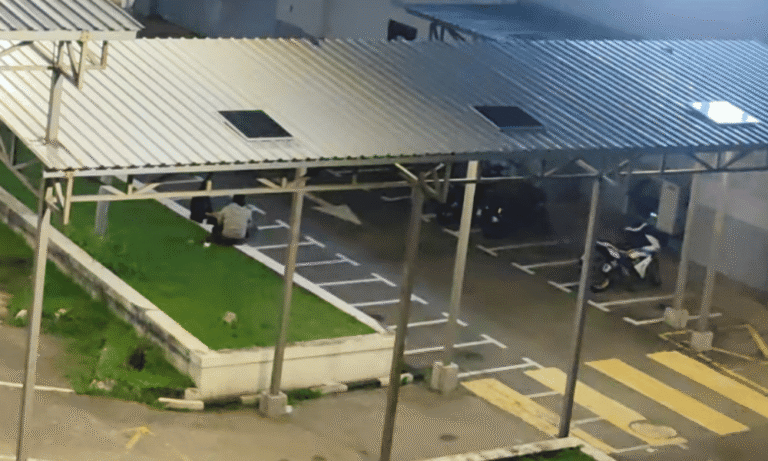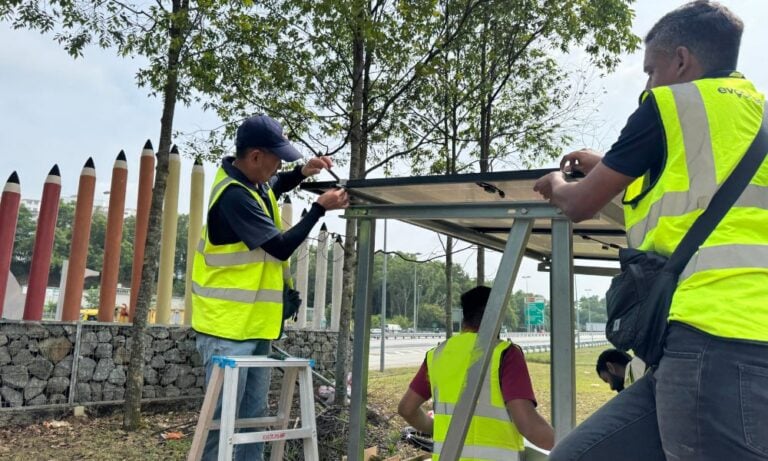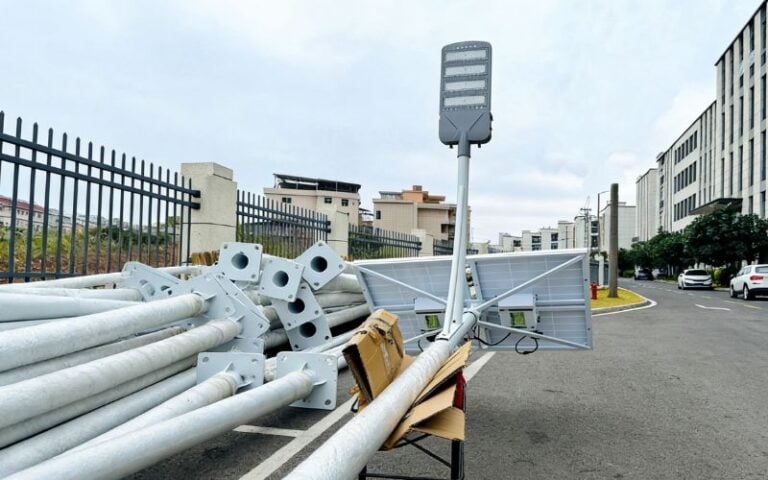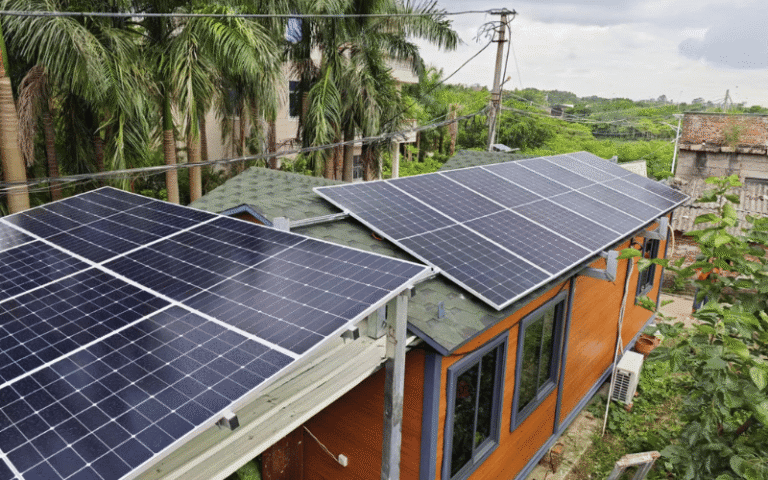

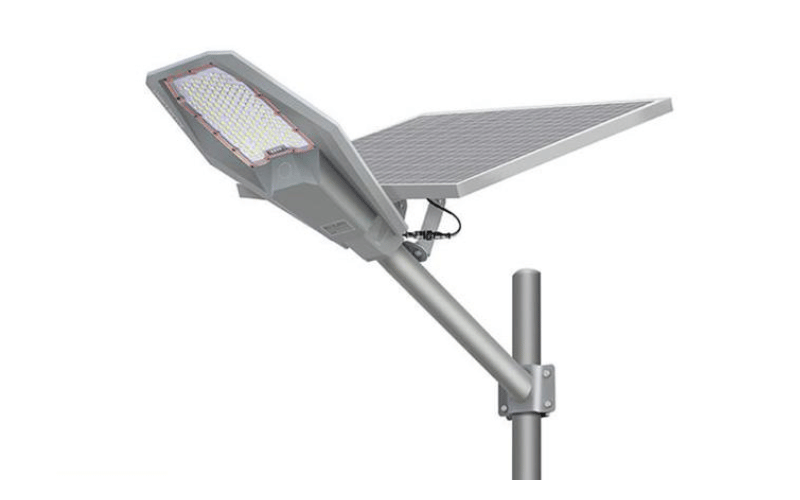
Solar street lights are transforming the way we illuminate outdoor spaces. These lights use solar panels to capture sunlight during the day and power LED lights at night. Their popularity is skyrocketing, and for good reason.
One significant advantage of solar street lights is sustainability. They rely on renewable energy, reducing the need for electricity from traditional sources. This not only helps the environment but also reduces energy bills. Additionally, solar street lights operate independently of the grid, making them ideal for remote areas or places with unreliable power supply.
In this guide, we’ll explore everything you need to know about solar street lights. From their key benefits to how they work, we’ll cover it all. Whether you’re considering them for a residential area, a commercial project, or a public space, this guide will help you make an informed decision.
Let’s dive into the world of solar street lights and discover why they are becoming a preferred choice for outdoor lighting solutions.
How Solar Street Lights Work
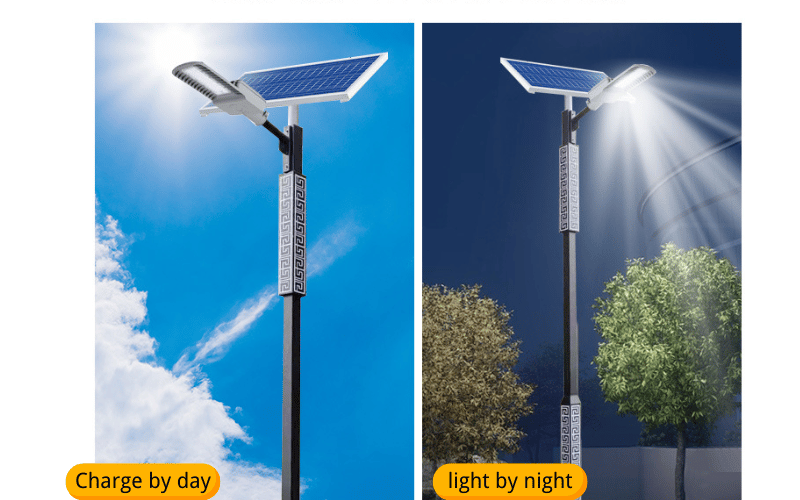
Solar street lights are like tireless workers, harnessing the sun’s energy during the day and transforming it into bright, reliable light at night. Their operation is straightforward yet highly efficient, making them a game-changer in outdoor lighting. Let me walk you through the process and the key components that make it all possible.
Charging During the Day
During daylight hours, solar panels absorb sunlight and convert it into electricity. This electricity doesn’t go to waste—it’s stored in batteries for later use. Please think of the batteries as a savings account, storing energy for when it’s needed most: nighttime.
The efficiency of this process depends on the quality of the solar panels and the amount of sunlight they receive. Panels with higher efficiency can capture more energy, even on cloudy days.
Lighting at Night
When the sun sets, the stored energy in the batteries powers the LED lights. These LEDs are designed to be energy-efficient, providing bright illumination while consuming minimal power. The transition from charging to lighting is seamless, thanks to the controller.
Role of Key Components
Each component in a solar street light plays a vital role, working together like a well-coordinated team:
- Solar Panels: These are the heart of the system, capturing sunlight and converting it into electricity. High-quality panels ensure better energy absorption and longer-lasting performance.
- Batteries: Acting as the backbone, batteries store the energy collected during the day. Lithium-ion batteries are a popular choice due to their durability and efficiency.
- Controller: This is the brain of the operation. It manages the flow of energy, ensuring the batteries charge properly and the LEDs light up at the right time. Advanced controllers also protect the system from overcharging or discharging.
- LEDs: These are the stars of the show, providing bright, focused light. LEDs are chosen for their energy efficiency and long lifespan, making them ideal for solar street lights.
Together, these components create a system that’s not only sustainable but also highly reliable. By understanding how they work, you can better appreciate the value solar street lights bring to outdoor spaces.
Essential Features to Look For
Choosing the right solar street light isn’t just about picking the brightest option. It’s about finding a balance between performance, durability, and functionality that suits your specific needs. Let’s break down the essential features you should focus on to make an informed decision.
Brightness and Coverage
The brightness of a solar street light is measured in lumens, and this is where many people get it wrong. More lumens don’t always mean better lighting—it’s about matching the brightness to the application.
For residential areas, a light with 1,000 to 3,000 lumens is usually sufficient. It provides enough illumination for safety without being overpowering. On the other hand, commercial or public spaces often require higher lumen outputs, ranging from 5,000 to 10,000 lumens, to ensure wide and consistent coverage.
Pay attention to the beam angle as well. A narrow beam focuses light on a specific area, while a wider beam spreads the light over a larger space. Choose based on the area you need to illuminate.
Battery Performance
The battery is the lifeline of a solar street light. A good battery ensures the light stays on throughout the night, even during cloudy days. Look for batteries with a runtime of at least 10-12 hours to cover long nights.
Backup capacity is another critical factor. High-quality batteries, like lithium-ion or lithium iron phosphate (LiFePO4), can store enough energy to power the light for 2-3 days without sunlight. This feature is invaluable in areas with unpredictable weather.
Also, consider the battery’s lifespan. A durable battery should last at least 3-5 years, reducing the need for frequent replacements.
Durability
Solar street lights face the elements every day, so durability is non-negotiable. Start by checking the IP (Ingress Protection) rating. An IP65 rating or higher ensures the light is resistant to dust and water, making it suitable for outdoor use.
The materials matter too. Aluminum alloy and stainless steel are excellent choices for the light’s body, as they resist corrosion and withstand harsh weather conditions. Tempered glass for the solar panel adds an extra layer of protection.
Smart Features
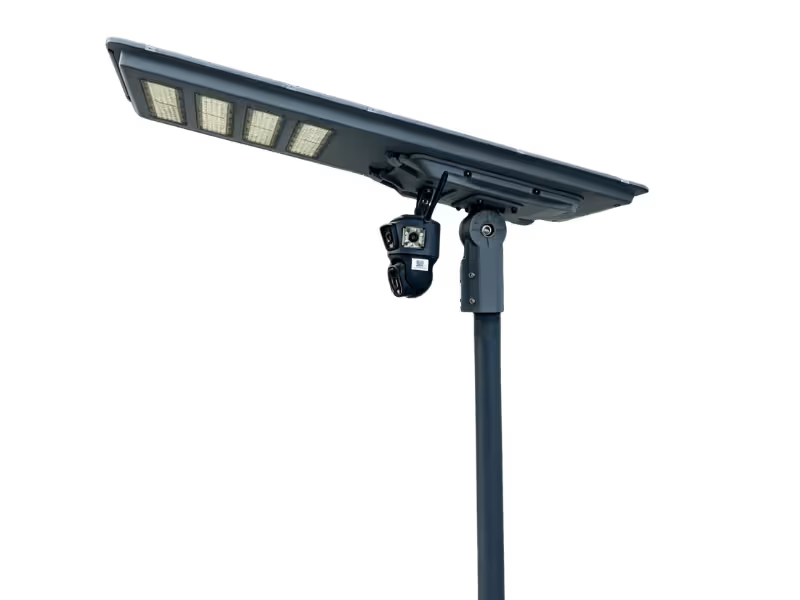
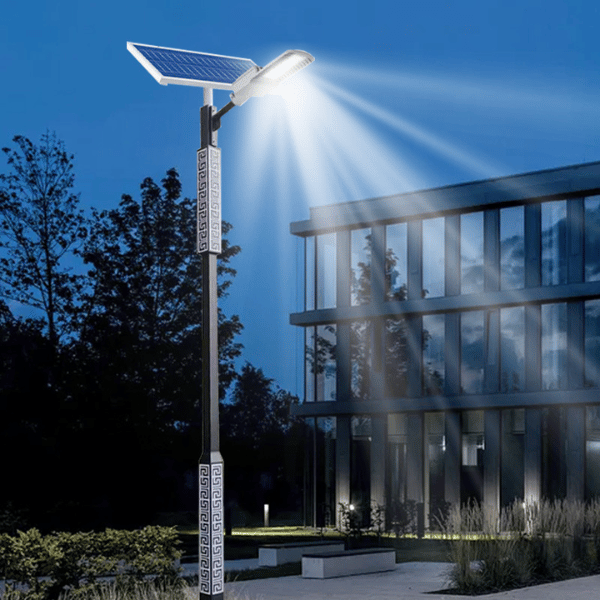
Modern solar street lights come with smart features that enhance their efficiency and usability. Motion sensors, for example, allow the light to brighten when movement is detected and dim when the area is empty. This not only saves energy but also extends the battery life.
Dimming options and dusk-to-dawn operation are equally important. Dimming lets you adjust the brightness based on the time of night or specific needs, while dusk-to-dawn sensors ensure the light turns on and off automatically. These features make the system more user-friendly and efficient.
By focusing on these essential features, you can select a solar street light that delivers reliable performance, lasts for years, and meets your specific requirements.
Benefits of Solar Street Lights
Solar street lights are more than just a lighting solution—they’re a smart investment in energy efficiency, sustainability, and convenience. Let’s explore the key benefits that make them a standout choice for outdoor lighting.
Energy Efficiency
One of the most significant advantages of solar street lights is their ability to cut electricity costs. By harnessing sunlight, these lights operate independently of the grid, eliminating monthly energy bills. This makes them especially appealing for large-scale projects, where traditional lighting would rack up significant costs.
Additionally, solar street lights are designed to maximize energy use. High-efficiency solar panels and LED lights work together to ensure every bit of stored energy is used effectively. This means you get bright, reliable lighting without wasting power.
Environmental Impact
Solar street lights are environmentally friendly. By using renewable energy, they significantly reduce carbon emissions compared to traditional grid-powered lights. This makes them an excellent choice for communities and businesses looking to lower their carbon footprint.
Another often-overlooked benefit is the reduction in light pollution. Many solar street lights come with focused beam angles and dimming features, ensuring light is directed where it’s needed without spilling into the night sky. This helps preserve natural darkness and supports local wildlife.
Ease of Installation
Installing solar street lights is a breeze compared to traditional lighting systems. Since they don’t require wiring or trenching, you can set them up almost anywhere. This is particularly useful in remote areas or locations with challenging terrain.
The simplicity of installation also means lower labor costs and faster project completion. Whether you’re lighting a residential street or a commercial parking lot, solar street lights save time and effort during setup.
Low Maintenance
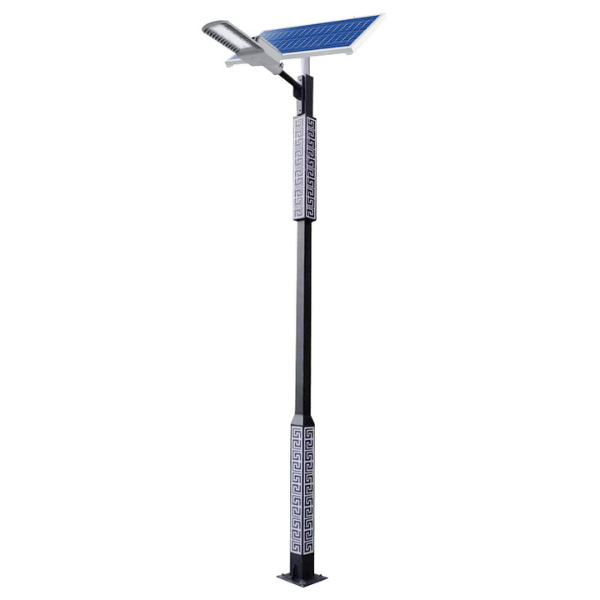
Solar street lights are built to last, with components designed for minimal upkeep. High-quality batteries, LEDs, and solar panels can operate efficiently for years without frequent replacements.
Most systems also include features like self-cleaning panels or protective coatings to reduce wear and tear. And with smart controllers managing energy flow, you can trust the system to run smoothly with little intervention.
By combining energy efficiency, environmental benefits, easy installation, and low maintenance, solar street lights offer a comprehensive solution for modern outdoor lighting needs.
Common Challenges and Solutions
While solar street lights offer numerous benefits, they are not without challenges. However, with the right strategies, these obstacles can be effectively managed. Let’s address some common issues and explore practical solutions to ensure your solar lighting system performs at its best.
High Initial Costs
Solar street lights indeed require a higher upfront investment compared to traditional lighting. This can be a concern for many buyers. However, it’s essential to look at the bigger picture.
The long-term savings on electricity bills and reduced maintenance costs often outweigh the initial expense. Over time, the system pays for itself, making it a cost-effective choice. Additionally, many governments and organizations offer subsidies or tax incentives for solar installations. Researching and applying for these programs can significantly reduce your initial costs.
Weather Dependence
Solar street lights rely on sunlight, which can be a challenge in areas with frequent cloudy or rainy days. But this doesn’t mean they won’t work effectively.
To address this, consider oversizing the solar panels and batteries. Larger panels can capture more energy even in low-light conditions, while higher-capacity batteries ensure the system has enough stored power to last through extended periods of poor weather. This approach ensures consistent performance, regardless of the climate.
Cold Climates
Cold weather can impact battery performance, as low temperatures reduce their efficiency and lifespan. But don’t let this deter you from using solar street lights in colder regions.
Advanced battery chemistries, such as lithium iron phosphate (LiFePO4), perform better in cold climates. Another option is to use heated enclosures for the batteries. These enclosures maintain an optimal temperature, ensuring the batteries function efficiently even in freezing conditions.
Maintenance Needs
While solar street lights are low-maintenance, they are not maintenance-free. Neglecting upkeep can lead to reduced performance over time.
Regular cleaning of the solar panels is essential to remove dust, dirt, and debris that can block sunlight. Depending on the environment, this may need to be done every few months. Additionally, batteries should be inspected and replaced as needed, typically every 3-5 years.
By addressing these challenges with proactive solutions, you can ensure your solar street lights deliver reliable, long-lasting performance. With proper planning and care, these systems can thrive in a variety of conditions.
How to Choose the Right Solar Street Light
Selecting the perfect solar street light isn’t just about picking the brightest option on the shelf. It’s about aligning the light’s features with your specific needs while ensuring quality and durability. Let me guide you through the key factors to consider when making your choice.
Matching Brightness and Power to Your Needs
Start by identifying the purpose of the light. Are you illuminating a residential street, a commercial parking lot, or a public park? Each application requires a different level of brightness, measured in lumens.
For residential areas, a light with 1,000 to 3,000 lumens is usually sufficient. It provides safety and visibility without being overpowering. For larger spaces like parking lots or highways, you’ll need higher outputs—5,000 lumens or more—to ensure adequate coverage.
Also, consider the power of the solar panel and battery. A higher wattage panel and a larger battery capacity ensure the light can operate reliably, even during cloudy days or longer nights.
Evaluating the Quality of Components
Not all solar street lights are created equal. Pay close attention to the quality of the components, as this directly impacts performance and longevity.
Look for certified batteries, such as lithium-ion or lithium iron phosphate (LiFePO4). These batteries are known for their efficiency, safety, and long lifespan. Similarly, choose solar panels with high efficiency ratings (at least 18-20%) to maximize energy capture.
The controller is another critical component. Advanced controllers not only manage energy flow but also protect the system from overcharging, over-discharging, and short circuits.
Considering Smart Features for Added Convenience
Modern solar street lights come with smart features that enhance their functionality. Motion sensors, for example, allow the light to brighten when movement is detected and dim when the area is empty. This saves energy and extends battery life.
Dusk-to-dawn sensors are another valuable feature. They ensure the light turns on automatically at sunset and off at sunrise, eliminating the need for manual operation. Some systems even offer remote control or app-based management for added convenience.
Tips for Selecting Durable, Weather-Resistant Designs
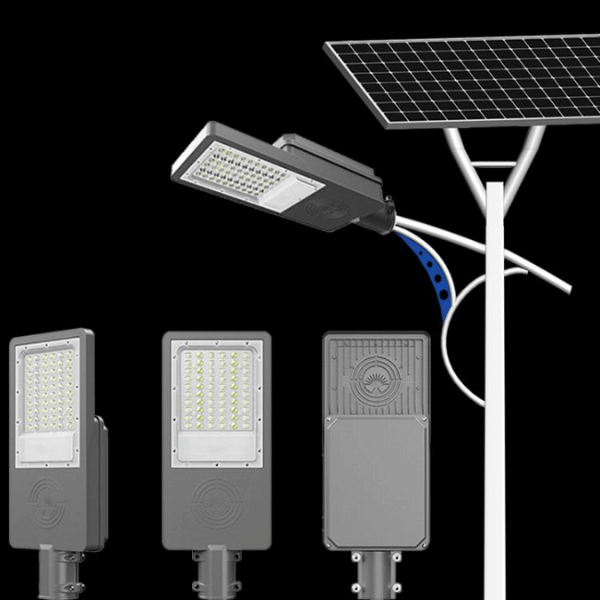
Durability is non-negotiable for outdoor lighting. Start by checking the IP (Ingress Protection) rating. An IP65 rating or higher ensures the light is resistant to dust and water, making it suitable for all weather conditions.
The materials used in the light’s construction also matter. Aluminum alloy and stainless steel are excellent choices for the body, as they resist corrosion and withstand harsh environments. For the solar panel, tempered glass provides added protection against impact and wear.
By focusing on these factors—brightness, component quality, smart features, and durability—you can choose a solar street light that meets your needs and stands the test of time.
Installation and Maintenance Tips
Proper installation and regular maintenance are the backbone of a reliable solar street lighting system. A well-installed and well-maintained light not only performs better but also lasts longer. Let’s dive into the key aspects of installation and upkeep to ensure your system operates at its peak.
Placement: Optimal Pole Height, Spacing, and Solar Panel Orientation
The placement of your solar street lights can make or break their performance. Start by determining the optimal pole height. For residential streets, poles between 4 to 6 meters (13 to 20 feet) are ideal. For highways or large public spaces, taller poles—8 to 12 meters (26 to 40 feet)—are necessary to provide wider coverage.
Spacing is equally important. For residential areas, lights should be spaced 20 to 30 meters (65 to 100 feet) apart. In commercial or public spaces, the spacing may need to be adjusted based on the brightness and beam angle of the lights.
Solar panel orientation is critical for energy efficiency. Panels should face true south in the northern hemisphere and true north in the southern hemisphere. Tilt the panel at an angle equal to your location’s latitude to maximize sunlight absorption. Avoid placing lights in shaded areas, as this can significantly reduce their performance.
Routine Maintenance: Cleaning Panels, Checking Batteries, and Securing Fixtures
Routine maintenance keeps your solar street lights running smoothly. Start with the solar panels. Dust, dirt, and debris can block sunlight and reduce energy capture. Clean the panels every 3 to 6 months using a soft cloth and water. Avoid abrasive materials that could scratch the surface.
Next, check the batteries. Inspect them for signs of wear, corrosion, or reduced capacity. Most batteries need replacement every 3 to 5 years, depending on their type and usage.
Don’t forget to secure the fixtures. Over time, bolts and screws can loosen due to wind or vibrations. Regularly inspect and tighten all components to prevent damage or misalignment.
Troubleshooting: Common Issues Like Dim Lighting or Short Runtime
Even with proper installation and maintenance, issues can arise. Dim lighting or short runtime is often caused by insufficient charging. Check if the solar panel is clean and properly oriented. If the problem persists, the battery may need replacement.
Another common issue is flickering or inconsistent lighting. This is usually a sign of a faulty controller or loose wiring. Inspect the connections and replace the controller if necessary.
By following these installation and maintenance tips, you can ensure your solar street lights deliver consistent, reliable performance for years to come.
Why Solar Street Lights Are the Future
Solar street lights are not just a trend—they are paving the way for a brighter, more sustainable future. With rapid advancements in technology, growing affordability, and their role in shaping modern cities, these lights are becoming an essential part of urban infrastructure. Let’s explore why they are set to dominate the future of outdoor lighting.
Advancements in Battery and Panel Technology
The technology behind solar street lights has come a long way. Modern solar panels are more efficient than ever, with conversion rates reaching 20% or higher. This means they can capture more energy even in low-light conditions, such as cloudy days or during winter months.
Battery technology has also seen significant improvements. Lithium iron phosphate (LiFePO4) batteries, for example, offer longer lifespans, faster charging, and better performance in extreme temperatures. Some systems even incorporate smart battery management systems (BMS) to optimize energy storage and usage, ensuring the lights stay on even during extended periods of poor weather.
These advancements make solar street lights more reliable and efficient, reducing the gap between solar and traditional grid-powered lighting.
Increasing Affordability and Government Support
One of the most significant barriers to adopting solar street lights has been their initial cost. However, this is changing rapidly. As technology improves and production scales up, the cost of solar panels, batteries, and LEDs has dropped significantly. Today, solar street lights are more affordable than ever, making them accessible to a broader range of users.
Governments around the world are also stepping in to promote solar lighting. Subsidies, tax incentives, and grants are being offered to encourage the adoption of renewable energy solutions. In some regions, governments are even mandating the use of solar street lights in new developments, further driving their adoption.
Role in Sustainable Urban Development and Smart Cities
Solar street lights are a cornerstone of sustainable urban development. By reducing reliance on grid electricity, they help lower carbon emissions and promote the use of renewable energy. This aligns perfectly with global efforts to combat climate change and create greener cities.
In smart cities, solar street lights play an even bigger role. Many modern systems come equipped with IoT (Internet of Things) capabilities, allowing them to be integrated into larger intelligent city networks. These lights can collect and share data, such as traffic patterns or air quality, providing valuable insights for urban planning.
By combining sustainability, affordability, and cutting-edge technology, solar street lights are not just lighting the way—they are shaping the future of urban living.
Frequently Asked Questions (FAQs)
Q: How long do solar street lights last?
A: The lifespan of solar street lights depends on their components:
- LED Lights: High-quality LEDs can last up to 50,000 hours, which translates to about 10-12 years of use.
- Batteries: Lithium-ion or LiFePO4 batteries typically last 3-5 years, depending on usage and maintenance.
- Solar Panels: Most panels have a lifespan of 20-25 years with minimal degradation.
Regular maintenance, such as cleaning panels and replacing batteries, can extend the overall lifespan of the system.
Q: Do they work in cloudy or rainy climates?
A: Yes, solar street lights are designed to work in various weather conditions.
- Solar Panels: High-efficiency panels can capture energy even on cloudy days, though the output may be lower.
- Battery Backup: Oversized batteries can store enough energy to power the lights for 2-3 days without sunlight.
For areas with frequent overcast weather, consider systems with larger panels and higher-capacity batteries to ensure consistent performance.
Q: What’s the difference between integrated and split designs?
A: The main difference lies in how the components are arranged:
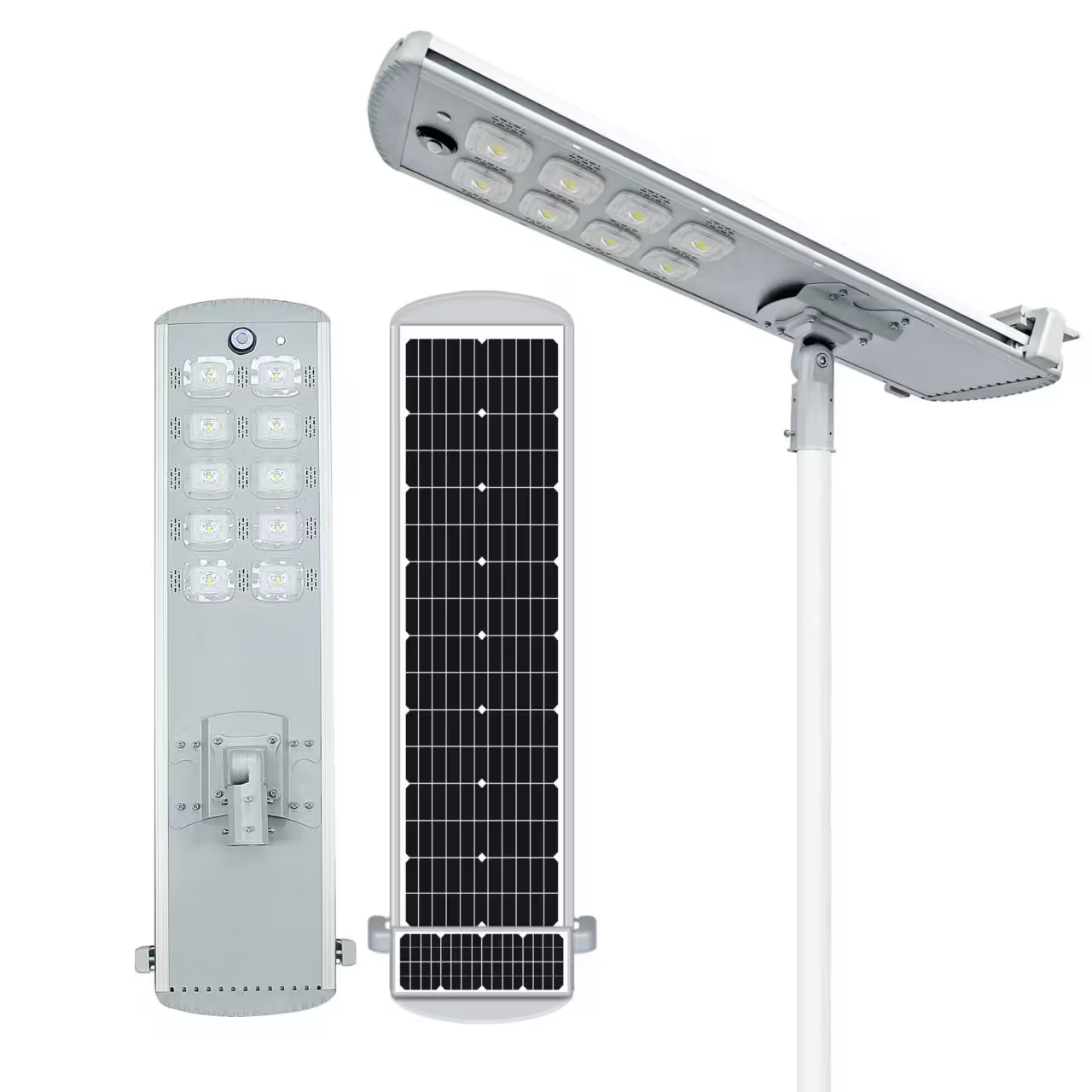
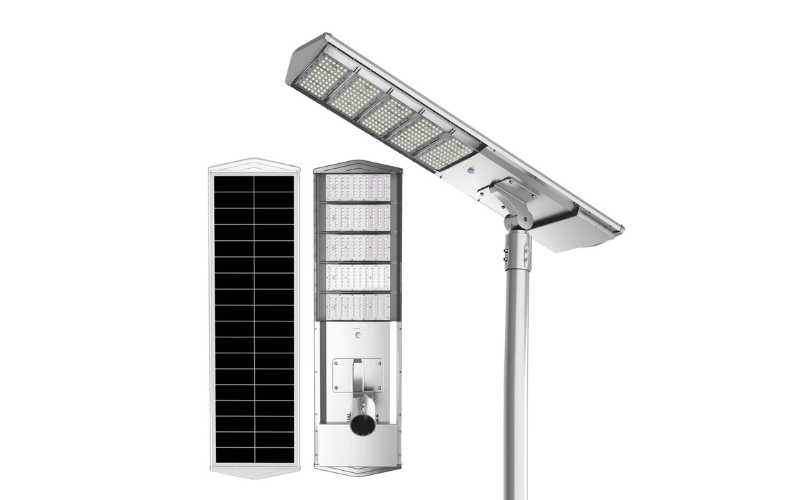
- Integrated Design: All components—solar panel, battery, controller, and LED—are housed in a single unit. These are compact, easy to install, and ideal for smaller applications.
- Split Design: The solar panel is separate from the light fixture, allowing for more flexibility in placement. These are better suited for larger or more complex installations.
Choose based on your specific needs, such as space constraints or the level of customization required.
Q: How do I size the battery and panel for my needs?
A: Proper sizing ensures your solar street light operates efficiently. Here’s how to calculate:
- Battery: Determine the daily energy consumption of the light (in watt-hours) and multiply it by the number of backup days you need. For example, if your light uses 50 watts for 10 hours, you’ll need a battery with at least 500 watt-hours of capacity.
- Solar Panel: Match the panel’s daily energy generation to the battery’s charging needs. Consider factors like sunlight hours and panel efficiency.
For precise sizing, consult with a solar lighting expert or use online calculators tailored to solar systems.
Conclusion
Choosing the best solar street lights requires careful consideration of several key factors. Focus on matching the brightness and power to your specific needs, ensuring the components—like batteries, panels, and controllers—are of high quality. Look for smart features and durable, weather-resistant designs to maximize efficiency and longevity.
Always balance quality, performance, and cost. While it may be tempting to opt for the cheapest option, investing in reliable, high-performing lights will save you more in the long run through reduced maintenance and energy costs. By prioritizing these elements, you can confidently select solar street lights that deliver lasting value and dependable performance.