
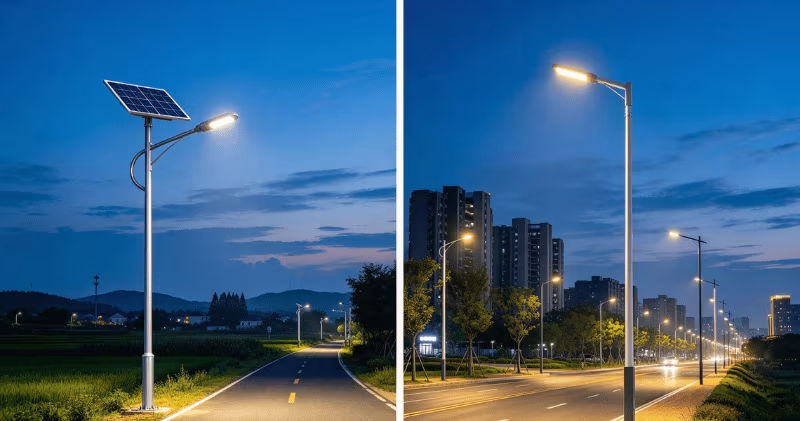
Pick the wrong street lighting system and the cost shows up fast: a trenching budget you never needed to spend, or off-grid lights that fade before dawn on the first cloudy week. The choice between solar and LED street lights shapes your installation timeline, civil works, electricity bills, and long-term reliability. On most outdoor projects, it is one of the earliest decisions that quietly locks in the rest of your budget.
But there’s a catch that trips up many buyers. This is not really a brightness contest. It is a decision about how each system gets its power. A solar street light generates and stores its own energy on-site, while a grid-powered LED street light draws from the mains. Sort that out first, and the rest of the comparison falls into place.
First, Let’s Clear Up the Terminology
Here is the confusion worth killing early: solar street lights also use LEDs. Nearly all of them do. So “solar vs LED” is not a fair technical pairing — both run on LED chips.
What the market really means by “LED street light” is a grid-powered LED street light: a mains-connected fixture with no panel and no on-site battery. It has simply become shorthand, the same way people say “LED” when they mean the whole grid-connected setup. We will use that convention here because it is what buyers actually search for, but the honest framing is this: you are comparing solar-powered lighting against grid-powered LED lighting. The real dividing line is the power source, not the light source.
Once you see it that way, the decision stops being about lumens and becomes a question of infrastructure, cost model, and site conditions.
Solar vs Grid-Powered LED: A Quick Overview
Before comparing the two, it helps to define each one clearly — and, more importantly, to understand what each means for your project on the ground.
What Is a Solar Street Light?
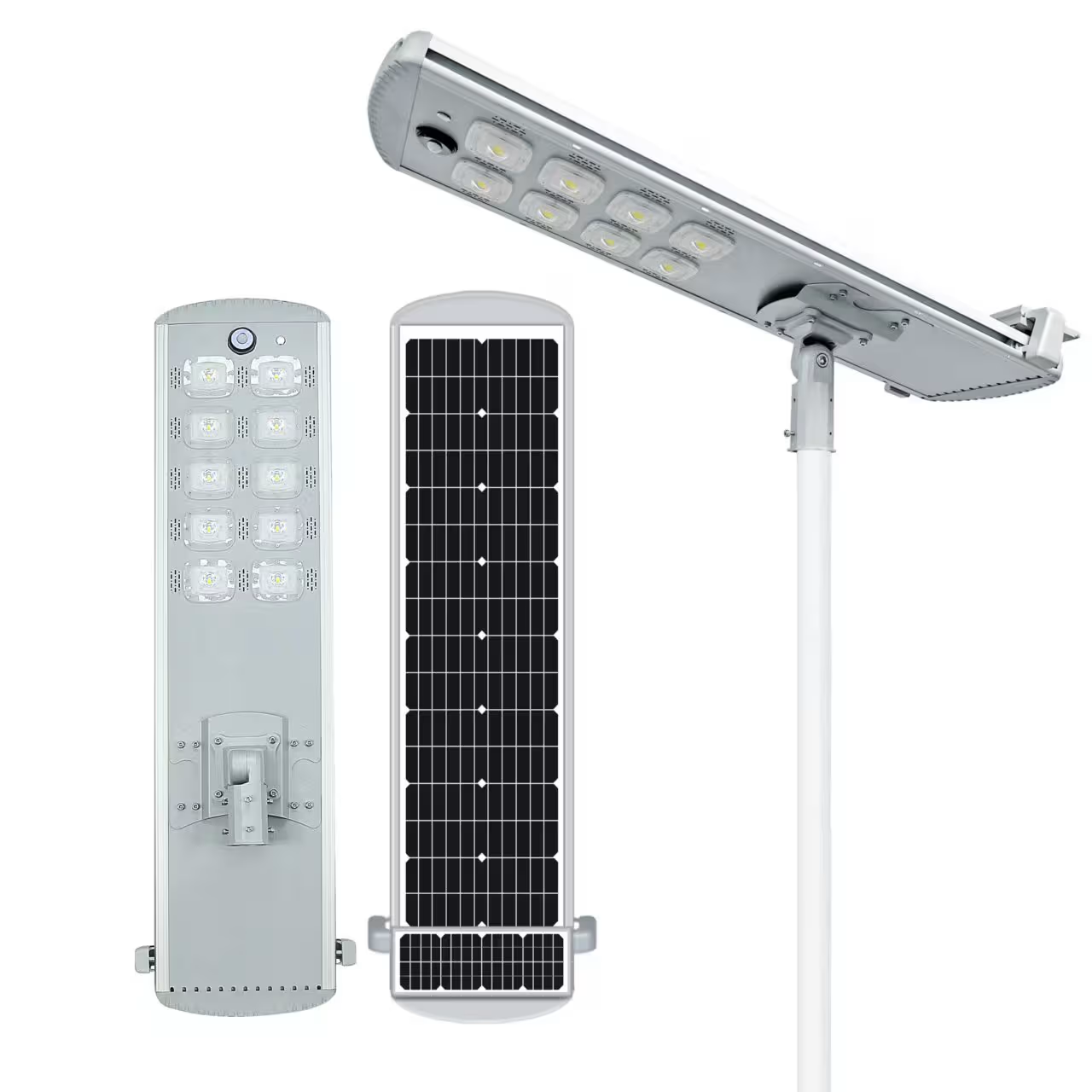
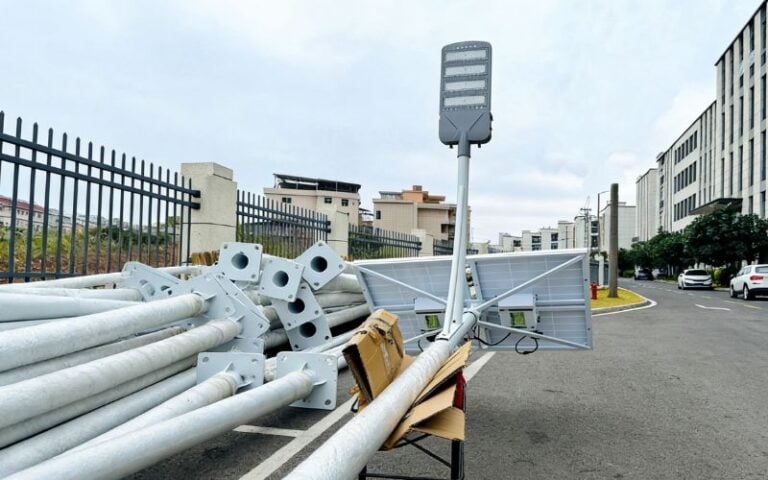
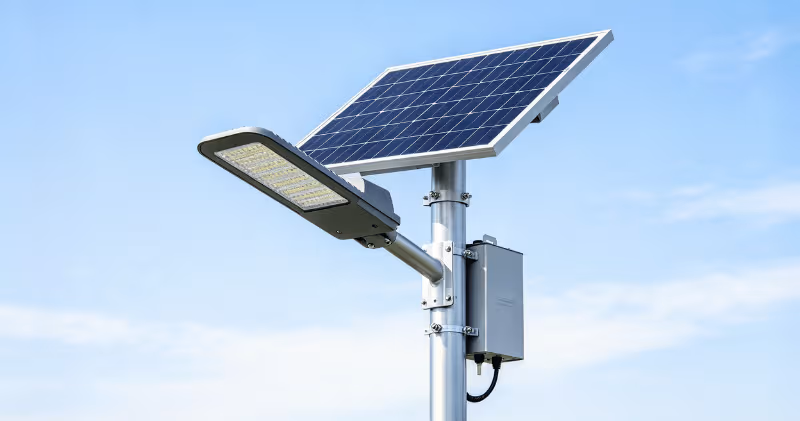
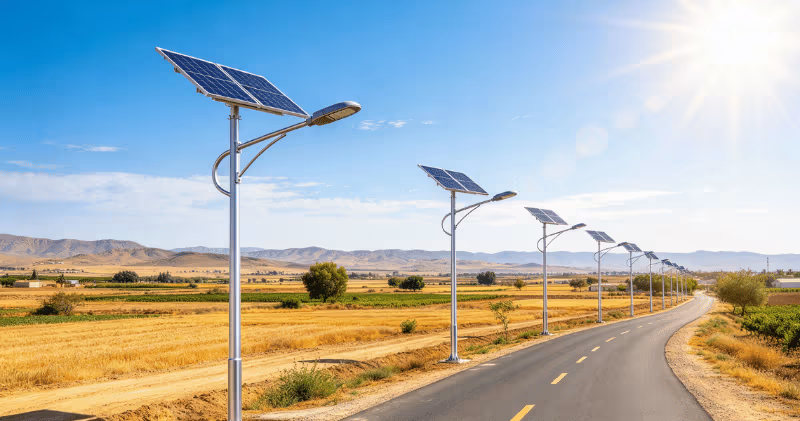
A solar street light is a self-contained, off-grid lighting system. It combines a solar panel, a battery, a charge controller, and an LED fixture on a single pole. During the day, the panel charges the battery. At night, the controller draws on that stored energy to run the light. Because each unit produces and stores its own power, it needs no cabling and no connection to the electrical grid.
What this means for a project: installation independence. You can drop a pole almost anywhere the sun reaches, skip the civil works, and scale one pole at a time. The trade-off is that the system now carries its own power plant—a panel and a battery—whose sizing must match the site’s weather, not a brochure’s assumptions.
What Is a Grid-Powered LED Street Light?
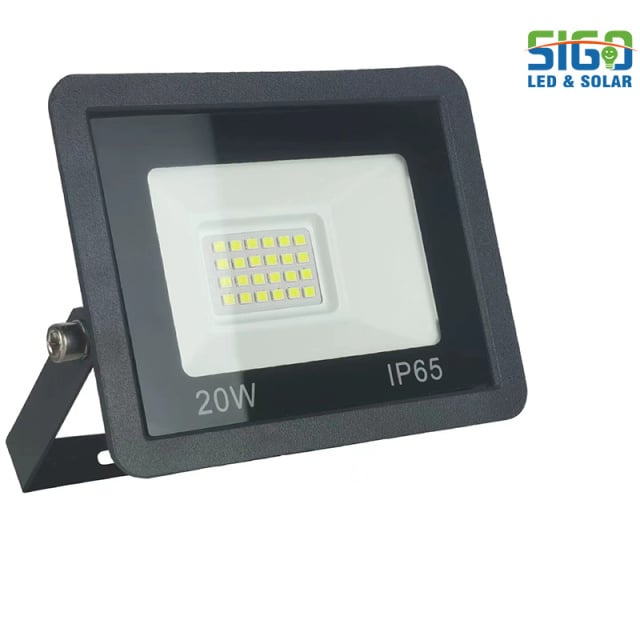
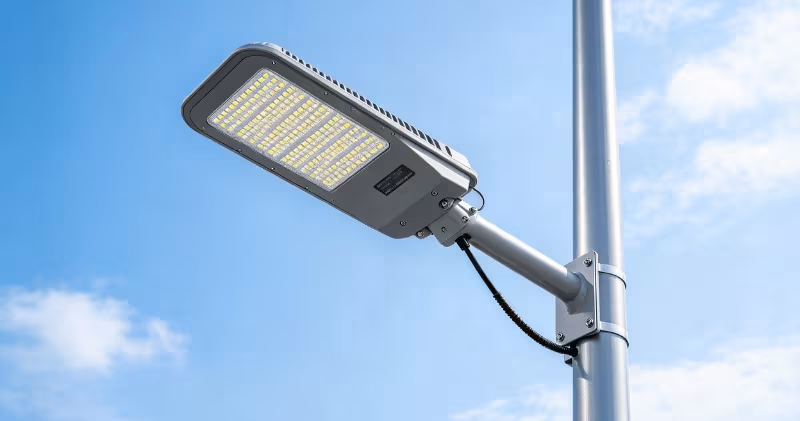
A grid-powered LED street light is a mains-connected fixture that uses LED chips as its light source. It has no panel and no on-site battery. Instead, it draws electricity from the grid through buried or overhead cabling, delivering constant, predictable output as long as power flows.
What this means for a project: infrastructure dependence. The fixture itself is simple, but the system leans on utility power, cable runs, and often permits. Where that infrastructure already exists, this is a strength. Where it does not, the “simple” fixture drags a trenching-and-cabling project behind it.
Solar vs Grid-Powered LED: The Key Differences
Every meaningful difference below traces back to one thing: how each system is powered. That single factor ripples out into installation, cost, maintenance, and reliability. The table gives you the side-by-side view; the analysis explains what each row means once it reaches a real site.
|
Aspect |
Solar Street Light |
Grid-Powered LED Street Light |
|---|---|---|
|
Power source |
On-site panel and battery |
Mains electricity |
|
Trenching/wiring |
None required |
Cabling and trenching needed |
|
Installation timeline |
Days; pole-by-pole |
Weeks; civil works first |
|
Upfront cost |
Higher per unit |
Lower per fixture |
|
Operating cost |
No energy bills |
Ongoing electricity charges |
|
Utility dependence |
None |
Full |
|
Maintenance |
Battery replacement cycle |
Fixture-focused, no battery |
|
Battery aging risk |
Present; sizing-dependent |
None |
|
Brightness stability |
Depends on sun and battery |
Constant, predictable |
|
Weather dependence |
High (sun-hours) |
Low |
|
Remote-rollout scalability |
High |
Low |
|
Smart controls |
Timers, sensors, dimming |
Timers, sensors, dimming |
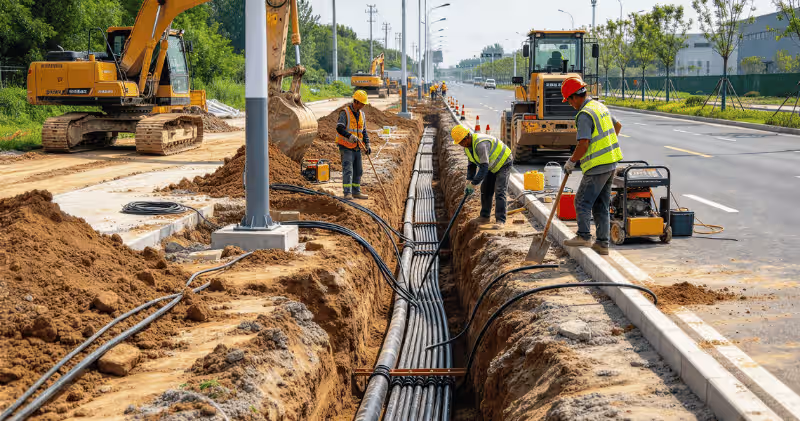
On installation, the split is sharp. Solar skips civil works entirely — no trenching, no cable runs, often no grid-connection permits — which can compress deployment from weeks to days on a remote site. Grid-powered LED shifts that complexity upstream: the fixture is simple, but the project quietly becomes a trenching, cabling, permitting, and utility-coordination job. Many buyers underestimate this because they compare fixture prices, not project scopes.
On cost and maintenance, the two trade places. Solar costs more per unit but bills you nothing for power across its entire service life; its main recurring cost is a battery swap every few years. Grid LED is cheaper to buy but meters you every month — and over a decade, those charges become a real line item. The maintenance profiles mirror this: grid fixtures have no battery to age, so service focuses on the fixture, while solar reliability lives and dies by battery health.
On reliability, grid wins on consistency — but that is not the whole story. The grid delivers the same output every night, regardless of weather. Solar performance depends not just on sun-hours, but on whether the system was sized for seasonal lows, consecutive cloudy days, and the actual dimming profile in use. This is the field-level truth worth internalizing: a badly specced solar light rarely fails in week one. It fails during the first long stretch of poor weather, when the battery never fully recharges, and the reserve bleeds away — and by then everyone blames the fixture instead of the sizing.
Which Projects Suit Each? A Decision Framework
The differences above only matter when you apply them to a real site. Rather than a list of use cases, use this as a quick decision filter.
Choose solar if:
- The grid is far, costly to reach, or simply not there — rural roads, farms, border posts, mining sites.
- Trenching is expensive, or the terrain is hard to dig.
- You need a phased rollout that scales pole by pole.
- The site has strong, reliable sun-hours year-round.
- You want to eliminate ongoing energy bills and lock in a predictable lifecycle cost.
Choose grid-powered LED if:
- A grid connection already sits nearby at acceptable cost.
- The site demands guaranteed, high-lux output every night — think busy highways or intersections.
- The climate is low-sun or the panels would be heavily shaded.
- Any dimming or weather-driven shortfall is unacceptable.
- Low upfront cost matters more than avoiding monthly energy charges.
Reconsider solar if the site is shaded, sits in a persistently cloudy region, or cannot support an oversized panel and battery. Solar in the wrong location is not a bargain — it is a slow failure. Reconsider grid-powered LED if the nearest connection is far away or the ground is difficult, because the trenching bill can dwarf every fixture you buy.
Some projects sit in the gray zone — campuses, industrial parks, parking lots. To break the tie, weigh grid distance against trenching cost, then check local sun-hours. When both point the same way, you have your answer.
Cost and ROI: What You Actually Pay Over Time
Judging these systems on unit price alone leads straight to poor decisions. The real question is total cost of ownership and how fast the investment pays back.
Start with upfront cost, and look past the fixture. A grid LED fixture is cheaper to buy, but the sticker price hides the real spend. Trenching cost scales with distance — every meter of cable trench adds labor, conduit, and reinstatement, and across a long rural road or a hard-dig site those meters add up faster than the fixtures ever could. Grid-connection fees and permits pile on top. Solar carries a higher per-unit price but needs none of that civil work, which is exactly why the total can flip in solar’s favor before the lights even switch on.
Next, weigh operating and service costs honestly:
- Energy charges (grid). Billed monthly, for life, and sensitive to local tariffs. In regions with high or rising electricity prices, this single factor can decide the comparison.
- Battery replacement (solar). Predictable and modest — every few years — but real, and it belongs in any fair lifecycle estimate.
- Maintenance logistics. At remote sites, the cost of reaching a pole often exceeds the cost of the part. A crew day, a vehicle, and fuel to service one fixture reward whichever system needs fewer visits — usually a well-built solar unit far from the grid.
- Civil works (grid). Trenching, cabling, conduit, and permits — the line item buyers most often forget to compare.
Payback favors solar fastest where trenching is expensive, sites are remote, and energy tariffs are high. Where a strong grid connection already sits nearby and sunlight is scarce, grid-powered LED usually stays cheaper across its lifetime. Run the numbers over the full lifecycle, not the first invoice.
How to Choose: A 5-Step Project Screening
You do not need to guess. Work through these five steps in order, and the right answer usually reveals itself.
- Check grid access and cost-to-connect. How far is the nearest usable connection, and what will it cost to reach each pole? The higher that figure, the stronger the case for solar.
- Verify sun-hours and shading. Pull the site’s real sun-hour data and account for seasons, cloudy spells, and any shading from trees or buildings. Solar depends on this more than any other factor.
- Define your non-negotiable reliability level. If constant, guaranteed brightness is essential and any shortfall is unacceptable, grid delivers it outright. If you can plan around sun-hours with correct sizing, solar performs reliably too.
- Assess maintenance reality. How often, and how easily, can a crew reach the site? Remote or hard-access locations reward low-touch systems and change the ROI math.
- Pick your cost model. Can you absorb higher upfront cost to erase ongoing bills, or do you need low capex and can carry monthly energy charges? This is often the deciding lens once the technical fit is clear.
Two mistakes to avoid throughout: never judge on unit price alone, since the cheapest fixture often carries the highest lifetime cost — and never deploy solar on a shaded or low-sun site without oversizing the panel and battery first. A perfectly good solar light will still fail in the wrong location. In climates where dust or grime cuts panel output, a self-cleaning solar street light protects daily harvest with far less manual upkeep.
What to Demand From a Supplier — and How Sigostreetlight Fits
Once you know which system your project needs, the next risk is the supplier. A strong product from a weak partner still fails, because nobody is there when something goes wrong. Before you commit, insist on a few things from any candidate:
- Irradiance-based sizing, not guesswork — a panel and battery matched to your site’s actual sun-hours and seasonal lows.
- Lux and spacing calculations tied to your road or area, so coverage is uniform rather than assumed.
- Honest lifecycle costing that compares upfront price, trenching, energy, and battery replacement side by side.
- Verifiable documentation — certifications, test reports, and warranty terms you can actually check.
- Project references in a climate and scale similar to yours.
This is where working across both categories matters. Sigostreetlight supplies complete solar street light systems and grid-powered LED fixtures, so recommendations follow the project rather than a single product line. We size autonomy to local weather, compare lifetime cost against unit price, and outline realistic payback for your specific site — grid distance, sun-hours, required lux, pole height, and climate all factored in. Field experience backs it up: our solar street light project in Tanzania was tuned to a hot East African climate rather than a generic spec, and our solar LED streetlight retrofit in Punjab, Pakistan shows how existing infrastructure can move off-grid without starting from scratch. If you are weighing solar against grid for an upcoming project, send us the site details, and we will help you spec it correctly.
Frequently Asked Questions
Are solar street lights brighter than LED street lights?
Brightness comes down to the LED and its lumen output, not the power source — and both systems use LEDs. A well-specced solar street light can match a grid-powered LED fixture. The real difference is consistency: grid delivers the same brightness every night, while solar output depends on correct panel and battery sizing for local weather.
How long do solar street light batteries last?
It depends on chemistry and how hard the battery is worked. Quality LiFePO4 batteries commonly deliver several years of daily cycling, and often longer when the system is sized so the battery is never deeply discharged or left uncharged for long stretches. Heat, deep discharges, and undersized panels all shorten real-world life.
When is a grid-powered LED street light the better choice?
When a grid connection already exists nearby, when the site demands guaranteed high brightness with zero tolerance for weather-driven dimming, or when the climate simply cannot supply reliable sun-hours. In these conditions, the low fixture cost and steady output are hard to beat.
Can solar street lights work in cloudy climates?
Yes, but only when you size the panel and battery for it. In cloudier regions, you plan for more autonomy days and a larger panel-to-load ratio so the system rides through consecutive overcast days. The failure mode isn’t the technology—it is specifying a sunny-climate system for a cloudy site.
Bringing It Together
The choice between solar and grid-powered LED street lights comes down to three factors, not brightness: grid access, local sun-hours, and lifetime cost. Solar wins where cabling is costly, and sun is reliable. Grid-powered LED wins where infrastructure already exists, and constant output is essential. Match the system to the site, judge cost across the full lifecycle, and most of the uncertainty disappears.
Ready to make the call with confidence? Map your site’s grid distance, sun-hours, and coverage needs, then reach out to the Sigostreetlight team for a spec review or project consultation — and turn a sound plan into lighting that quietly does its job for years.