

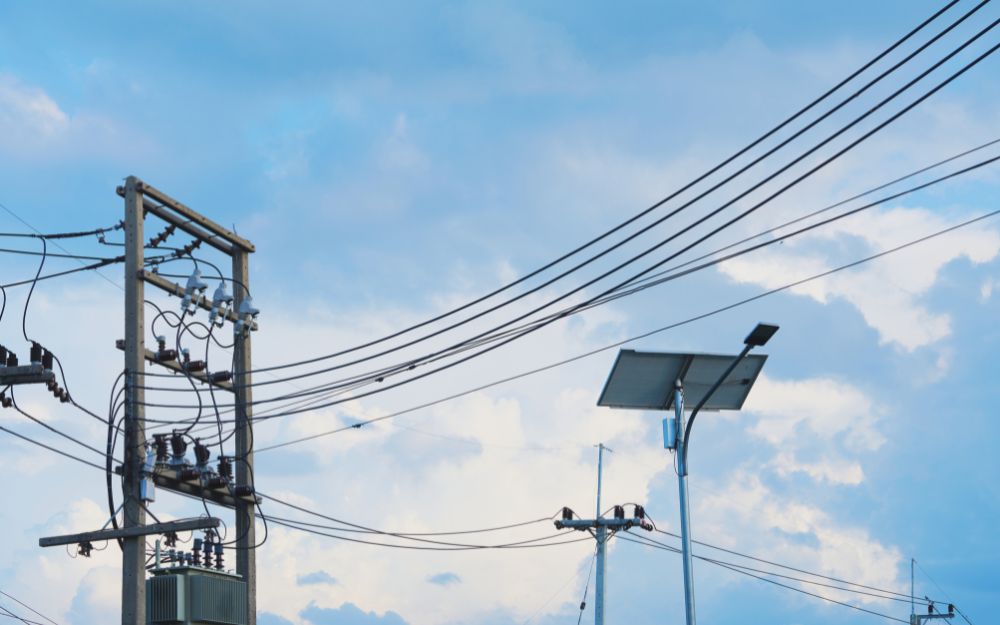
Solar street lights have become an increasingly popular source of sustainable lighting over the last decade. As the green transition accelerates, solar power is firmly established as part of the global infrastructure mix, providing clean, eco-friendly illumination to communities worldwide. However, installing the street lights requires generating this light, which is a complex and challenging undertaking. These advanced lighting structures require significant engineering expertise and logistical planning.
In this article, we take a closer look at the process of installing solar street lights and examine the essential role that support systems play in ensuring they operate efficiently.
How many solar street lights are there worldwide?
There are currently millions of solar streetlight projects worldwide. These are at various stages of development, with a vast number already operational, more being installed daily, and countless new projects in the planning phase. Additionally, there are several initiatives that have either been approved or applied for government grants and incentives to make the switch from traditional lighting.
With a combined total of millions of kilowatts of energy saved by millions of solar lights across countless cities, the world has seen a dramatic increase in solar street light installations. Furthermore, many countries are home to some of the world’s most ambitious solar lighting projects.
What does installation at this scale look like in real terms? It means that the world’s solar street lights generate enough electricity to power hundreds of thousands of homes if the energy were diverted, and deliver a significant reduction in carbon emissions. This number is only rising. In recent years, Asia and Africa have accounted for a large share of global installations, with millions of new installations.
How do solar street lights work?
Solar street lights use integrated systems to produce illumination. Each individual unit has a solar panel that absorbs sunlight during the day. As it absorbs solar radiation, it creates direct current (DC) energy and stores it in a rechargeable battery. This battery then powers the LED fixture at night, ready to light up streets, parks, and pathways.
Each light is anchored to the ground with a sturdy pole and foundation and is usually installed at heights of around 13 to 39 feet, depending on the specific application. The decision of where to locate a solar street light is strategic: units need to be placed in areas with consistent sunlight exposure to ensure they can generate and store electricity efficiently.
The stronger, more direct sunlight experienced in open areas is also a factor in why solar street lights are more productive than those placed in shaded locations. There is nothing obstructing—and therefore weakening—the flow of solar energy like there is in areas with tall buildings and trees. The increased sun exposure experienced in clear areas, therefore, delivers a greater energy yield. Furthermore, modern solar panels are often much more efficient than older counterparts, which, again, contributes to a greater energy yield.
How solar street lights are installed
While installing solar street lights is a complex and nuanced process, it usually involves the following five key steps:
- Site Preparation
The installation area needs to be surveyed before work can begin. This process allows for the identification of any potential hazards or obstacles, such as underground utilities or overhead power lines. It may also flag the need to level the ground to provide a stable foundation for the light pole.
- Foundation Installation
Specialized crews with digging equipment install the light pole’s foundation, typically using concrete to create a solid base. This ensures the pole can withstand wind and other environmental factors. For smaller lights, direct burial or pre-fabricated bases might be used to speed up the process.
- Solar Panel and Fixture Installation
After setting the foundation, assembly crews mount the main components. The solar panel is attached to the top of the pole at an optimal angle to catch sunlight. The LED light fixture, battery box, and controller are then securely fastened onto the pole according to the manufacturer’s specifications.
- Wiring and Connections
Using weatherproof cables and connectors, technicians wire the system together. The solar panel is connected to the charge controller, which is then connected to the battery and the LED fixture. All connections must be secure and protected from moisture to prevent system failure.
- Commissioning
Once the pole is erected and all components are installed and connected, the system is tested to ensure it is operating correctly. After passing all necessary electrical, safety, and performance checks, including verifying that the light turns on at dusk and off at dawn, the system is commissioned.
The type of foundation a solar street light requires depends on the pole height and local soil conditions. For lights installed in stable soil, a standard concrete pier is often used. For lights installed in areas with poor soil quality, a more robust foundation system—using a larger concrete base or helical piles—is advised. And for taller poles in high-wind areas, a deep concrete foundation with additional anchoring bolts is used to ensure stability.
How do support systems enhance solar street light installations?
A number of different systems are required for successful solar street light installations. As well as the more obvious hardware, such as poles and fixtures, perhaps surprisingly, one of the most crucial elements for getting solar lighting projects up and running is the support infrastructure. This is because modern projects are subject to performance expectations that require every unit to have monitoring and maintenance plans in place.
In fact, the role of support systems in solar lighting projects is so essential that they must be available at all times, providing round-the-clock service to their assigned installations. While remote monitoring can be done from anywhere, the idea is that maintenance teams will be dispatched to repair units should the need arise.
These specialist systems need to have the facilities and capabilities to:
- Carry a range of specialist data, such as battery health, energy production, and fault alerts.
- Operate fully during severe weather.
- Allow for remote diagnostics and troubleshooting to provide technicians with the necessary information.
- Act as a central database with state-of-the-art communication equipment.
- Operate as a ‘place of record’ and a coordination point for maintenance efforts during a system issue.
- Monitor performance and warn of potential issues to prevent downtime.
With a strong commercial and technical background in the lighting industry, our company can provide leading support to clients involved in solar streetlight projects. Contact our expert team to find out more about our impeccable track record in providing a range of specialist solutions for the renewable lighting sector.