

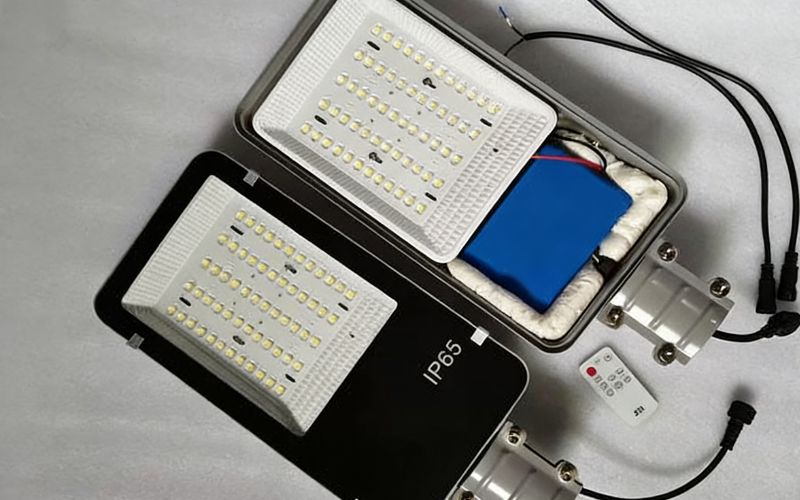
Most solar street lights are sold with three to seven-year warranties on their batteries and solar panels—with high-end lithium-ion batteries often covered for five to seven years. That said, like other public infrastructure investments, high-quality solar street lights are expected to last much longer, with the LED fixtures and poles often remaining fully operational for up to 15 years.
As solar street lights age, their internal batteries degrade. It is generally accepted that when a battery falls below 70% to 80% of its original storage capacity (there is no global unified standard, and most manufacturers adopt this range), it has reached the end of its useful life for nighttime street lighting. In reality, this means a solar light originally designed to last 12 hours might only last 9 hours before shutting off.
Despite potentially no longer being as useful for illuminating public roadways all night, these batteries still store significant amounts of energy at the end of their primary life. As a result, several organizations are already taking used street light batteries and converting them into smaller stationary storage systems to power residential sheds, off-grid cabins, or emergency backup systems. It is expected that these repurposed batteries could easily last another decade in these less demanding use cases.
Once a solar street light battery has lost a significant proportion of its original energy capacity, it can then be recycled into raw materials used to build brand new batteries. The efficiency of this advanced recycling process continues to improve globally, with a strong possibility of creating a nearly closed-loop system in the near future, in which lithium and other metals are fully recovered and remanufactured into new energy storage units.
The European Union has set an ambitious target under its battery regulations to collect and recycle 70% of all lithium-ion batteries (including portable, industrial, and automotive batteries) by the year 2030. Similarly, the United States has introduced a number of policies to promote the responsible recycling of end-of-life battery systems. As the renewable lighting industry continues to expand rapidly, more policies on the reuse and repurposing of materials are likely to be established by governments to ensure the ongoing sustainability of solar street light batteries.