

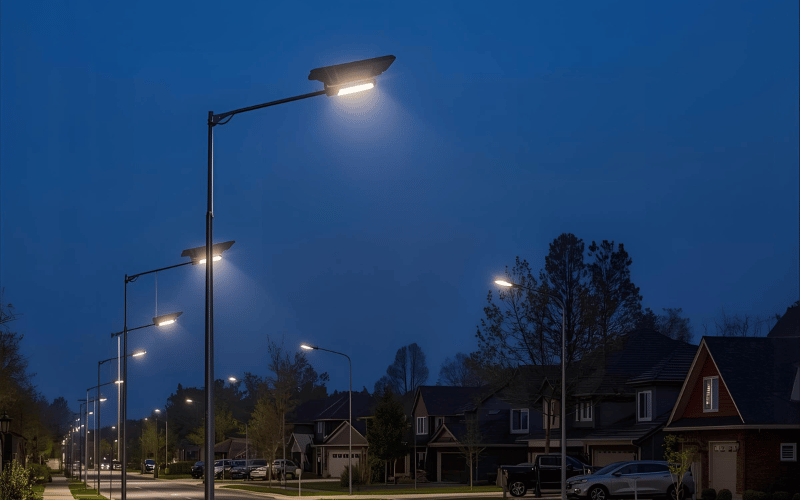
Wattage plays a crucial role in the performance and efficiency of solar lights. It determines how much power the light consumes and directly impacts its brightness and energy efficiency. Understanding wattage is essential for selecting the right solar light to meet specific needs, whether for residential, commercial, or outdoor applications.
Higher wattage typically means brighter lights, but it also requires more energy, which can affect battery life and overall efficiency. On the other hand, lower wattage lights are more energy-efficient but may not provide sufficient brightness for specific applications. Striking the right balance between wattage and performance is key to ensuring optimal results.
The purpose of this blog is to explain the concept of wattage, its impact on solar light performance, and the factors to consider when choosing solar lights. By understanding these aspects, you can make informed decisions and select solar lights that best suit your requirements.
How to Define Wattage in Solar Lights?
Wattage is a measure of the power consumption of a solar light. It indicates how much electrical energy the light uses to produce illumination. While wattage is often associated with brightness, it is not a direct measure of light output. Instead, brightness is measured in lumens, which represent the total amount of visible light emitted by a source.
The key difference between wattage and brightness lies in their focus. Wattage reflects energy usage, while lumens measure the light output. For example, a solar light with higher wattage may not necessarily be brighter if it is less energy-efficient. Modern solar lights are designed to maximize lumens while minimizing wattage, ensuring better energy efficiency.
Wattage plays a crucial role in determining the energy efficiency and performance of solar lights. Lower wattage lights consume less energy, making them more sustainable and cost-effective. However, it is essential to balance wattage with the required brightness to meet specific lighting needs effectively.
| Metric | Definition | Importance |
|---|---|---|
| Wattage | Power consumption of the light | Determines energy efficiency |
| Lumens | Total light output | Measures brightness |
In conclusion, understanding wattage helps in evaluating the energy efficiency and compatibility of solar lights with your lighting requirements. By considering both wattage and lumens, you can make informed decisions to achieve optimal performance and sustainability.
Wattage vs. Lumens: What’s the Difference?
Wattage measures the amount of power a light bulb consumes. For years, people have associated higher wattage with brighter light, a holdover from the days of incandescent bulbs. When I consult on lighting projects, I explain that wattage is really about energy use, not brightness. With the rise of energy-efficient technology like solar-powered LEDs, this distinction has become more important than ever. A low-wattage LED can produce the same brightness as a high-wattage traditional bulb, saving significant energy.
Understanding how wattage and lumens relate is key to evaluating the efficiency of any light source, especially solar lights. Efficiency is often expressed in lumens per watt (lm/W). A higher number means the light produces more brightness for each watt of power it consumes. For solar lighting systems, maximizing this efficiency is critical because they rely on a finite amount of stored energy. For example, a 10-watt solar light that produces 1500 lumens (150 lm/W) is far more efficient than a 20-watt light that also produces 1500 lumens (75 lm/W). The first light will drain the battery half as quickly, allowing it to stay on longer.
Lumens measure the total amount of visible light emitted by a source. It is the most accurate way to gauge a light’s actual brightness. When you shop for modern light bulbs or solar fixtures, the lumen rating is the number you should focus on to determine how bright the light will be. A higher lumen count means a brighter light.
For instance, if you want to replace an old 60-watt incandescent bulb, you should look for an LED bulb that produces about 800 lumens. This LED bulb will likely only consume around 8 to 12 watts of power. In the context of solar street lights, a fixture for a residential street might require 3000-5000 lumens, while a major roadway could need 10,000 lumens or more. Focusing on lumens ensures you get the desired brightness, while considering wattage helps you understand the energy cost and, for solar, the required battery and panel size.
To clarify the relationship between wattage and lumens, this simple table can be helpful:
|
Metric |
Measures |
Typical Use Case |
|---|---|---|
|
Wattage |
Power consumption |
Calculating energy usage and battery life |
|
Lumens |
Total light output |
Determining the actual brightness of a light |
This table helps illustrate why both metrics are important. When you understand that wattage is about energy input and lumens are about light output, you can make smarter choices. It’s not just about finding the brightest light; it’s about finding an efficient light that provides the right amount of brightness for your needs without wasting energy.
Factors That Determine Solar Light Wattage
Many customers believe that higher wattage always equals better performance for solar lights. They also hope to keep energy usage low. If they focus solely on the rated wattage on the box, they might miss the critical elements that define true system capability. LED efficiency, battery storage, and solar generation all dictate the effective wattage. Even if two systems claim the same wattage, they can operate very differently depending on these internal components.
LED Efficiency
I look at LED efficiency as the starting point. This is gauged by how much light is produced per watt of electricity consumed. If a fixture uses high-efficiency LEDs, we can achieve the desired brightness with lower wattage. I have evaluated numerous LED modules from different suppliers. Some advanced modules require very little power to shine brightly, while older ones waste energy as heat. That distinction is very important. Over the last decade, I watched the tech evolve. Years ago, high wattage was needed for decent light. Today, with premium chips, you can use lower wattage to get the same results.
When I outline a solar solution for a project, I always highlight the LED specifications. I want the client to understand that lower wattage doesn’t mean dim light if the efficiency is high. This allows me to specify a system that uses energy smarter, not harder. I also explain to my clients that quality matters for longevity. Premium LEDs maintain their efficiency and handle heat better, which protects the circuitry over time.
Here is a quick table I often show to people:
|
LED Quality Tier |
Efficiency Level |
Typical Wattage Needed |
|---|---|---|
|
Standard |
Low |
High wattage for basic light |
|
Improved |
Medium |
Medium wattage for street lamps |
|
Premium |
High |
Low wattage for high brightness |
I have found that most of my clients prefer the efficient route once they grasp the concept. They realize that while high-quality LEDs might seem complex, they reduce the strain on the battery. This means we can rely on a specific wattage without draining the system too fast.
The capacity of the battery storage
The battery limits how much wattage can be sustained. As the stored energy is depleted, the wattage drawn by the light may need to adjust. In my experience, smart controllers monitor this constantly. These devices lower the wattage delivered to the LEDs when voltage drops. The controller reduces the power draw to prevent the battery from dying completely. This means the operating wattage decreases. Also, as a battery ages, its capacity to hold a charge fades. That leads to shorter periods where the light can run at full wattage.
I often share a story from one of my early projects. I set up solar path lights in a park. The battery size was calculated for a specific wattage draw. But the client noticed the lights dimming early on cloudy days. I explained that because the battery wasn’t fully charged, the system automatically lowered the wattage. That was a safety feature to keep the lights running all night. The client understood that variable wattage was better than a total blackout. Now I am more precise with capacity planning. A battery that is too small forces the system to drop wattage too soon. I calculate the reserve needed to ensure the light runs at its rated wattage for the required hours.
Solar panel power, battery capacity, solar controller type
In the end, solar lights rely on energy generation. That comes from the panels, which fill the battery. If the panel can generate more watts during the day, the battery charges fully. A powerful panel supports a higher wattage light fixture. This means the system can afford to burn more energy at night. For commercial installations, I carefully balance the panel size with the light’s wattage. A robust panel captures enough sun even on shorter days. With a large battery, the light can operate at high wattage without interruption.
The controller type is also a major factor. I usually recommend MPPT (Maximum Power Point Tracking) controllers because they manage wattage better than older PWM (Pulse Width Modulation) types. MPPT controllers convert excess voltage into usable current. They optimize the transfer of power, which helps the system support higher wattage loads efficiently. I have seen sites where an MPPT upgrade allowed the lights to run at full wattage 20% longer than before. This advantage is critical when you need consistent high-wattage output.
When I create designs at SIGO, I ask about the geographic location, desired brightness, and operating hours. Then I align the panel power, battery size, and controller to support the target wattage. This engineering is vital. I learned that a generic setup fails to support high wattage in poor weather. By integrating a strong panel, deep-cycle battery, and smart controller, we ensure the solar light delivers its rated wattage reliably.
Typical Wattage Ranges for Different Solar Lights
Some clients want small solar garden lamps for their houses. Others need massive solar streetlights for big commercial projects. I like to show them the typical wattage ranges, so they can see which option matches their needs.
Low-wattage lights for households range from 1 to 5 watts. Mid-range commercial lights reach around 10 to 30 watts. High-wattage streetlights can hit 50 watts or more, covering big roads and parking areas.
typical-wattage-ranges
I have worked with many customers who want simpler solutions for their homes, like solar wall lights, post lamps, or pathway lights. These usually fall into the 1W-5W bracket. They are enough for gentle illumination of patios or sidewalks. In my experience, this level suits people who value a cozy atmosphere rather than a high-intensity floodlight.
For small commercial uses, I see solar garden lights and streetlights that hover around 10 watts up to 30 watts. These can light small parking lots or retail fronts. The brightness is enough to see clearly and feel safe, but does not blind passersby. I designed a series of these in an urban retail complex. The client wanted moderate brightness and attractive lamp designs. My team customized the lamp housings, giving them a sleek appearance while keeping them at around 20W each.
When the scale increases, so does the wattage demand. Large project-type solar streetlights often go from 50 watts to over 100 watts. One of my biggest projects was at a logistics hub. We installed solar streetlights on 10-meter poles. Each lamp drew about 80W. That large output was necessary for wide roads, and the client was satisfied with the coverage. Technically, we can push solar floodlights or streetlights to 150W or higher. But we do not recommend that unless it is truly necessary. High-wattage systems demand large panels and huge batteries, which raise costs. Also, the fixtures become heavier. Installation complexity grows. I usually guide my clients to find a balance between brightness needs and total system cost.
|
Wattage Range |
Use Case |
Applications |
Benefits & Considerations |
|---|---|---|---|
|
Residential |
1W – 5W |
Solar wall lights, post lamps, pathway lights |
Ideal for creating a cozy atmosphere; suitable for patios and sidewalks; very low energy consumption. |
|
Small Commercial |
10W – 30W |
Solar garden lights, security lights |
Suitable for small parking lots and retail fronts; moderate brightness; customizable for design. |
|
Large Projects |
50W+ |
Large solar streetlights, floodlights |
Necessary for wide areas like roads; higher wattage increases cost, weight, and installation complexity. |
|
General Strategy |
Variable |
Balanced power setups |
Emphasis on efficient energy use; aligns with battery capacity and panel size constraints. |
How to Choose the Right Wattage for Your Needs
Many buyers want solar lights that are powerful and effective. They also want to manage their budget wisely. If they only look at the advertised wattage, they might overlook the factors that determine a system’s true suitability. Assessing your needs, understanding efficiency, and matching components all shape the right wattage choice. Even if two systems have the same wattage rating, they can perform differently based on these practical details.
Assess Lighting Requirements
The first step is to assess your specific lighting needs. This is about defining the size of the area and how bright it needs to be. If you need to light a small garden path, a low-wattage fixture (1-5W) is often sufficient. I have seen many homeowners select low-wattage options for decorative and ambient lighting. For these applications, high power consumption is unnecessary and wasteful. Over the years, I saw how a few well-placed, low-wattage lights can be more effective than one overpowering high-wattage fixture.
When I plan a lighting project for a client, I always start with a site assessment. I want them to see that choosing the right wattage is about matching power to purpose. This helps me recommend a system that provides adequate light without oversizing the solar panel and battery, which saves money. I also tell my clients that the goal is functionality. A commercial parking lot requires a much higher wattage than a private driveway to ensure safety and visibility.
Here is a quick table I often show to people:
|
Application Area |
Brightness Need |
Typical Wattage Range |
|---|---|---|
|
Decorative Path |
Low |
1W – 5W |
|
Residential Security |
Medium |
10W – 30W |
|
Commercial Street |
High |
50W+ |
I have noticed that most of my customers appreciate this tailored approach. They realize that while a high-wattage light sounds impressive, it might be overkill. By defining their needs first, they can choose a wattage that delivers the right performance without paying for excess capacity.
Consider Energy Efficiency
A battery’s charge level directly impacts a light’s ability to maintain its wattage. As stored power diminishes, performance can change. In my experience, most modern solar controllers have energy-saving features. These modes activate when the battery voltage drops to a certain point. The controller then reduces the power sent to the LEDs to conserve energy. This means the effective wattage of the light decreases. Also, as a battery provides power, its output can fluctuate, leading to less consistent wattage delivery.
I often share an example from a residential project. I installed solar security lights rated at 20W. The battery was sized for average conditions. The client noticed the light seemed less intense late at night. I explained that the system was designed to lower its wattage draw after several hours to guarantee it would last until dawn. The client agreed that a slightly dimmer light was better than it shutting off completely. Now, I am very deliberate about explaining this process. Choosing a light with high-efficiency LEDs means you can get the brightness you need from a lower wattage, putting less strain on the battery and ensuring more consistent performance.
Match Wattage to Solar Panel and Battery
In the long run, a solar light’s performance depends on a balanced system. The power comes from the solar panel, which charges the battery. If the panel can generate enough energy during the day, the battery will be ready to support the light’s full wattage at night. A larger, more powerful panel ensures the battery charges quickly, even on overcast days. For large-scale projects, I also carefully size the battery capacity. A bigger battery can store enough energy to power a high-wattage light through several nights of bad weather.
The solar controller is another critical element. I often recommend systems with MPPT (Maximum Power Point Tracking) controllers because they are more efficient at managing power than standard PWM (Pulse Width Modulation) controllers. An MPPT controller optimizes the energy transfer from the panel to the battery. This ensures the battery gets a full charge, which is necessary to sustain a higher wattage output all night long. I have seen systems where upgrading to an MPPT controller allowed a light to maintain its peak wattage for hours longer.
When I prepare a proposal in SIGOLight, I ask about the installation location, required runtime, and desired brightness. Then I select a solar panel, battery, and controller that can reliably support the chosen light’s wattage. This system-level approach is crucial. I learned that simply buying a high-wattage light is not enough. By matching the components correctly, we can guarantee the system performs as expected, night after night.
Conclusion
Understanding wattage is essential for selecting the right solar lights that balance performance and energy efficiency. Wattage plays a critical role in determining power consumption, which directly impacts the efficiency and suitability of solar lights for various applications.
To achieve optimal results, it is essential to balance wattage with efficiency and the specific requirements of your lighting project. This ensures that the solar lights provide adequate brightness while maintaining energy savings and long-term reliability.
For tailored solar lighting solutions, consult experts or trusted suppliers who can guide you in choosing the most suitable options for your needs.