

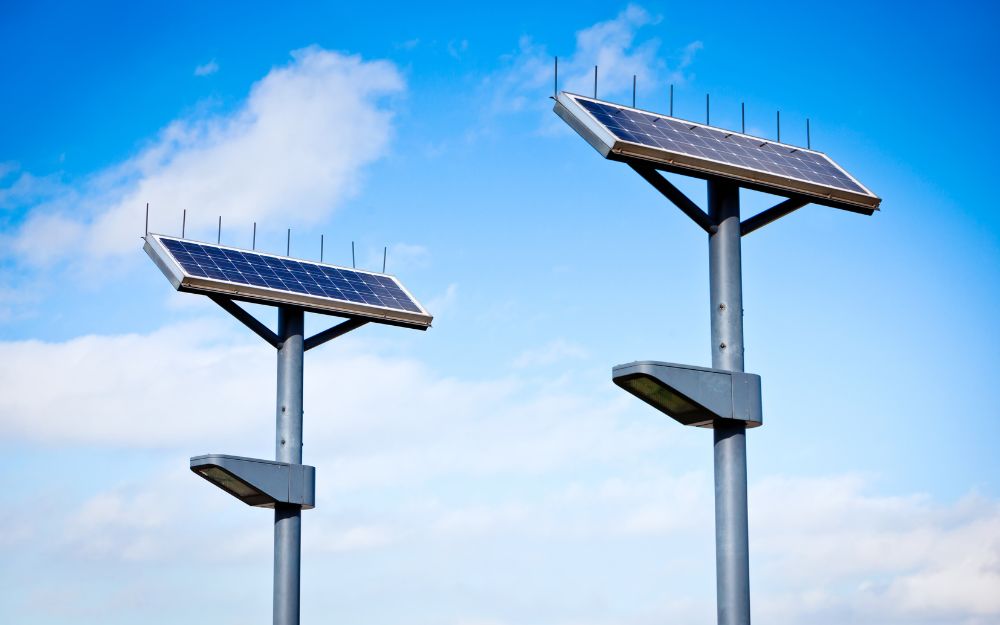
Solar street lights play an essential role in sustainable public lighting by using renewable solar power. From their beginnings as simple pathway illuminators to their present-day use, these devices are at the forefront of eco-friendly lighting solutions. They represent a significant shift toward smarter, more resilient infrastructure. As cities and communities seek to reduce their carbon footprint and operational costs, solar lighting offers a powerful combination of efficiency, reliability, and environmental stewardship, paving the way for a brighter, greener future for public spaces around the globe.
What Are Solar Street Lights?
The role of solar street lights is crucial in moving towards cleaner and more efficient public lighting systems.
A solar street light, also known as a solar-powered lamp, is a device that uses sunlight to generate electricity for illumination. When several solar street lights are arranged along a road or in a park, a solar-lit path is created. This technology operates independently of the electrical grid, making it an ideal solution for remote areas or locations where traditional wiring is impractical or too expensive to install.
A solar street light consists of various parts:
- Solar Panel: Harvests the sun’s energy, typically with monocrystalline or polycrystalline cells connected in a panel. When sunlight hits the panel, it converts solar radiation into direct current (DC) electricity. The fixture, located at the top of the pole, houses the light source (LEDs), while the electronic systems that convert stored energy into light are part of the control and sensor system.
- Battery: Connected to the solar panel via a controller, it stores the electrical energy generated during the day for use at night. This process is based on electrochemical principles, using lithium-ion or LiFePO4 batteries to hold a charge.
- Pole: The structure that supports the solar panel and light fixture at the top. The height of the pole is crucial, since proper placement ensures maximum sun exposure and effective light distribution on the ground.
- Control and Sensor System: The solar street light is typically equipped with a control system that manages battery charging and discharging to maximize lifespan and ensure efficient performance. These systems ensure that the light operates automatically, turning on at dusk and off at dawn.
How Do Solar Street Lights Work?
The operation of a solar street light can be divided into several stages, from harvesting solar energy to light generation. These stages are:
Harvesting Solar Energy
It starts when sunlight hits the street light’s solar panel. These specially designed panels aim to maximize the harvesting of solar energy. It is important to note that solar street lights are designed to operate effectively even on cloudy days, though their charging efficiency is highest in direct, bright sunlight. The panel’s conversion efficiency and power directly influence how quickly the battery can be charged, while the light’s operating time is determined by a combination of panel performance, battery capacity, LED power, and controller energy-saving settings.
Energy Storage
The sun’s energy triggers the photovoltaic effect in solar cells, causing electrons to move and create an electrical current. This DC electricity is transmitted to a rechargeable battery via a charge controller, which regulates the charging voltage and current to prevent overcharging during the day and deep discharging at night, protecting the battery and extending its life. The stored energy is held in reserve, ready to be deployed as soon as the sun sets, ensuring a reliable power source for nighttime illumination.
Lighting Activation
The light fixture is the key component that transforms the stored electrical energy into visible light. Generally, solar street lights employ light-emitting diodes (LEDs) for their high efficiency and long lifespan. An ambient light sensor, or photodiode, detects when natural light levels fall below a certain threshold. Once it gets dark enough, the sensor signals the controller to turn on the LED, illuminating the surrounding area.
Control Systems
The solar street light has a control system that adjusts energy usage to maximize efficiency. Smart controllers constantly monitor battery levels and can adjust the light’s brightness based on programmed settings or detected motion. For example, some lights dim to a lower brightness during hours of low activity and return to full power when a person or vehicle is detected, conserving energy and extending the operational time.
Electricity Distribution
The DC electricity stored in the battery powers the LED fixture. The controller regulates the flow of electricity to the LEDs, ensuring a stable, consistent output. Some systems may include timers or motion sensors to further manage how the electricity is distributed throughout the night. At this point, the light is fully operational, providing illumination without any connection to the main power grid.
Types of Solar Street Lights
The diversity of available solar street lights makes it possible to choose based on different needs. Factors such as sun exposure at the site, the installation’s purpose, and aesthetic considerations are decisive in selecting the most suitable type of solar street light. Furthermore, solar lighting technology continues to evolve, leading to improvements in efficiency, performance, and adaptability to different environments. Solar street lights can be classified based on different dimensions, and common types include:
All-in-One Solar Street Lights
All-in-one solar street lights, the most common for simple installations, follow a design in which the solar panel, battery, controller, and LED fixture are integrated into a single compact unit. This design simplifies installation and reduces the risk of vandalism or component theft. The main function of this integrated approach is to provide a plug-and-play solution that can be quickly mounted on a pole. This all-in-one design enables the effective conversion of solar energy into light, thus contributing to sustainable public lighting.
Split Solar Street Lights
Split-type solar street lights feature a modular design, with a separate solar panel that can be positioned independently from the light fixture. This design makes them versatile and powerful. Thanks to their flexible structure and ability to orient the solar panel for maximum exposure to sunlight, regardless of the light’s position, they are an outstanding choice in areas with limited or directional sunlight, such as narrow streets or shaded pathways. Although they require more complex installation, these lights offer superior performance in challenging environments.
Smart Solar Street Lights
The relevance of smart solar street lights is noteworthy, as they have seen significant growth due to their ability to integrate into IoT (Internet of Things) networks. These smart solar street light technologies, featuring advanced controllers and communication modules, enable users to remotely monitor and manage their lighting systems. When installed in urban or commercial environments, these solutions enable centralized control of renewable-energy lighting, reducing maintenance costs and optimizing performance for a more sustainable, efficient system.
Solar LED Floodlights (by Illumination Purpose)
Solar LED floodlights, also known as high-power solar security lights, represent an innovation compared to standard streetlight designs. Instead of providing focused light for a roadway, these devices are designed to illuminate a wide area. Harvesting solar energy is achieved through larger panels and higher-capacity batteries to power high-intensity LED arrays. These designs aim to improve security and visibility in large spaces such as parking lots, sports courts, and building perimeters, reducing the dark spots associated with traditional lighting. They can be designed as all-in-one, split-type, or smart solar lights, depending on the integration and control methods used.
Our company’s commitment to solar lighting not only positions it as an essential pillar in the energy transition but also emphasizes its dedication to diversification and innovation in the sector. This strategic vision supports our position as a leader in providing advanced lighting solutions. Our product portfolio is an addition to our work in cities and communities in the country and abroad. Moreover, the integration of smart technology into our product lines further reinforces our commitment to the renewable energy market, one of the largest and most promising markets.
In line with this strategy, we would also like to underscore our participation in projects such as large-scale municipal lighting and innovative smart city technology. Our commitment highlights a proactive role in building a more sustainable and resilient future for public infrastructure.