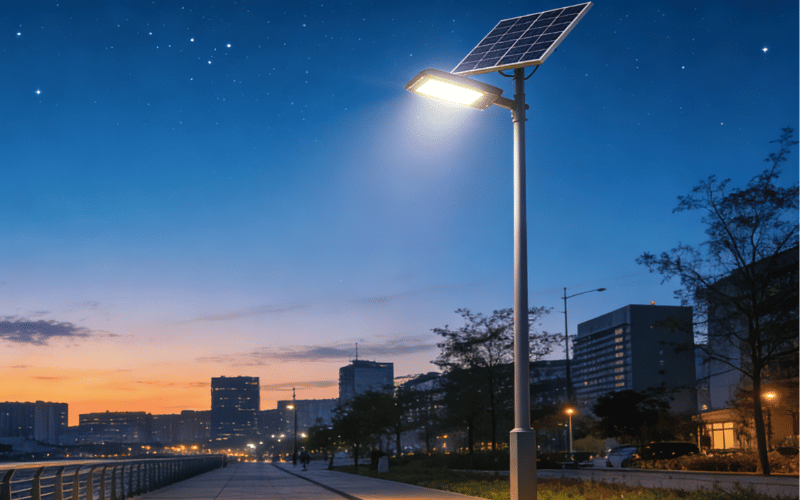
The era of depending on grid-tied, energy-draining street lighting is fading. Today’s outdoor illumination is powered by the sun – a brilliant, sustainable, and energy-efficient solution that is far superior to old-fashioned methods. While it is easy to identify solar lighting as the most suitable type, the challenge is to determine which fixtures are the best solar street lights for your specific needs.
To help you make this determination, we will start with the basics on these modern marvels, from understanding lumens and battery capacity to choosing the correct mounting height. When we are through, you will have a much better idea of how to light your urban or rural space and save time and money along the way.
Solar Street Lighting Basics
Before getting into all the technical details, let’s begin with the basics: What are solar street lights? These are standalone lighting systems engineered for outdoor areas, from bustling city streets to remote rural roads. Think of environments like community parks, parking lots, highways, and residential neighborhoods—places where reliable lighting is essential for safety and security.
Solar street lights are advanced luminaires that generate their own power from sunlight. They are designed for outdoor lighting applications where connecting to the electrical grid is either too expensive, impractical, or undesirable. They operate independently, making them perfect for a wide range of public and private spaces.
Their off-grid nature makes them an entirely eco-friendly solution, harnessing renewable energy to reduce carbon footprints and eliminate electricity bills. By providing powerful illumination without relying on fossil fuels, solar street lights offer a green alternative that supports sustainable development goals.
The operation of a solar street light is a simple yet effective cycle of energy generation, storage, and use. During the day, photovoltaic (PV) panels absorb sunlight and convert it into DC electricity through the photovoltaic effect. This energy is then managed by a controller, which charges a built-in rechargeable battery.
Once the sun sets, the controller detects the drop in voltage from the solar panel and automatically turns on the high-efficiency LED fixture. The stored energy in the battery powers the light throughout the night. This seamless process ensures reliable, automated lighting from dusk until dawn, even on cloudy days, thanks to efficient energy storage systems.
What to Look for When Buying Solar Street Lights
Choosing the best solar street light for your space is not a one-size-fits-all decision. You will need to keep several factors in mind to ensure you are getting the best performance and value for your investment.
- Lumens Over Wattage: Forget the old habit of looking at wattage—when it comes to modern lighting, it is all about lumens. Lumens measure the total amount of visible light a fixture produces; the higher the lumens, the brighter the light. For streets, pathways, or parking lots, you will want lights with a high lumen output to ensure everything is properly illuminated. For residential streets or pathways, a range of 5,000 to 15,000 lumens is often sufficient. For major roads or large commercial areas, you might look for fixtures offering 20,000 lumens or more to ensure adequate brightness and coverage.
- Battery Capacity: The battery is the heart of a solar street light, storing energy to power the light through the night and during periods of low sunlight. Battery capacity, measured in Amp-hours (Ah), determines how long the light can operate without recharging. A larger capacity ensures longer autonomy, which is critical for reliability. For areas that require lighting all night, look for batteries that can provide at least two to three nights of autonomy. Lithium-ion (Li-ion) or Lithium Iron Phosphate (LiFePO4) batteries are preferred for their long lifespan, high energy density, and minimal maintenance requirements.
- Durability and Weatherproofing: Solar street lights are built to last in outdoor environments, but you must choose fixtures made of durable materials that can withstand harsh conditions. An IP (Ingress Protection) rating is crucial. An IP65 rating or higher ensures the fixture is protected against dust and water, making it suitable for all weather. Look for lights made from corrosion-resistant materials such as die-cast aluminum. These materials not only withstand rain, snow, and high winds but also help with heat dissipation, which extends the life of the LED components and battery.
- Mounting Height and Placement: The height at which your lights are installed plays a big role in their performance. If a light is mounted too high for its lumen output, it will not provide adequate coverage on the ground. Conversely, mounting a powerful light too low can create overly concentrated bright spots and glare. For urban streets, a mounting height of 20-30 feet is common, while rural roads or pathways might use poles around 15-25 feet. Optimal placement involves ensuring the solar panel receives maximum direct sunlight without obstruction from buildings or trees.
- Smart Features: Modern solar street lights often come with smart features that enhance efficiency and convenience. Motion sensors allow the light to operate at a lower brightness level until movement is detected, at which point it brightens to 100%, conserving battery power. Dusk-to-dawn sensors automate the on/off cycle. Some advanced systems offer remote control and smart monitoring capabilities. These features allow you to adjust brightness levels, check battery status, and receive performance diagnostics from a central location, making it simple and efficient to manage multiple lights.
Types of Solar Street Lights
There are two main types of solar street lights, each serving a different purpose. Understanding the types available will help you choose the right one for your space.
All-in-One Solar Street Lights
As the name suggests, all-in-one solar street lights integrate the solar panel, battery, controller, and LED fixture into a single compact unit. This design makes them incredibly easy to install, as there are no external wires to connect between components. They offer a sleek, modern aesthetic that blends well in various settings.
Their integrated nature simplifies maintenance and reduces the risk of tampering or theft. All-in-one lights are an excellent choice for residential areas, parks, and smaller-scale projects where quick installation and a clean look are priorities.
Split Solar Street Lights
Split solar street lights feature a separate solar panel that is detached from the LED fixture. This design offers greater flexibility in placement. The solar panel can be positioned independently to receive optimal sunlight, even if the light fixture needs to be placed in a shaded area.
This separation allows for much larger solar panels and batteries, making split systems ideal for large-scale projects requiring high brightness and long autonomy. They are commonly used for highways, large parking lots, and major municipal roadways where performance and power are paramount.
Benefits of Upgrading to Solar Street Lights
Upgrading to solar street lights reaps long-term benefits for your community or business. Check out the top 5 reasons why making the switch is one of the smartest decisions you can make for your outdoor lighting needs:
- Longer Lifespan: While traditional street lights require frequent bulb replacements, solar street lights are built for longevity. The LED components can last up to 50,000 hours, and the solar panels typically last 20-25 years.
- Reduced Maintenance Costs: Fewer replacements mean less maintenance. Because they last longer and are not connected to the grid, you will not need to constantly replace bulbs or deal with wiring failures. This is especially beneficial in remote areas where accessing high-mounted lights can be difficult and costly.
- Lower Energy Consumption: Solar street lights use 100% renewable energy from the sun, which means they have zero energy consumption from the grid. This translates directly to a complete elimination of electricity bills for lighting—a huge plus for municipalities and businesses looking to cut operational costs.
- Enhanced Lighting Quality: LEDs provide a cleaner, brighter light than older lighting technologies. This improved light quality helps increase visibility and safety, creating a more secure environment for pedestrians and drivers. Plus, LEDs offer excellent color rendering, so everything appears clearer and more vibrant.
- Eco-Friendly Solution: Solar street lights use clean energy and contain no harmful substances, such as mercury found in some traditional lamps. Reducing your reliance on grid power also lowers your carbon footprint, a win for both your organization and the environment.
Best Place to Buy Solar Street Lights
With so many options on the market, finding the best place to buy solar street lights can feel like a challenge. You need a supplier that offers high-quality products and provides the expertise and customer support to guide you through the process.
Here’s why Sigostreetlight is a solid choice for all your solar lighting solutions:
- We offer a wide selection of solar street lights to meet the unique needs of different urban and rural spaces. You will find exactly what you need to suit your project’s requirements.
- Need help deciding which lights are best for your application? Sigostreetlight’s team of experts is available to offer personalized advice and guidance, ensuring you choose the best solution.
- All of Sigostreetlight’s products are carefully selected for durability, energy efficiency, and performance. Our solar street lights are designed to last, even in the toughest environments.
- Quality does not have to break the bank. We offer competitive pricing without sacrificing performance, making it easy to upgrade your lighting within budget. All purchases come with reliable warranties and customer service support, so you can be confident in your investment.
Maintenance Tips for Solar Street Lights
One of the perks of solar street lights is their minimal maintenance, but a little care goes a long way in ensuring they perform at their best for years to come. Here are some simple yet effective maintenance tips:
- Regular Cleaning: Debris, dust, and snow can accumulate on the solar panel’s surface, reducing its ability to absorb sunlight. Schedule regular cleanings to wipe down the panel with a soft cloth and water to maintain optimal charging efficiency.
- Inspect for Loose Connections: Although solar lights are durable, regular inspections can catch minor issues early. Check for any loose wiring or mounting bolts that could affect performance or safety, especially after heavy storms or high winds.
- Monitor Battery Health: While modern batteries are long-lasting, they will eventually need replacement. Monitor the light’s performance, especially after several cloudy days. If the light’s duration shortens significantly, it may be a sign that the battery is nearing the end of its life.
- Keep a Spare Inventory: For larger installations, keeping a small inventory of spare components, such as batteries or controllers, is good practice. This ensures you can quickly swap out any faulty parts without significant downtime.
Ideal Applications for Solar Street Lights
Whether you are illuminating a busy city street or a remote country path, solar street lights deliver performance and energy savings. Here are some of the most common and practical uses:
- Urban Streets and Highways: Solar lights provide reliable illumination for city roads and major thoroughfares, enhancing safety for drivers and pedestrians without adding strain to the municipal power grid.
- Rural Roads and Villages: In areas with limited or nonexistent grid access, solar street lights are a transformative solution, bringing light to remote communities and improving nighttime safety and economic activity.
- Parks and Recreational Areas: They are perfect for lighting up parks, jogging trails, and public squares, extending their usability into the evening hours and creating safer community spaces.
- Parking Lots and Commercial Spaces: Businesses can illuminate their parking lots and perimeters to enhance security for customers and employees without incurring ongoing electricity costs or complex wiring installations.
- Schools and Community Centers: Solar lights provide safe, well-lit environments around educational campuses and community gathering places, ensuring safe passage for students and visitors after dark.
- Emergency and Disaster Relief Areas: Because they operate independently, solar lights are invaluable for providing temporary lighting in areas affected by natural disasters or power outages, aiding relief efforts.
Light Up Your Space With the Best Solar Street Lights from Sigostreetlight
The best solar street lights can make all the difference in safety and sustainability for your community or commercial space. They provide powerful illumination while eliminating energy costs. Now that you have the information on solar street lights, you are ready to bring bright, efficient lighting to your project.
Make the switch to a smarter, greener lighting solution today! Explore our range of high-quality solar street lights and let our experts help you find the perfect fit for your needs.
FAQs: Best Solar Street Lights
Below, we have answered some common questions about the best solar street lights. Please contact us for more information.
How do solar street lights work?
They use a solar panel to capture sunlight during the day, store it in a battery, and then use that stored energy to power an LED light at night.
Are they suitable for areas with low sunlight?
Yes, systems are designed to maintain battery autonomy for several cloudy or rainy days. High-efficiency panels can still generate power in overcast conditions.
How long do they last at night?
A fully charged light is designed to last the entire night, typically 10-12 hours. Many systems have smart modes to conserve energy and ensure all-night operation.
What maintenance do they require?
Maintenance is minimal. It mainly involves periodic cleaning of the solar panel and checking connections. Batteries typically need replacement every 5-7 years.
Can they be used in extreme weather conditions?
Absolutely. They are built with durable, weatherproof materials (IP65 rated or higher) to withstand rain, snow, high winds, and extreme temperatures.
How do I choose the right solar street light?
Consider factors like required brightness (lumens), mounting height, local sunlight conditions, and battery autonomy to select the best model for your application.
All-in-one Solar Street Light
Check out our smart and powerful All-in-one Solar Street Light with all the features you could hope for in a modern lighting fixture. This series offers unparalleled performance in a compact, durable, and sleek design built to last through years of quality use.