

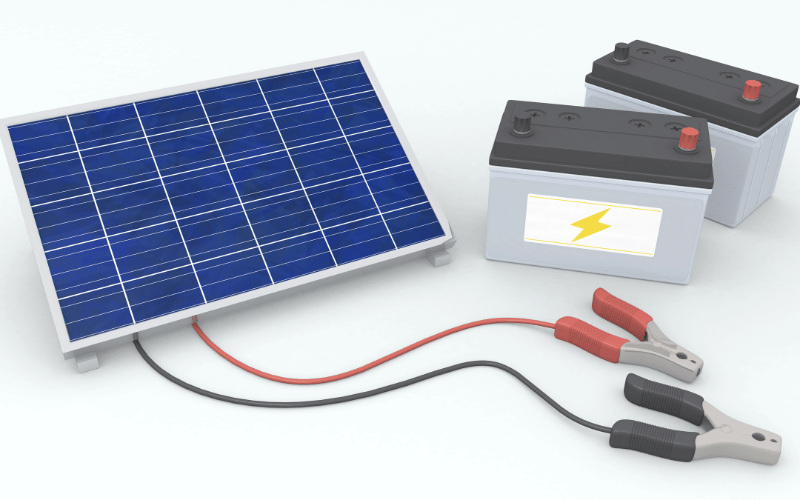
There is always a thriving concern among homeowners and garden enthusiasts about the technical details involving their solar lighting, batteries, and performance components. Yes, we presume you’d come across myths about upgrading the capacity of rechargeable batteries in solar lights while looking to improve your garden ambiance. Or perhaps you have questions bugging your mind about dim lights or short run times, which is why you’re on this page. Whichever way, we have addressed some of these common myths and provided answers in this detailed article.
Many people hesitate to replace their old batteries with higher-numbered ones, fearing they might damage the circuitry or cause the solar panel to fail. The truth is often less scary and more beneficial than the rumors suggest. Understanding the relationship between your solar light fixture and the energy storage inside it is key to getting that all-night glow you desire.
What Are Higher mAh Batteries?
As the name implies, higher mAh batteries are energy storage units with increased capacity densities built for extended performance in electronic devices. These batteries store more power primarily through electrochemical reactions. Their various types, such as Nickel-Metal Hydride (NiMH) and Nickel-Cadmium (NiCd), can be found in everyday household electronics and solar garden lights, respectively.
Battery operations in solar lights mainly involve storing energy collected by the solar panel during the day to power an LED at night. Unlike standard single-use alkaline batteries, these rechargeable cells efficiently support the daily charging and discharging cycle required by outdoor lighting. Even better, a higher mAh rating means greater charge storage per unit mass, allowing for longer illumination times on winter nights or cloudy days.
However, there are some myths about using higher mAh batteries in solar lights, raising concerns about compatibility. While the types of batteries used in solar lights vary, higher-capacity batteries are known to provide adequate, ready-made energy for the light to run longer. Yet, this does not rule out the possibility that lights may not fully charge them if the solar panel is too small or weak.
Myths About Using Higher mAh Batteries in Solar Lights
Here is a breakdown of the myths about higher-capacity batteries in solar lights, ranging from ‘Will a higher mAh battery hurt my light’ to the capacities needed for battery replacement.
Myth 1: Higher mAh Batteries Cannot Be Used in Solar Lights
You can always replace faulty or old batteries with higher-mAh versions that differ from the defaults. That is, the myth that high-capacity batteries in solar lights are unsuitable for replacement is not entirely correct. Although you must stick to the same chemistry (NiCd or NiMH) and voltage, replacing batteries with higher mAh is possible and often beneficial.
You can replace the battery in your solar light with a higher mAh-capacity battery that has the same voltage (usually 1.2V) as the original battery removed from the device. However, the new battery generally has to be physically the same size (AA or AAA) to fit the compartment. For instance, you can replace a 600mAh AA battery with a 2,000mAh AA battery that has the same voltage.
When replaced, a higher mAh battery may require more hours of direct sunlight to reach a full charge, but wit ill discharge at the same rate, meaning the light stays on longer. Also, be sure your solar panel receives enough sunlight to take advantage of the extra capacity. So if you have thoughts about ‘whether I can put a higher mAh battery in my solar light,’ you can, provided the voltage and physical size match.
Myth 2: Fully Discharging Higher mAh Batteries Improves Their Performance
The myth that allowing rechargeable solar batteries to discharge to 0% improves battery health is false and unnecessary, especially for modern NiMH types. A full discharge will not improve battery health but may reduce lifespan if repeated frequently over time. Worse yet, deeply discharging high-capacity batteries can cause the cell to reverse polarity or fail to hold a charge.
Battery discharges happen naturally in solar lights overnight, but forcing them to “die” is rarely helpful. The “memory effect” that required full discharges was primarily an issue with older NiCd technology. Herein, you do not need to worry about manually draining your lights. Aside from these situations, a way to maintain your battery’s health and improve it over time is to ensure the solar panel gets adequate sun to top it off daily.
According to technical advice and recommendations, keeping your battery in a constant state of deep discharge due to poor sunlight exposure can harm the cell. If you’re looking for answers to the question, ‘is it better to fully discharge solar batteries?’, the answer is generally no. Consistent partial-discharge cycles are perfectly healthy for modern rechargeable batteries.
Myth 3: Higher mAh Batteries Are Immune to Overcharging
Overcharging batteries is a bad idea to avoid, though it is harder to do with solar lights than with plug-in chargers. When it comes to solar light batteries, excessive charging can occur if the solar panel is much larger than the battery capacity. It may refer to a situation in which the panel continues to push current into batteries when they reach 100 percent capacity, without a cut-off mechanism.
Similar to commonly found batteries, high-capacity batteries do not and cannot withstand severe overcharging indefinitely. The health of these batteries will continue to deteriorate if subjected to high currents after being fully charged. This generates heat and pressure inside the cell.
It may also be of interest to you to know that in most standard garden lights, the charging current is low enough that overcharging is rarely a safety risk. We know nobody wants to use a light that fails prematurely. However, be aware that while higher mAh batteries can store more energy, pairing a massive panel with a tiny battery without regulation can eventually harm the battery’s health.
Myth 4: Higher mAh Batteries Are Too Large for Solar Lights
There is also the myth that higher-capacity batteries cannot fit in solar lights because their physical size increases with power. Of course, they can fit. For years, AA rechargeable batteries ranged from 600mAh to 1000mAh on average. However, the world is changing, and technology is altering the dynamics of energy density.
We are beginning to see AA batteries with 2,800 mAh, and AAA batteries pushing 1,100 mAh, all while retaining standard dimensions. This means you can fit a battery with three times the capacity into the exact same slot. Some examples include high-density NiMH batteries readily available in supermarkets that look identical to the low-capacity ones included with cheap solar lights.
Due to the need for standardization in consumer electronics, manufacturers have kept the physical dimensions of AA and AAA cells constant while improving the chemistry inside. Therefore, the physical slot in your solar light will accommodate a higher mAh battery perfectly. Rather than being too big, high-capacity batteries with higher mAh are the same size and will further improve the duration your lights stay on at night.
Myth 5: Higher mAh Batteries Last Forever
Every solar light battery’s health begins to deplete after long periods, necessitating the need for a replacement. While high-capacity batteries are poised to last longer on a single night’s charge, they can also weaken over time in terms of total lifespan in years. Just like an ordinary battery, these damages can be influenced by extreme weather or moisture entering the housing.
The battery in a solar light lasts about one or two years at optimal capacity before holding less charge. However, by changing your maintenance habits, such as cleaning the solar panels, you can help them last longer. These include exposing high-capacity batteries to extreme freezing temperatures or scorching heat, which can cause the chemistry inside to degrade faster.
High-capacity batteries have a limited lifespan of usually 500 to 1,000 charge cycles. Replacing it after two years might be the appropriate answer to what the maximum capacity should be for my battery. Whichever way, always remember that the myths about high-capacity batteries in solar lights having an unlimited lifespan are untrue; they are consumables that eventually need replacing.
Conclusion
Upgrading your solar lights to higher-mAh batteries is a smart way to boost performance, provided you follow a few simple rules. While high-capacity batteries offer extended run times and better reliability during cloudy spells, they are not magic solutions that last forever without care. By understanding the balance between your solar panel’s output and the battery’s storage, you can significantly improve your garden lighting experience.
Remember to match the voltage and physical size of your original batteries, and don’t expect a massive battery to charge if it’s placed in a shady spot. Regular maintenance, such as cleaning the solar panels