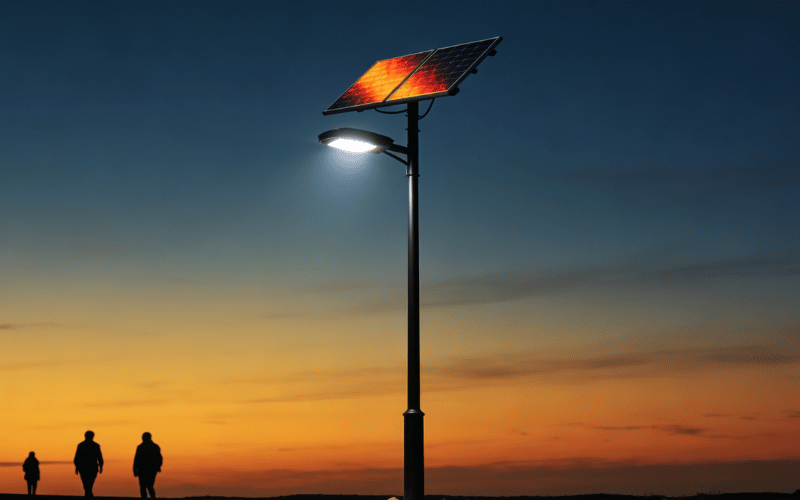
The rapid adoption of solar LED street lights marks a significant step toward sustainable and cost-effective public infrastructure. However, this progress brings an unforeseen challenge: theft. Solar street lights are frequent targets for criminals due to the high resale value of their core components, particularly the lithium batteries and high-efficiency solar panels. These easily accessible parts can be quickly dismantled and sold on the black market, turning a city’s investment into a recurring loss. This issue is not just a minor inconvenience; it represents a significant threat to project viability and public safety.
The financial impact of theft extends far beyond the cost of replacement parts. Each stolen component results in downtime, leaving critical areas such as highways, residential streets, and rural roads in the dark. This compromises public safety and incurs additional labor costs for repair and replacement, straining already tight municipal budgets. The operational disruption can delay project timelines and erode public trust in sustainable infrastructure solutions, making it a critical problem to solve for any organization deploying these systems.
To combat this growing problem, a reactive approach is insufficient. A comprehensive, multi-layered security strategy is essential to protect these valuable assets. This blog will provide a detailed guide on how to prevent the theft of solar LED street lights by combining robust physical hardware security, advanced electronic monitoring, strategic site deterrence, and proactive administrative precautions. By implementing this full-stack defense, you can safeguard your investment, ensure consistent lighting, and maintain the integrity of your solar lighting projects.
Physical Hardware Security
The first line of defense against theft is making the physical hardware as difficult to compromise as possible. Thieves are opportunistic and will target lights with exposed, easily removable components. By reinforcing the structure and securing key parts from day one, you can significantly increase the time and effort required to tamper with your lights, making them a far less attractive target. This involves using specialized fasteners, reinforcing battery enclosures, and leveraging strategic placement to deter criminals before they even start.
Anti-theft Nuts and Bolts
A simple yet highly effective deterrent is replacing standard fasteners with specialized anti-theft nuts and bolts. Standard hexagonal bolts can be removed in seconds with common tools such as a wrench or a socket set. Anti-theft fasteners, such as pin-in-hex screws, one-way bolts, or tri-groove nuts, require a unique, corresponding tool for removal. This immediately thwarts casual thieves who are typically equipped with only basic tools. By securing the solar panel brackets, lamp head mount, and any external battery boxes with these specialized bolts, you create a significant barrier to disassembly.
Another powerful option is the use of shear nuts. These nuts feature a hexagonal head that shears off once a specific torque is reached during installation, leaving a smooth, tamper-proof conical nut with no grip points. Attempting to remove a shear nut without specialized equipment is nearly impossible without causing significant noise and damage, which is a major deterrent. In real-world scenarios across high-risk urban and rural areas, projects that standardize on anti-theft fasteners have seen a dramatic reduction in component theft compared to those using conventional hardware.
Reinforced Battery Boxes
The battery is often the most valuable and most targeted component of a solar street light. Securing it is paramount. Standard on-pole battery boxes are vulnerable, but reinforcing them can make a huge difference. Using heavy-gauge steel enclosures with internal hinges and high-security puck locks makes it much harder to pry the box open. For an even higher level of security, battery bunkers can be installed. This involves burying the battery underground in a rugged, waterproof container, often encased in concrete. This method makes the battery virtually inaccessible without significant excavation equipment and time, representing the pinnacle of physical battery protection.
While highly effective, these solutions come with cost and maintenance implications. Reinforced steel boxes add to the initial hardware cost, and underground bunkers increase installation complexity and expense. Maintenance can also become more challenging, as accessing a buried battery requires more effort than opening a pole-mounted box. Therefore, the decision to implement these measures should be based on a thorough risk assessment of the installation area. For critical infrastructure or regions with a known history of high theft rates, the added investment in reinforced battery security is well justified.
Height and Placement Strategies
Strategic placement of solar street lights can be a powerful passive deterrent. Thieves are less likely to target assets that are difficult to reach or are highly visible. Increasing the mounting height of the solar panel and lamp head to 25-30 feet (8-9 meters) or higher makes them inaccessible without specialized equipment such as a bucket truck. Most opportunistic thieves operate on foot with hand tools and cannot reach components mounted at this height. This simple adjustment significantly reduces the risk of casual tampering and theft.
Furthermore, the placement of the pole itself is crucial. Installing lights in open, well-trafficked areas provides natural surveillance from passersby and nearby residents. Avoid placing poles in secluded spots, behind buildings, or in areas obscured by dense foliage, as these locations provide cover for criminal activity. When designing a lighting layout, consider sightlines and public visibility as part of your security strategy. Combining increased mounting height with strategic, visible placement creates a formidable deterrent that costs nothing extra but adds a significant layer of security to the entire project.
Electronic and Software Protection
In an increasingly connected world, leveraging technology provides a powerful, proactive layer of security. While physical hardware slows thieves down, electronic and software-based solutions can alert you to theft in real-time, track stolen assets, and even render stolen components useless. This digital shield turns a passive piece of infrastructure into an active, monitored asset, changing the risk-reward calculation for potential criminals.
GPS Tracking Modules
Embedding GPS tracking modules into the most valuable components is a game-changer for asset recovery. These small, discrete units can be hidden within the lamp housing or, more commonly, integrated directly into the lithium battery pack itself. The GPS module remains dormant until it detects movement or is reported stolen, at which point it begins transmitting its location in real-time. This allows law enforcement to track and recover the stolen asset, often leading to the apprehension of the thieves.
To enhance this capability, geofencing alerts can be configured. A virtual perimeter is drawn around the installation site, and if a tagged asset moves outside this boundary, an instant alert is sent via SMS or email to the project manager or security team. This immediate notification enables a rapid response, dramatically increasing the chances of recovery before the component is sold or disassembled. The cost of GPS modules has decreased significantly, making them a viable and cost-effective security upgrade for high-value projects.
Smart Monitoring Systems
Modern solar street lights can be equipped with smart controllers that connect to a remote management platform via cellular or LoRaWAN networks. This software enables continuous monitoring of each light’s performance, including battery voltage, charging current, and energy output. While primarily used for maintenance and performance optimization, this data is also an invaluable security tool. A sudden, unexpected drop in power generation or a complete loss of signal from a specific pole can be an immediate indicator of tampering or theft.
For example, if a solar panel is disconnected, the system will register a zero-watt input during daylight hours, triggering an automatic alert. Similarly, if a battery is removed, the entire unit will go offline, prompting inspection. This allows maintenance crews to be dispatched promptly to investigate the anomaly. By analyzing energy data patterns, these smart systems can distinguish between a technical fault and a probable theft event, providing actionable intelligence to help secure the entire lighting network.
Remote Locking Features
One of the most powerful electronic deterrents is the ability to remotely disable stolen hardware. Advanced Battery Management Systems (BMS) and smart controllers can be engineered with a “remote lock” or “kill switch” feature. If a battery or an entire lighting unit is reported stolen, an administrator can send a command through the network to permanently lock the component. This command renders the battery unable to be charged or discharged, making it completely useless to the thief.
The primary motivation for theft is the resale value of the components. By remotely bricking a stolen battery, its value drops to zero. When word spreads within criminal networks that stolen solar components from a certain municipality or company are worthless, the incentive to steal is eliminated. This software-based solution directly attacks the economic driver behind the crime, making it a highly effective, long-term deterrent.
Site Security and Deterrence
Creating a secure on-site environment involves more than just reinforcing hardware; it also involves shaping the perceptions and behaviors of potential thieves. Visual deterrents and community engagement can make a site appear more secure and increase the perceived risk of getting caught. These strategies focus on preventing a theft attempt from ever happening by creating a strong impression of surveillance and local vigilance.
Video Surveillance Integration
The presence of security cameras is a powerful psychological deterrent. Installing visible CCTV cameras overlooking the solar street light installations can make thieves think twice. Even if the cameras are not monitored 24/7, the simple awareness that their actions could be recorded is often enough to prevent an incident. For large-scale projects, integrating live-feed cameras that can be accessed remotely provides an active surveillance capability.
In areas where the cost of a full CCTV system is prohibitive, dummy cameras can be a highly cost-effective alternative. These non-functional replicas look identical to real cameras and create the same deterrent effect at a fraction of the cost. When combined with prominent signage indicating that the area is under video surveillance, dummy cameras can be remarkably effective. The goal is to make a potential thief believe the risk of being identified is high, prompting them to move on to an easier target.
Warning Signs and Decals
Never underestimate the power of a clear warning. High-visibility warning signs and decals affixed directly to the light pole can effectively communicate that the asset is protected. Stickers that read “GPS TRACKED” or “Warning: This Property is Electronically Monitored” immediately signal that the components are not easy targets. These labels suggest that even if a thief succeeds in removing a part, they are likely to be tracked and caught.
These warnings serve a dual purpose: they deter amateur thieves and inform more organized criminals that the stolen goods will be difficult to sell and could lead back to them. The decals should be made of durable, weather-resistant material and placed at eye level to ensure they are easily seen. This low-cost, low-tech solution complements high-tech measures like GPS by creating a visible deterrent that can prevent a theft attempt before it starts.
Community Collaboration
The most effective and sustainable security measure is to foster a sense of community ownership over the lighting infrastructure. When local residents view the street lights as a valuable asset that improves their safety and quality of life, they are more likely to protect them. Engaging the community from the project’s inception by holding town hall meetings to explain the benefits of the lights can build this sense of partnership.
Establish a “community watch” program by providing residents and local business owners with a dedicated hotline or contact number to report suspicious activity around the poles. Publicize this number through flyers and community newsletters. When residents know who to call and are confident their reports will be acted upon, they become the eyes and ears of the project. Collaborating with local law enforcement to increase patrols in areas with new installations further strengthens this security net, creating a powerful combination of official oversight and community vigilance.
Legal and Administrative Precautions
A robust security plan is incomplete without a solid foundation of administrative and legal measures. These backend processes ensure that you can identify your assets, track them effectively, and mitigate financial losses if a theft does occur. Proper documentation and asset management are crucial for law enforcement investigations, insurance claims, and overall project accountability.
Asset Marking and Identification
If a stolen component is recovered, you must be able to prove it belongs to you. Physical asset marking is essential for identification and prosecution. Engraving a unique serial number and the municipality’s logo or name directly onto the solar panel frame, battery casing, and lamp housing creates a permanent identifier. This makes it more difficult for thieves to resell the items and provides clear evidence of ownership for law enforcement.
For an even higher level of security, microdot technology can be employed. This involves applying a liquid solution containing thousands of microscopic dots, each etched with a unique PIN, to the components. These dots are nearly invisible to the naked eye and can only be read with a special scanner. Even if a thief attempts to remove the visible serial numbers, the microdots will remain, providing irrefutable proof of ownership.
Inventory Management
A detailed and meticulously maintained inventory management system is a critical administrative control. This system should serve as a comprehensive database for every deployed solar street light unit. Each entry should include the pole’s exact GPS coordinates, the unique serial numbers of the solar panel, battery, and lamp head, installation date, and a full maintenance history.
This detailed record-keeping is invaluable in the event of a theft. It allows you to immediately identify which specific components were stolen and provide law enforcement with exact serial numbers for their investigation. This information can be cross-referenced against pawn shop databases or online marketplaces to track down the stolen goods. A well-managed inventory system also streamlines maintenance and asset tracking, improving overall operational efficiency.
Insurance for Lighting Infrastructure
Despite the best preventative measures, theft can still occur. To protect against the financial impact of such events, it is wise to secure an appropriate insurance policy for your lighting infrastructure. Many commercial property or municipal insurance policies can be extended to cover assets like street lights against theft and vandalism. Work with an insurance provider to ensure your policy specifically covers the full replacement cost of the components, including labor.
Having comprehensive insurance provides a financial safety net, allowing you to replace stolen assets quickly without derailing your budget. To ensure a smooth claims process, maintain detailed records of your inventory, security measures, and any police reports filed after a theft. This documentation will be critical in demonstrating due diligence and substantiating your claim, minimizing financial losses, and allowing you to restore service to the community promptly.
Frequently Asked Questions (FAQs)
What are the most stolen parts of Solar LED Street Lights?
The most frequently stolen components are lithium batteries and solar panels, due to their high resale value on the black market.
Do anti-theft screws really stop professional thieves?
They can significantly deter them by requiring specialized tools and more time, increasing the risk of getting caught.
Should I bury solar batteries or keep them on the pole?
Burying batteries offers the highest security but increases installation cost and maintenance complexity; the choice depends on the site’s risk level.
Can I track a stolen solar panel if it doesn’t have GPS?
Tracking is very difficult without GPS, but permanent markings such as serial numbers and logos can help police identify it if it is recovered.
How much does a typical security upgrade cost per pole?
Costs vary widely, from a few dollars for anti-theft screws to several hundred for GPS tracking and reinforced battery boxes.
What should I do immediately after discovering a theft?
Immediately report the theft to local law enforcement, providing the component’s serial number, and notify your insurance provider.
Conclusion
Protecting solar LED street lights from theft is not about finding a single magic bullet; it is about building a resilient, multi-layered defense. By starting with a secure physical design that hides and locks down valuable components, you create the foundation of your security strategy. Layering this with robust hardware, such as anti-theft fasteners and reinforced enclosures, adds crucial barriers that frustrate and deter criminals. This physical strength, when combined with the intelligence of electronic systems like GPS tracking and remote monitoring, transforms a vulnerable asset into a smart, defensible unit.
Ultimately, technology and hardware alone are not enough. The most successful theft-prevention strategies integrate community involvement and strong administrative practices. When local residents feel a sense of ownership and are empowered to report suspicious activity, they become your most valuable security asset. This, coupled with diligent inventory management and insurance, ensures you are prepared for any eventuality. By consistently combining and maintaining these physical, electronic, and social measures, you can effectively safeguard your investment and ensure your solar street lights continue to shine brightly for years to come.