

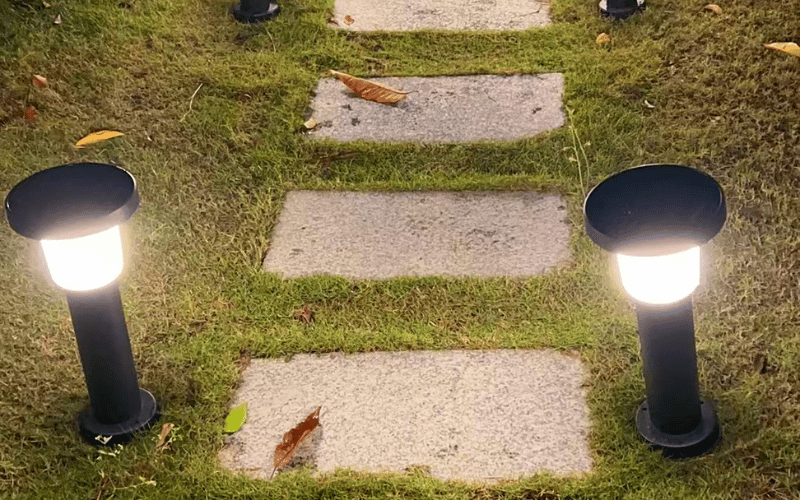
If you’re looking to install solar lights to beautify your garden, you’ve come to the right place. In this blog, we’ll explore how many lumens you should be aiming for, depending on the effect you want to create and the areas you need to illuminate. Understanding this key metric will help you choose the best solar garden lighting solution for your needs, ensuring your outdoor space is both functional and enchanting.
Getting the brightness right is crucial. Too dim, and your pathway remains a tripping hazard; too bright, and your tranquil garden feels like a sports stadium. The secret to achieving that perfect glow lies in understanding a simple unit of measurement: the lumen. It’s the difference between a random assortment of dim dots and a well-designed, inviting landscape. Let’s get started on demystifying lumens so you can pick the perfect solar lights for your garden with confidence.
What Are Lumens?
Lumens (lm) is a term that refers to the total amount of visible light emitted by a source. Simply put, the higher the lumen rating, the brighter the light will appear. In the past, people associated brightness with wattage, but that’s a measure of power consumption, not light output. With the rise of energy-efficient technologies like LEDs—which are used in all solar lights—lumens have become the standard for measuring brightness.
Understanding lumens helps you identify how bright a solar light will actually be. This is especially critical for solar lights because their performance is directly tied to the LED’s efficiency and the battery’s capacity. A high-lumen solar light will provide more powerful illumination, which is excellent for security, but a low-lumen light might be better for creating soft, ambient accents. As a result, knowing how many lumens you need for different parts of your garden is the first step toward creating a beautiful and practical lighting scheme.
How Many Lumens Are Recommended for Solar Garden Lights?
So, how many lumens do solar garden lights have? The ideal brightness depends entirely on the application. A soft glow for a flowerbed requires far fewer lumens than a light designed to illuminate a dark pathway. We’ve created the table below to help guide you:
|
Areas to Cover |
Lumens Required |
|---|---|
|
Decorative Accents |
2 to 50 lumens |
|
Garden Pathways |
50 to 200 lumens |
|
Steps/Stairs |
15 to 100 lumens |
|
Patio/Deck |
100 to 300 lumens |
|
Wall/Fence Accents |
50 to 200 lumens |
|
Pond/Pool Area |
100 to 400 lumens |
|
Motion-Sensor Security |
300 to 800 lumens |
For general decorative purposes, like highlighting a small plant or creating a firefly effect, a very low lumen count (2-20 lm) is sufficient. For pathways, you need enough light to see where you’re stepping, so 100 lumens per light, spaced a few feet apart, is a good target. Security is a different matter. A motion-activated solar spotlight designed to deter intruders should be much brighter, typically starting around 300 lumens and going up from there. Choosing the right lumen level ensures each light serves its purpose effectively without being overpowering or underwhelming.
Are Watts and Lumens the Same Thing?
Watts and lumens are two separate things, despite some lingering confusion. This confusion comes from the days of old-fashioned incandescent bulbs, where people believed that a higher wattage meant a brighter light. This led people to buy light bulbs based on their power consumption. Remember: watts is a unit of power or electrical energy consumption, not a measure of light output.
Lumens, on the other hand, measure the actual brightness of the light. The shift to highly efficient LED technology has made this distinction more important than ever. An LED can produce the same number of lumens as an incandescent bulb while using a fraction of the watts. For solar lights, this is especially critical. The wattage of a solar light’s LED indicates how much power it draws from the battery, while the lumens indicate how bright it will be. So, when buying your solar garden lights, make sure to look at the lumens on the label to determine brightness, not the watts.
Factors to Consider When Choosing Solar Garden Lights
When choosing solar garden lights, there are several factors beyond just lumens that you will need to consider, including:
- Purpose: The primary reason for your lighting will heavily influence your choice. Is it for safety on a dark staircase, ambiance on the patio, or to highlight a beautiful tree? Security lighting needs high lumens, while decorative lighting is all about creating a mood with lower lumens.
- Area Size: A small flowerbed will require fewer, less powerful lights than a long driveway or a large patio. For larger spaces, you’ll need either more lights or higher-lumen models to illuminate the area effectively.
- Location & Sunlight: Think about where the light will be placed. A solar light needs several hours of direct sunlight to charge fully. A light placed in a shady spot will not perform well, regardless of its lumen rating. Ensure the location gets at least 6-8 hours of sun per day.
- Battery Capacity & Runtime: A high-lumen light consumes more power. Check the battery capacity (measured in mAh) and the estimated runtime. A very bright light for two hours is less valuable than a slightly dimmer one that lasts all night.
- Color Temperature: The color of the light also affects the mood. “Warm white” (around 2700K-3000K) provides a soft, yellowish, cozy glow. “Cool white” (5000K-6500K) is a harsher, blue-toned light that appears brighter and is often used for security purposes.
FAQs About Lumens and Solar Garden Lights
How do I calculate the lumens I need?
A general rule for functional lighting is to use foot-candles (a measure of illuminance). For a simple pathway, you might aim for 5-10 foot-candles. The formula is: Area (square feet) x Desired Foot-candles = Total Lumens Needed. For a 100 sq. ft. path needing 5 foot-candles, you’d need 500 lumens total, which you could get from five 100-lumen lights. For decorative lighting, this calculation is less critical; it’s more about visual appeal.
How bright is 100 lumens in a garden?
100 lumens is a common and versatile brightness level for solar garden lights. It is bright enough to clearly illuminate a path for safe walking without being harsh or glaring. It provides a good balance of function and ambiance, making it a popular choice for walkways, driveways, and general garden lighting.
Is professional installation necessary for solar garden lights?
No, one of the most significant advantages of solar garden lights is that they do not require professional installation. Since there is no wiring to connect to your home’s electrical system, you can typically install them yourself in minutes. Most are either stake-mounted, which you push into the ground, or come with screws for mounting on a wall or fence.
How often should I replace my solar garden lights?
Choosing high-quality solar lights with LED bulbs means you receive a long-lasting product. The LEDs themselves can last for 50,000 hours or more. The component that will need replacing is the rechargeable battery, which typically lasts 1-3 years. Severe weather and extreme temperatures can affect the longevity of both the battery and the housing.
Do I need to maintain my solar garden lights?
Yes, solar lights are low-maintenance, but not no-maintenance. Regular cleaning of the solar panel is essential to ensure it can charge efficiently. Wipe it with a damp cloth every few weeks to remove dust, pollen, and bird droppings. Also, check that plants have not grown over the panel, blocking the sun.
Conclusion
Choosing the right solar garden lights is a key step in creating an outdoor space that is safe, functional, and beautiful after the sun goes down. By familiarizing yourself with lumens and understanding how brightness levels correspond to different garden tasks, you can confidently select products that meet your needs. Remember that lumens tell you how bright a light is, while watts tell you how much power it uses—a crucial distinction for battery-powered devices.
Before you buy, consider the light’s purpose, the amount of sunlight the location receives, and the overall aesthetic you want to achieve. With this knowledge, you can move beyond simply buying a “solar light” and start designing an effective, energy-efficient lighting scheme for your garden. For a solution that costs nothing to run and is easy to install, browse the wide range of solar LED lighting products available today.