

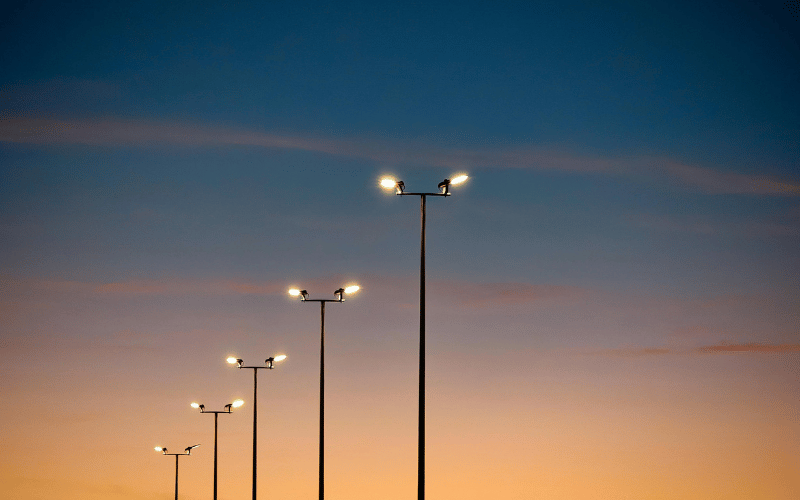
Streetlights are more than just fixtures that illuminate our roads and sidewalks—they are silent guardians of safety, visibility, and order in our urban and suburban landscapes. Have you ever wondered why streetlights are spaced the way they are? Their placement is far from random; it is the result of meticulous planning and engineering. In this blog, we’ll explore the science and guidelines behind streetlight spacing, shedding light on the thoughtful design that keeps our nights safe and our cities functional.
Factors Influencing Streetlight Spacing
1. Pole Height and Light Coverage
Pole height is one of the most critical factors in determining streetlight spacing. Taller poles can cast wider pools of light, allowing for greater distances between installations. For example, poles mounted at 20 feet are typically spaced 50 to 60 feet apart, while those mounted at 30 feet can be spaced 75 to 90 feet apart. This ensures that the light cones overlap sufficiently to eliminate dark spots on the ground, creating a continuous path of illumination. The relationship between pole height and spacing is carefully calculated to balance visibility, energy efficiency, and cost.
2. Road Type and Function
Road type plays a significant role in determining how far apart streetlights are placed.
- Highways and arterial roads prioritize visibility for high-speed vehicles. These roads often feature taller poles mounted at 40 feet, spaced 120 to 200 feet apart. This setup provides bright, uniform lighting, giving drivers ample reaction time and reducing the risk of accidents.
- Residential streets and pedestrian walkways use shorter poles, typically mounted at 15 to 20 feet and spaced closer together, usually 30 to 50 feet apart. This closer spacing creates a sense of security and ensures that pedestrians can clearly see faces, obstacles, and their surroundings.
3. Traffic and Pedestrian Activity
Traffic density and pedestrian activity also influence streetlight spacing. In areas with heavy traffic or significant pedestrian movement, such as downtown cores, shopping districts, or intersections, streetlights are installed closer together to enhance safety. For example, busy intersections and crosswalks often feature additional lighting, with poles spaced 20 to 30 feet apart. This higher lighting density ensures that potential hazards, such as crosswalks or obstacles, are well-lit, reducing accidents and improving nighttime safety for both drivers and pedestrians.
4. Safety Regulations and Standards
Safety standards set by organizations such as the Illuminating Engineering Society (IES) specify minimum lighting levels for public roadways. These standards ensure that streetlight placement meets specific safety requirements. For instance, a minimum clearance of 18 feet is often required for streetlights over roads with heavy traffic or for roads with oversized vehicles. Engineers carefully select the spacing, fixture type, and wattage to comply with these regulations, ensuring consistent and safe illumination across jurisdictions.
5. Environmental and Aesthetic Considerations
Environmental and aesthetic factors further influence streetlight placement. Streets lined with mature trees may require closer spacing, such as 40 feet apart, to compensate for light blocked by the canopy. In historic districts, decorative poles are often used, mounted at 12 to 15 feet, and spaced based on architectural aesthetics as much as technical requirements. Urban planners strive to balance functional lighting with the overall look and feel of a neighborhood, ensuring that streetlights enhance both safety and aesthetics.
6. Technological Advancements
Modern lighting technologies have revolutionized streetlight design and placement. LED fixtures provide brighter, more focused light while consuming less energy, allowing for greater flexibility in spacing. Smart lighting systems that adjust brightness based on traffic or pedestrian activity are also becoming increasingly common. These innovations not only optimize streetlight placement but also contribute to energy efficiency and sustainability.
Conclusion
The strategic placement of streetlights is a testament to the careful engineering and planning that goes into creating safe, functional, and visually appealing urban environments. From pole height and road type to safety regulations and environmental considerations, every factor is meticulously calculated to balance visibility, energy efficiency, and public safety. For example, whether towering over a busy highway at 200 feet apart or lining a quiet suburban street at 50 feet apart, streetlights are strategically spaced to meet the unique needs of their environment.
As technology continues to evolve, the future of streetlight design promises even greater innovations, from smart lighting systems to sustainable energy solutions. By understanding the science behind streetlight spacing, we can better appreciate the infrastructure that keeps our communities safe and illuminated after dark.