

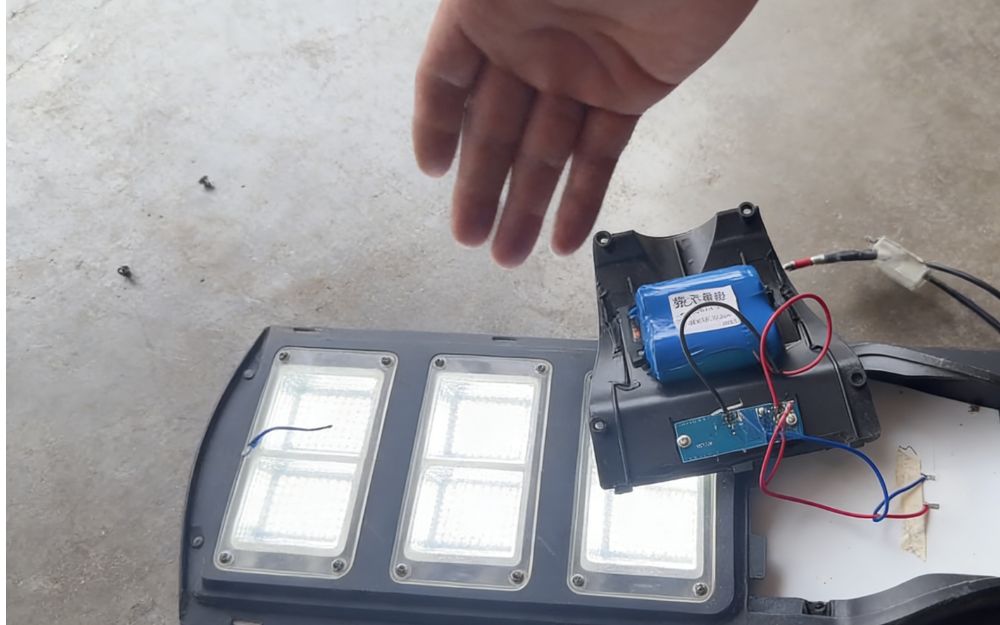
Energy storage systems, usually batteries, are essential for all solar street lights. These off-grid lighting solutions rely entirely on stored solar energy to provide reliable illumination throughout the night. The battery is the heart of the system, determining its performance, longevity, and overall cost-effectiveness. As solar lighting technology becomes more prevalent for roadways, parks, and public spaces, understanding the different battery types and their life cycles is critical for municipalities, developers, and engineers making infrastructure decisions. The right battery ensures that these sustainable lighting solutions operate efficiently, even through long winter nights or cloudy weather, making them a dependable alternative to traditional grid-powered lights.
Types of Batteries for Solar Street Lights
Lithium-Ion Batteries
Lithium-ion batteries are widely used in high-performance solar street lights because of their high energy density per unit mass and volume compared with other mainstream battery types. They also have a high power-to-weight ratio, high energy efficiency, good high-temperature performance, long life, and low self-discharge. Most components of lithium-ion batteries can be recycled, but the cost of material recovery remains a challenge for the industry. Most of today’s premium solar street lights from brands like Sigostreetlight use lithium-ion batteries, though the exact chemistry often varies. Research and development are ongoing to reduce their relatively high cost, extend their useful life, and address safety concerns regarding various fault conditions.
Nickel-Metal Hydride Batteries
Nickel-metal hydride batteries, once common in portable electronics, offer reasonable specific energy and power capabilities for lighting applications. Under proper use conditions (such as controlled charge-discharge depth and suitable operating temperature), nickel-metal hydride batteries have a longer life cycle than lead-acid batteries and are considered safe and abuse-tolerant. These batteries have been used in some older or mid-range solar lighting systems. The main challenges with nickel-metal hydride batteries are their high cost compared to lead-acid, a high self-discharge rate (meaning they lose charge when not in use), heat generation at high temperatures, and the need to control hydrogen loss over their lifespan, which can degrade performance.
Lead-Acid Batteries
Lead-acid batteries can be designed for high power and are inexpensive, safe, recyclable, and reliable, which made them an early choice for solar lighting. However, their low specific energy (meaning they are heavy for the amount of energy they store), poor cold-temperature performance, and short calendar and lifecycle impede their use in modern, high-efficiency systems. Advanced high-power lead-acid batteries are being developed, but they are now typically used only in very low-cost or DIY solar lighting projects. They are more commonly found in applications like backup power for ancillary loads in larger systems.
Ultracapacitors
Ultracapacitors store energy in an electric field between an electrode and an electrolyte. Energy storage capacity increases with the surface area of the electrode material. Although ultracapacitors have very low energy density compared to batteries, they have an extremely high power density, meaning they can deliver a large amount of power very quickly and can be charged and discharged hundreds of thousands of times. Ultracapacitors can provide solar lights with a burst of power to meet the instantaneous current demand (such as when the LED is turned on), but they cannot store enough energy for overnight use on their own. They are best used as a secondary energy-storage device to help electrochemical batteries stabilize voltage, buffer the impact of instantaneous load, protect the battery, and extend its service life.
Recycling Batteries for Solar Street Lights
Solar street lights are becoming more common in global infrastructure, so a growing number of them will be approaching the end of their useful lives. As this happens, the market for recycling their batteries is set to expand significantly. Studies have shown that if a solar light battery has not failed, the remaining capacity at the end of its first life varies by battery type: lead-acid batteries typically retain 30%-50% of their initial capacity, while lithium-ion batteries can retain about 50%-70%. This remaining capacity is often more than sufficient for less demanding energy storage applications, and with proper maintenance and suitable operating conditions, the battery can work for another 5-10 years.
Widespread battery recycling would help keep hazardous materials from entering the waste stream, both at the end of a battery’s useful life and during its production. Government bodies and private companies are supporting initiatives to develop profitable solutions for collecting, sorting, storing, and transporting spent lithium-ion batteries for eventual recycling. After collection, material recovery would also reintroduce critical materials such as lithium, cobalt, and nickel back into the supply chain and increase domestic sources of these materials. Work is underway to develop battery recycling processes that minimize the life-cycle impacts of using various battery types in solar lighting. Not all recycling processes are the same, and different separation methods are required for material recovery.
To recover valuable materials from lithium-ion batteries used in solar lights, there are three major technologies: smelting (pyrometallurgy), chemical leaching (hydrometallurgy), and direct recycling. Smelting is a high-temperature process that burns organic materials and recovers valuable metals and salts, which can then be refined. Chemical leaching uses chemical treatments to extract key compounds from crushed battery material, known as “black mass.” Direct recycling involves recovering cathode materials while maintaining their molecular structure, which is often the most economically viable method as it eliminates the need for energy-intensive smelting or chemical processing. Separating the different kinds of battery materials is often a stumbling block, so designing batteries that consider disassembly and recycling from the start is important for making the process easier and more cost-effective.
Future of Solar Street Light Batteries
Learn more about the research and development of batteries from leading institutions and government programs focused on energy storage. As the solar lighting industry grows, so does the investment in creating next-generation batteries that are cheaper, more efficient, and more environmentally friendly. Ongoing research focuses on solid-state batteries, which promise higher energy density and improved safety, as well as on new chemistries that reduce reliance on rare or conflict materials. These advancements will make solar street lights from brands like Sigostreetlight even more reliable and affordable, accelerating their adoption worldwide and further contributing to a sustainable energy future.