
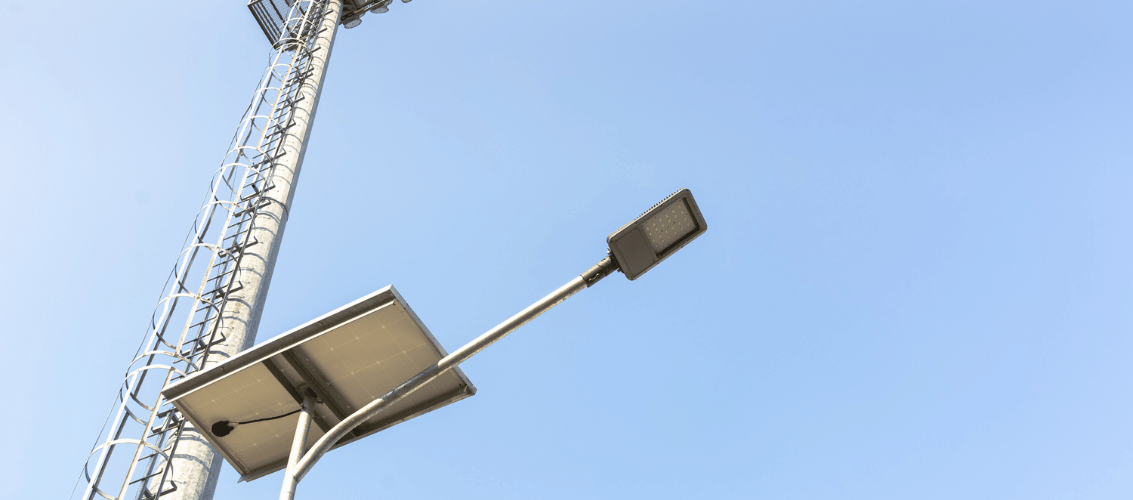
There is a lot of discussion around the types of power used in solar street lights. If you’re exploring solar lighting solutions, you may have come across terms like AC (alternating current) and DC (direct current) power. Understanding the differences between these two types of power is crucial for selecting the right solar street light system. While DC power is commonly associated with solar panels and batteries, AC power is used in grid-connected hybrid systems. Read on to learn about the differences between AC and DC power, their pros and cons, and how they apply to solar street lights.
AC vs. DC Power
Near the turn of the 20th century, Thomas Edison and Nikola Tesla were at the forefront of developing the types of electric power we use today. Edison championed DC power, which was initially the standard electricity in the United States. Tesla, on the other hand, introduced AC electricity to address some of DC power’s limitations, such as its inability to transmit over long distances efficiently.
DC Power for Solar Street Lights
DC electricity is a current that flows consistently in one direction. It is the type of power generated by solar panels and stored in batteries, making it ideal for solar street lights. The direct flow of current ensures compatibility with solar systems, allowing for efficient energy transfer and storage. DC power is also stable and reliable, which is crucial for off-grid solar lighting systems. Its efficiency and simplicity make it the preferred choice for solar street lights.
AC Power for Solar Street Lights
AC electricity, which reverses direction multiple times per second (60 times per second in the United States), became the standard for power grids due to its ability to transform voltages easily using a transformer. In solar street lights, AC power is often used in hybrid systems that connect to the grid. While AC power is widely available and versatile, it is less efficient for solar applications due to energy loss during conversion and its slower efficiency compared to DC power.
Both AC and DC power have their roles in solar street lighting, with DC the primary choice for off-grid systems and AC a viable option for hybrid setups. Understanding the strengths and limitations of each can help determine the best solution for specific lighting needs.
AC and DC Power Pros and Cons for Solar Street Lights
Because much of the existing power grid relies on AC power, it remains a common choice for hybrid solar street light systems. However, DC power is the preferred option for off-grid solar lighting due to its efficiency and compatibility with solar panels and batteries. Both have their advantages and limitations in the context of solar street lights.
AC Pros
AC power is readily available and seamlessly integrates with existing grid infrastructure, making it a practical choice for hybrid solar street light systems. Its ability to easily transform voltages using transformers ensures compatibility with a wide range of applications. This widespread availability makes AC power a convenient option for areas already connected to the grid.
AC Cons
One of the main drawbacks of AC power is energy loss over long distances, which can reduce efficiency. Additionally, AC power is less effective for solar systems due to the need for conversion, which can result in slower energy transfer and reduced overall efficiency compared to DC power.
DC Pros
DC power is highly efficient and stable, with a consistent current flow that aligns perfectly with the energy generated by solar panels and stored in batteries. This direct compatibility eliminates the need for conversion, making DC power ideal for off-grid solar street lights. Its efficiency and reliability are key advantages for sustainable lighting solutions.
DC Cons
The primary limitation of DC power is the lack of infrastructure for grid integration, which can make it less practical for hybrid systems. Additionally, the initial setup cost for DC-based hybrid systems can be higher due to the need for specialized components. However, technological advancements are gradually addressing these challenges.
Both AC and DC power have their roles in solar street lighting, and the choice between them depends on the project’s specific needs and infrastructure.
Applications of AC and DC Power in Solar Street Lights
Solar street lights can utilize AC, DC, or a combination of both power types, depending on the system design and application. Each configuration serves specific needs and offers unique advantages.
DC Systems
DC systems are fully off-grid solar street lights that rely entirely on solar panels and batteries for power. These systems are ideal for remote areas or locations without grid access. The direct flow of DC power ensures efficient energy transfer from solar panels to batteries, making these systems highly reliable and sustainable for standalone operation.
AC Systems
AC systems are hybrid solar street lights that connect to the grid for backup power. These systems primarily use solar energy but can switch to grid power when solar energy is insufficient, such as during prolonged cloudy periods. The ability to integrate with existing grid infrastructure makes AC systems a practical choice in areas with grid access.
Combination Systems
Combination systems use DC power for primary operation but can switch to AC power when needed. These systems offer the best of both worlds, combining the efficiency and stability of DC power with the flexibility and reliability of AC power. This dual capability ensures uninterrupted operation, even in challenging conditions, making combination systems a versatile solution for solar street lighting.
By understanding the applications of AC and DC power, businesses and municipalities can choose the most suitable solar street light system to meet their specific needs and infrastructure.
Conclusion
Both AC and DC power have their place in solar street lighting, but DC power is the preferred choice for off-grid systems due to its efficiency and compatibility with solar panels and batteries. AC power, on the other hand, is better suited for hybrid systems that require grid connectivity. By understanding the strengths and limitations of each, you can make an informed decision that aligns with your lighting needs. Whether you’re looking for an entirely off-grid solution or a hybrid system, solar street lights powered by the right technology can provide reliable, sustainable, and cost-effective illumination.