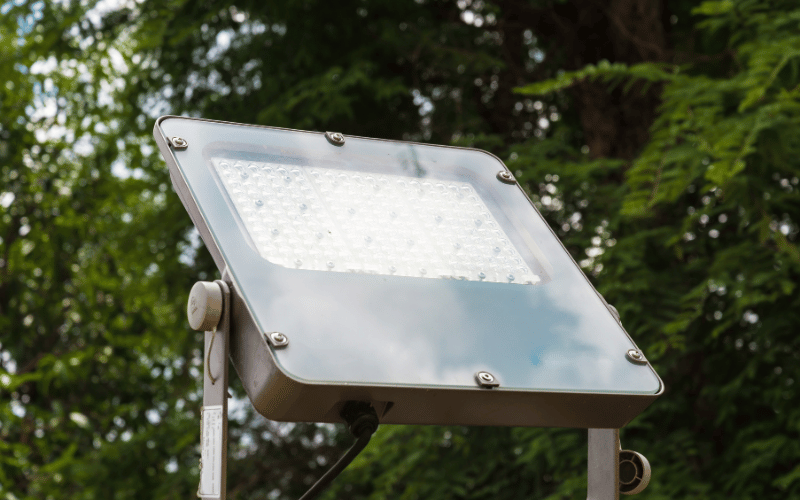
Looking to illuminate your yard, secure your property, or simply add some ambiance after dark? A solar LED flood light is an excellent solution. Before making a purchase, it’s essential to consider factors like brightness, battery capacity, and weather resistance. This guide outlines 10 key considerations to help you choose the perfect solar flood light for your needs.
Table of Contents
Toggle1. How Can Solar LED Flood Lights Benefit You?
With the rise of sustainable living and the need for cost-effective security, solar-powered lighting has become an essential tool for homeowners and businesses. Installing traditional wired lighting can be expensive and disruptive, often requiring trenching and an electrician. Solar LED flood lights bypass these issues entirely.
Here’s how a solar LED flood light can help:
- Save money: Eliminates electricity costs and the need for professional electrical installation.
- Improve your security: A well-lit property deters intruders and improves visibility for security cameras.
- Install with ease: Set up your lighting in minutes without any complex wiring.
- Reduce environmental impact: Harnesses clean, renewable energy from the sun.
- Enhance safety: Prevents trips and falls by illuminating dark pathways, driveways, and steps.
- Boost aesthetics: Highlight architectural features or landscaping to improve curb appeal.
- Simplify maintenance: Modern LED and solar technology requires minimal upkeep.
2. Types of Solar LED Flood Lights
Solar LED floodlights come in several main types, categorized by function and designed to meet various lighting needs. Whether you’re looking for a motion-activated security light or a consistent dusk-to-dawn beacon, each type serves different outdoor requirements.
a. Motion-Sensor Lights
Motion-sensor flood lights are ideal for security, activating only when movement is detected. They conserve battery power by remaining dim or off until triggered, then providing a bright blast of light. This sudden illumination is effective at startling potential intruders and alerting you to activity on your property.
b. Dusk-to-Dawn Lights
This type works well when you need consistent, all-night illumination. Using a built-in photocell, the light automatically turns on at sunset and off at sunrise. It’s perfect for lighting up signs, entrances, or large areas where continuous visibility is required for safety or aesthetic purposes.
c. Decorative and Accent Lights
Fully focused on aesthetics, these lights are designed to highlight landscaping features, architectural details, or garden pathways. They typically offer a softer, warmer light and may come in various colors or styles to complement your outdoor decor.
d. Hybrid Security Camera Lights
These advanced models integrate a security camera directly into the floodlight fixture. When motion is detected, the light turns on, and the camera begins recording, often sending a notification to your smartphone. This all-in-one solution provides both illumination and surveillance for comprehensive property protection.
Read more: Are Solar Flood Lights Any Good? The Bright Truth
3. Solar Panel Types: Monocrystalline vs. Polycrystalline
Both monocrystalline and polycrystalline solar panels use silicon to convert sunlight into electricity, and their performance is a key factor in your floodlight’s reliability. As long as the panel is appropriately sized for the battery and light output, both options can provide consistent power.
In terms of user experience and lifespan, there’s a notable difference. Monocrystalline panels are generally more efficient, especially in low-light conditions, and have a longer lifespan, but they cost more. Polycrystalline panels are less expensive but slightly less efficient.
| Feature | Monocrystalline Panels | Polycrystalline Panels |
|---|---|---|
| Efficiency | Higher (17-22%) | Lower (15-17%) |
| Appearance | Uniform black color | Blue, marbled look |
| Performance | Better in high heat and low light | Less efficient in high temperatures |
| Cost | More expensive | More affordable |
| Lifespan | Longer (25+ years) | Shorter (20-25 years) |
4. Installation Options for Solar LED Flood Lights
When deciding where to install a solar flood light, it’s important to evaluate your property and sunlight exposure. Most solar lights offer versatile mounting options, which can be selected based on the following conditions:
a. Wall-Mounted
If your home or building has a wall that receives several hours of direct sunlight, wall mounting is the most common and recommended option. This method is ideal for illuminating entrances, driveways, or patios. It positions the light at an effective height for wide coverage and security.
b. Ground-Mounted
If you need to illuminate landscaping, garden beds, or pathways away from the house, ground mounting is a great solution. These lights are attached to stakes that can be pushed directly into the soil. This allows for flexibility in placement, as you can easily move them to highlight different features or adjust for seasonal sun angles.
c. Pole-Mounted
For lighting large areas like parking lots, basketball courts, or large backyards, mounting the floodlight on a pole is the best approach. This installation type elevates the light high above the ground, providing maximum coverage and minimizing shadows. It is the most permanent option and ensures the light is clear of any ground-level obstructions.
5. Avoiding Installation Pitfalls
Before permanently installing your solar flood light, double-check your chosen location for the following potential issues to ensure optimal performance and longevity:
a. Sunlight Exposure
The most common mistake is placing the solar panel in a shaded area. A spot that looks sunny in the morning might be shaded by a tree or the house itself in the afternoon. Monitor the location for a full day to ensure it receives at least 6-8 hours of direct, unobstructed sunlight.
b. Improper Angle
A flat-mounted solar panel will not perform as well as one angled toward the sun. For best results in the Northern Hemisphere, angle the panel to face South. This maximizes the amount of energy collected throughout the day, especially during winter when the sun is lower in the sky.
c. Proximity to Other Lights
Placing your solar light too close to another bright light source, like a porch light or another street light, can trick its photosensor. The sensor may think it is still daytime and prevent the light from turning on, or cause it to flicker on and off. Ensure there is adequate distance from other light sources.
6. Battery Capacity and Lifespan
The battery is the heart of your solar flood light. It stores energy collected during the day to power the light at night. Its capacity (measured in mAh or Ah) determines how long the light can run on a full charge.
However, there are exceptions to watch out for:
- Battery Type: Most modern solar lights use Lithium-ion (Li-ion) or Lithium Iron Phosphate (LiFePO4) batteries. LiFePO4 batteries are superior, offering a longer lifespan (5-7 years vs. 2-3 years for Li-ion), better performance in extreme temperatures, and enhanced safety.
- Operating Mode: A light set to dusk-to-dawn mode requires much more battery capacity to last all night than a motion-activated light, which only turns on for a few minutes at a time.
- Winter Performance: Colder temperatures reduce a battery’s effective capacity. A light that lasts all night in the summer might only last a few hours in the winter. Choose a light with a high-capacity battery if you live in a region with cold winters.
7. Brightness and Lumens
When choosing the right solar flood light, it’s crucial to check its brightness, measured in lumens. The number of lumens you need depends entirely on the light’s intended purpose. You can typically find this information in the product specifications.
a. Security Lighting
For security purposes, where the goal is to deter intruders and clearly identify objects, a higher lumen count is necessary. A range of 700 to 1500 lumens is generally effective for illuminating driveways, entry points, and the sides of a house.
b. General-Purpose & Safety Lighting
To light up pathways, stairs, or a back patio for safe navigation, you don’t need blinding brightness. A floodlight in the 300 to 700 lumen range is usually sufficient to provide comfortable visibility without causing excessive glare.
c. Accent & Landscape Lighting
For highlighting a tree, a garden feature, or architectural details, brightness is less important than ambiance. Lower-lumen lights, typically 50 to 300 lumens, are ideal. They provide a gentle glow that enhances the landscape without overwhelming it.
8. Weather Resistance and Durability
When choosing an outdoor lighting fixture, durability is paramount. Your solar flood light will be exposed to rain, snow, heat, and cold, so it must be built to withstand the elements.
a. IP Rating
The Ingress Protection (IP) rating indicates how well a device is protected against solids and liquids. The first digit rates solid protection (dust, dirt), and the second rates liquid protection (water). For a flood light, look for a rating of at least IP65.
- IP65: Dust-tight and protected against water jets from any direction. This is the minimum standard for a reliable outdoor light.
- IP66: Dust-tight and protected against powerful water jets.
- IP67: Dust-tight and can be submerged in up to 1 meter of water for 30 minutes.
b. Material
The housing material affects both durability and heat dissipation.
- ABS Plastic: Lightweight and inexpensive, but it can become brittle over time with sun exposure.
- Aluminum: Excellent for heat dissipation, which prolongs the life of the LED chips. It is also strong and corrosion-resistant, making it a superior choice for long-term outdoor use.
9. Preventing Performance Issues
One of the most common issues users face after installing a solar flood light is poor performance, such as dim lighting or short run times. This problem typically stems from two key areas:
- Charging Issues: Insufficient sunlight due to shading, a dirty solar panel, or incorrect orientation.
- Battery Depletion: The light is running in a mode that consumes more power than the panel can replenish in a single day, especially during winter or on cloudy days.
How to Fix Performance Issues
To resolve these problems, first ensure the solar panel is completely clean and positioned for maximum sun exposure. Try switching the light to a more conservative mode (e.g., from dusk-to-dawn to motion-activated) to reduce nightly power consumption.
If performance issues persist, it may indicate the battery is nearing the end of its life, or the panel is too small for the light’s power demands in your specific climate.
Choosing a Reliable Solar Light
Lower-priced solar lights often use undersized panels and low-quality batteries that fail quickly. Consider investing in products from reputable brands that specify the panel wattage and battery capacity (in mAh or Wh). This transparency is a good indicator of a well-engineered product designed for reliable, long-term performance.
10. Cable-Free Design and Aesthetics
Proper aesthetics are essential when adding fixtures to your home’s exterior. The self-contained nature of solar flood lights means you don’t have to worry about running unsightly power cables up walls or across your yard.
Cable Length (for split units)
- Some models feature a separate solar panel connected to the light fixture by a cable. This allows you to place the light in a shaded area (like under an eave) while mounting the panel on a sunny roof. Ensure the provided cable is long enough to bridge this distance.
- For integrated units where the panel and light are one piece, the look is even cleaner, but placement is restricted to sunny spots.
Maintaining a Clean Look
Modern solar flood lights are often designed with sleek, low-profile aesthetics that blend into your home’s architecture. Choose a color and style that complements your exterior. For split units, neatly tuck the connecting cable along the siding or trim to maintain a professional, clutter-free appearance.
Conclusion
We’ve covered common questions about selecting a solar LED flood light, including brightness levels, weatherproofing, and installation options. Solar lighting is a powerful, convenient, and eco-friendly way to illuminate your property. By considering these 10 factors, you can confidently choose a product that meets your security and aesthetic needs and delivers reliable performance for years to come.
Take the time to assess your property, determine your primary lighting goals, and invest in a quality product with a durable build and a well-sized battery and panel. The right solar flood light will not only enhance your home’s safety and beauty but will also deliver significant cost savings over its lifespan.