
Looking to add a magical glow to your garden paths or highlight your favorite flower beds without the hassle of wiring? Solar garden lights are an excellent solution. Before making a purchase, it’s essential to consider factors like brightness, battery type, and weather resistance. This guide outlines 10 key considerations to help you choose the perfect solar garden lights for your needs.
1. How Can Solar Garden Lights Benefit You?
With the rise of eco-conscious living and a desire for beautiful, low-maintenance outdoor spaces, solar garden lights have become essential tools for homeowners. Running electrical wires through a garden can be costly, destructive, and complicated. Solar lights offer a simple, elegant alternative that you can install in minutes.
Here’s how solar garden lights can help:
- Save money on electricity: They run entirely on free energy from the sun.
- Improve safety: Illuminate pathways, steps, and potential trip hazards.
- Install effortlessly: No digging, trenching, or electricians required.
- Enhance aesthetics: Create a beautiful ambiance and highlight your garden’s best features.
- Go green: Reduce your carbon footprint with a renewable energy source.
- Offer flexibility: Easily move and rearrange lights as your garden design changes.
- Provide automatic operation: Most lights turn on at dusk and off at dawn without any intervention.
2. Types of Solar Garden Lights
Solar garden lights come in several main types, categorized by their form and function to meet various aesthetic and practical needs. Whether you’re looking for functional path lighting or whimsical decorative accents, each type serves a different purpose in your garden.
a. Pathway Lights
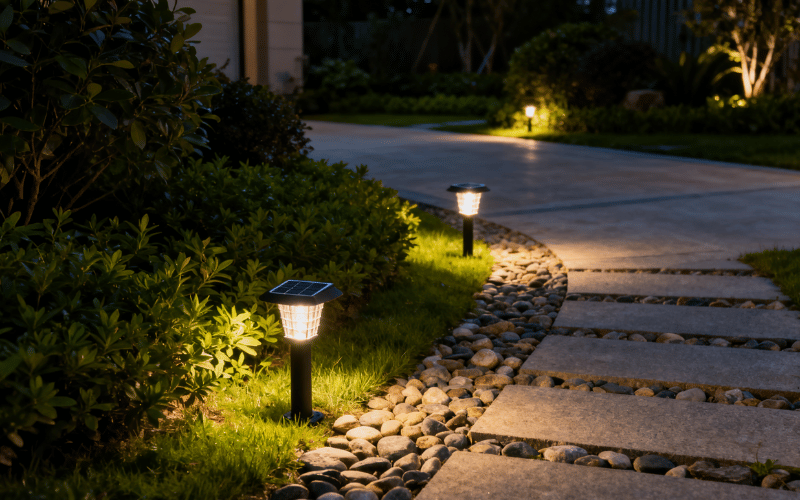
Pathway lights are the most common type, designed to be staked into the ground along walkways, driveways, and garden borders. They cast light downward and outward to illuminate the ground, ensuring safe passage after dark. They come in countless styles, from modern stainless steel to classic lantern designs.
b. Spotlights
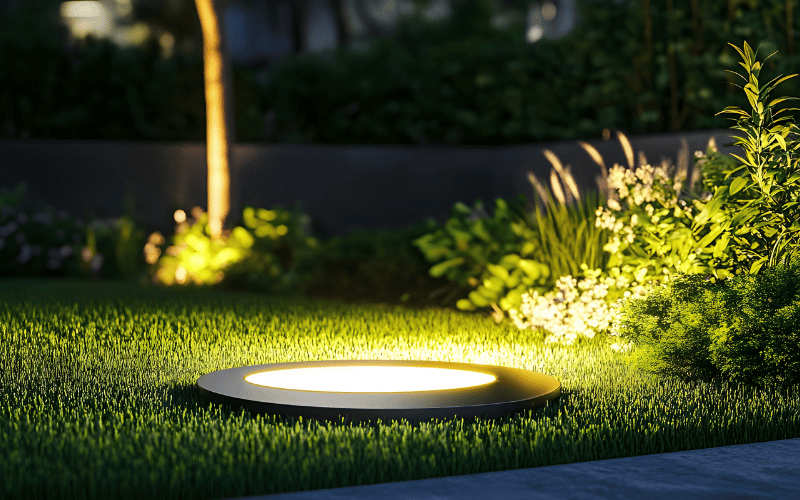
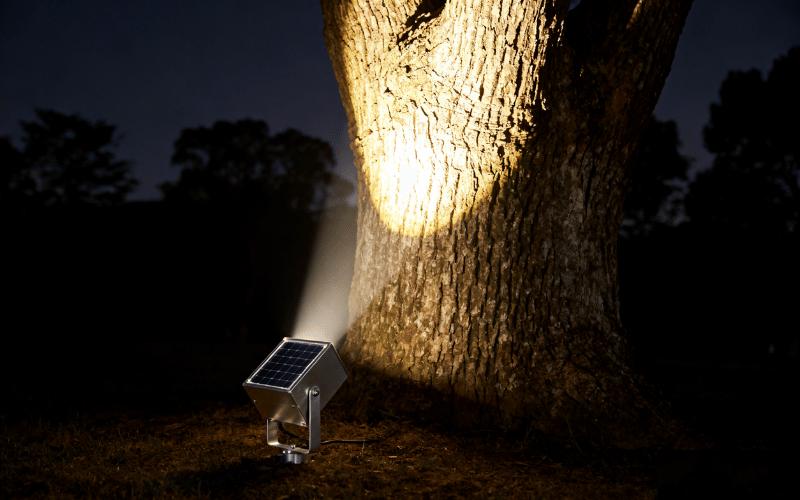
This type works well when you want to draw attention to a specific feature, like a beautiful tree, a statue, or the architectural details of your home. Solar spotlights produce a focused, directional beam of light and are often adjustable, allowing you to aim the light precisely where it’s needed.
c. Decorative and String Lights
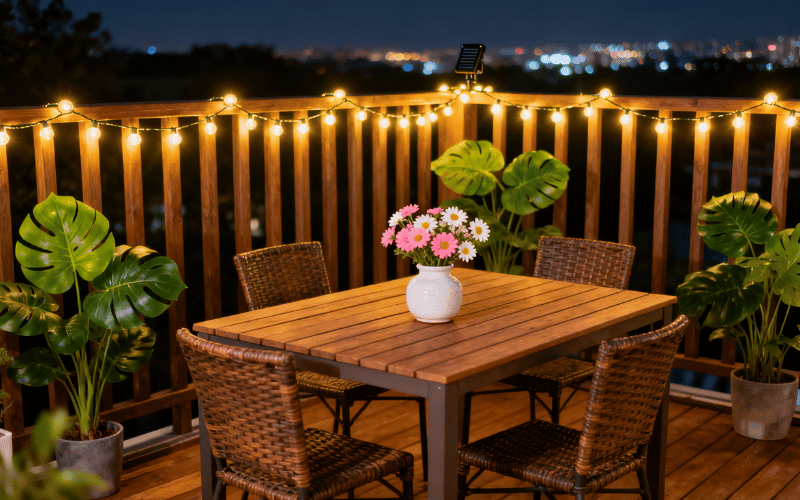
Decorative lights are all about creating ambiance. This category includes everything from whimsical fairy lights you can wrap around trees to string lights for a patio to novelty lights shaped like flowers or animals. They are ideal for adding a touch of magic and personality to your outdoor space.
d. Wall Sconce and Step Lights
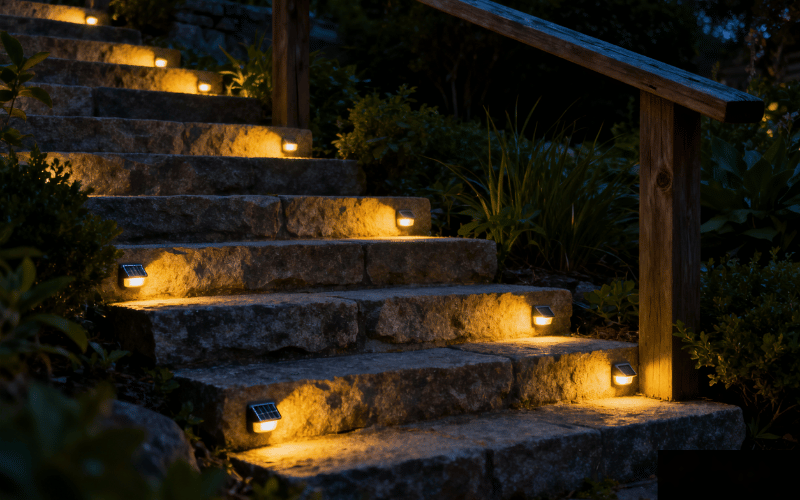
These lights are mounted directly onto vertical surfaces. Wall sconces are perfect for illuminating entryways or fence lines, while step lights are smaller fixtures installed on stair risers or deck edges. They provide crucial safety lighting while adding a sophisticated, built-in look.
3. Solar Panel Types: Monocrystalline vs. Polycrystalline
Both monocrystalline and polycrystalline solar panels use silicon to convert sunlight into electricity, and their performance is a key factor in your system’s reliability. As long as the panel is appropriately sized for the battery and light output, both options can provide consistent power.
In terms of user experience and lifespan, there’s a notable difference. Monocrystalline panels are generally more efficient, especially in low-light conditions, and have a longer lifespan, but they cost more. Polycrystalline panels are less expensive but slightly less efficient.
| Feature | Monocrystalline Panels | Polycrystalline Panels |
|---|---|---|
| Efficiency | Higher (17-22%) | Lower (15-17%) |
| Appearance | Uniform black color | Blue, marbled look |
| Performance | Better in high heat and low light | Less efficient in high temperatures |
| Cost | More expensive | More affordable |
| Lifespan | Longer (25+ years) | Shorter (20-25 years) |
4. Installation Options for Solar Garden Lights
When deciding where to install solar garden lights, it’s important to evaluate your garden layout and sunlight exposure. Most garden lights come with simple and versatile mounting options, which can be selected based on the following conditions:
a. Ground Stake Installation
This is the most common method for pathway lights and spotlights. The light is attached to a stake that you simply push into the ground. This method is incredibly flexible, allowing you to easily place and reposition your lights as needed. It works best on soft ground, such as soil or mulch, and requires no tools.
b. Wall-Mount Installation
If you want to illuminate a fence, a deck post, or the side of your house, wall mounting is the recommended option. These lights come with a mounting bracket and screws for a secure attachment. This method is perfect for decorative sconces or security-oriented floodlights that need to be elevated for better coverage.
c. Hanging Installation
String lights, lanterns, and other decorative lights are often designed to be hung. You can drape them over tree branches, along a pergola, or from hooks installed on a fence or patio cover. This installation type offers a whimsical, floating effect and is perfect for creating a festive or romantic atmosphere.
d. Surface-Mount Installation
Some lights, particularly step and deck lights, are designed to be mounted directly onto a flat surface. This usually involves screwing the fixture into a wooden deck, a stair riser, or a concrete patio. It provides a clean, integrated look that is both functional and stylish.
5. Avoiding Installation Pitfalls
Before permanently placing your solar garden lights, double-check your chosen locations for the following potential issues to ensure optimal performance and longevity:
a. Sunlight Exposure
The most common mistake is placing the solar panel in an area that doesn’t get enough direct sunlight. A spot that seems sunny in the morning might be shaded by a tree or your house in the afternoon. Monitor the location for a full day to ensure it receives at least 6-8 hours of direct sun.
b. Obstructions
Even small obstructions can cast shadows that significantly reduce charging efficiency. Avoid placing panels under dense bushes, beneath the deck lip, or in areas where tall plants might grow over them. For pathway lights, ensure the light itself isn’t blocked by overgrown grass or foliage.
c. Competing Light Sources
Placing your solar light too close to another bright light source, like a porch light or a street lamp, can confuse the built-in photosensor. The sensor may think it is still daytime and prevent the light from turning on, or cause it to flicker annoyingly. Position your solar lights away from other nighttime light sources.
6. Battery Capacity and Lifespan
The battery is the heart of your solar garden light. It stores energy collected during the day to power the light at night. Its capacity (measured in mAh) determines how long the light can run on a full charge. A larger capacity means a longer runtime.
However, there are exceptions to watch out for:
- Battery Type: Most garden lights use either Nickel-Metal Hydride (NiMH) or Lithium-ion (Li-ion) batteries. NiMH batteries are common in smaller stake lights and are easily replaceable. Li-ion batteries are found in brighter spotlights and decorative sets, offering higher capacity and a longer overall lifespan (3-5 years vs. 1-2 years for NiMH).
- Replaceability: Many cheaper solar lights are sealed units, meaning you cannot replace the battery. Once the battery dies, the entire fixture is useless. Look for lights that specify a replaceable battery (usually standard AA or AAA NiMH rechargeables) for better long-term value.
- Winter Performance: Cold weather reduces a battery’s effective capacity. A light that runs for 8 hours in summer might only last for 4 hours in winter. If you need reliable all-night performance year-round, invest in lights with high-capacity batteries and high-efficiency panels.
7. Brightness and Lumens
When choosing the right solar garden light, it’s crucial to check its brightness, measured in lumens. The number of lumens you need depends entirely on the light’s intended purpose. You can typically find this information in the product specifications.
a. Pathway and Safety Lighting
To safely illuminate walkways and steps, you need enough light to see the path clearly without causing harsh glare. A range of 10 to 100 lumens per light is generally effective. Spacing them correctly will create a continuous, gentle guide through your garden.
b. Accent and Decorative Lighting
To highlight a specific plant, a small statue, or to add a touch of ambiance, you don’t need much brightness. Low-lumen lights, typically between 2 and 50 lumens, are ideal. They provide a soft glow that adds beauty and depth to your landscape without being overpowering. Fairy lights and string lights often fall into this category.
c. Task or Security Spotlights
If you are using a solar light to illuminate a specific work area, like a grill, or to function as a mild security spotlight for a dark corner of the yard, you will want more power. Look for fixtures in the 100 to 400 lumen range. This provides enough focused light to see details clearly.
8. Weather Resistance and Durability
When choosing an outdoor lighting fixture, durability is paramount. Your solar garden lights will be exposed to rain, snow, heat, and UV rays, so they must be built to withstand the elements.
a. IP Rating
The Ingress Protection (IP) rating indicates how well a device is protected against solids and liquids. For garden lights that will be exposed to rain and sprinklers, look for a rating of at least IP44.
- IP44: Protected against solid objects over 1mm and water splashing from any direction. This is suitable for most garden applications.
- IP65: Dust-tight and protected against water jets. This is a better choice for more exposed locations or for lights that might get hit directly by a sprinkler.
- IP67: Dust-tight and can be temporarily submerged in water. Ideal for lights placed near ponds or in areas prone to puddling.
b. Material
The housing material affects both durability and appearance.
- Plastic: Inexpensive and lightweight, but cheaper plastics can become brittle and fade after a few seasons in the sun.
- Stainless Steel/Aluminum: These metals are strong, corrosion-resistant, and give a modern look. They are an excellent choice for long-term durability.
- Glass: Glass lenses or globes offer better clarity and don’t yellow over time like plastic lenses do, but they can be more fragile.
9. Preventing Performance Issues
One of the most common issues users face after purchasing solar garden lights is “dimming,” where the lights are not as bright as expected or don’t last through the night. This problem typically stems from two key areas:
- Poor Charging: The solar panel is dirty, shaded, or too small to fully charge the battery during the day.
- Aging Battery: The rechargeable battery has reached the end of its natural lifespan and can no longer hold a sufficient charge.
How to Fix Performance Issues
To resolve these problems, first, wipe the solar panel with a clean, damp cloth. Check for and trim any foliage that may have grown to cast a shadow on the panel. If the light still performs poorly, try replacing the rechargeable battery with a new one of the same type and capacity. This simple fix can often restore a light to its original performance.
Choosing Durable Solar Lights
Lower-priced, all-in-one solar lights often use small, inefficient panels and non-replaceable, low-quality batteries. Consider investing in products where the panel and battery specifications are clearly listed. Lights with larger panels relative to their brightness and replaceable, standard-sized batteries (like AA NiMH) offer much better value and longevity.
10. Aesthetic and Functional Design
Proper design is essential when adding elements to your garden. The lights you choose should not only function well but also complement your home’s and landscape’s style.
Matching Your Garden’s Style
- For modern gardens: Look for sleek, minimalist designs in stainless steel or black aluminum.
- For cottage or traditional gardens: Classic lantern styles, copper finishes, or decorative filigree designs can add a charming touch.
- For whimsical spaces: consider novelty lights shaped like flowers or animals, or colorful string lights, to create a playful atmosphere.
Functionality in Design
The design also impacts function. Pathway lights should cast light downwards to prevent glare. Spotlights should have adjustable heads so you can aim the beam precisely. The solar panel on many lights is integrated into the top, but some models have a separate panel connected by a wire, allowing you to place the light in a shady spot while keeping the panel in the sun.
Conclusion
We’ve covered common questions about selecting solar garden lights, including brightness, battery types, installation, and durability. Solar lighting is a powerful, convenient, and beautiful way to enhance your outdoor spaces. By considering these 10 factors, you can confidently choose products that meet your aesthetic and functional needs and deliver reliable performance for years to come.
Take the time to assess your garden, determine your lighting goals, and invest in quality lights made from durable materials with well-matched components. The right solar garden lights will not only improve your home’s safety and curb appeal but will also bring your garden to life after the sun goes down, creating a magical space for you to enjoy.