
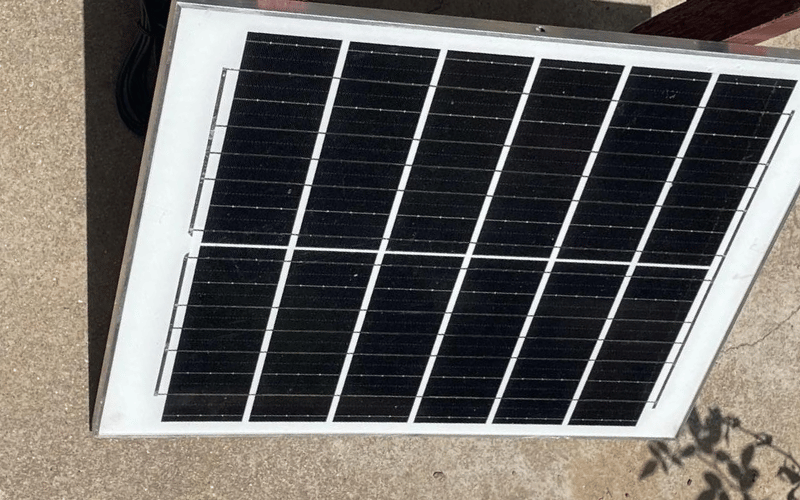
I see many people who want their solar lights to charge faster. They feel frustrated when their lights perform poorly on cloudy days. A bigger solar panel might solve this.
Yes, you can use a higher wattage solar panel if the controller can handle it. This enables faster charging, but it costs more and requires more mounting space. Check controller compatibility before upgrading.
I have spent over ten years developing and selling outdoor solar lighting systems for various projects worldwide. I have learned that component balance is crucial. Let me share how the panel, controller, and battery work together so that you can make better decisions.
What Is Solar Panel Wattage and Why Does It Matter?
I see people who get confused about solar panel wattage. They assume a bigger panel is always better. This leads to problems and wasted money. I want to prevent that.
Solar panel wattage must be matched to the system’s controller and battery capacity. If the battery is small, a large, high-wattage panel may overcharge it without the right controller. A mismatch stops the system from functioning optimally.
The Relationship Between Solar Panel, Battery, and Controller
I am Nicole, co-founder and sales director of Sigolight. I have seen many solar light users overlook the importance of wattage. A solar light system includes a battery, a controller, and a solar panel. The controller manages charging and discharging. The battery stores energy. The panel collects solar power.
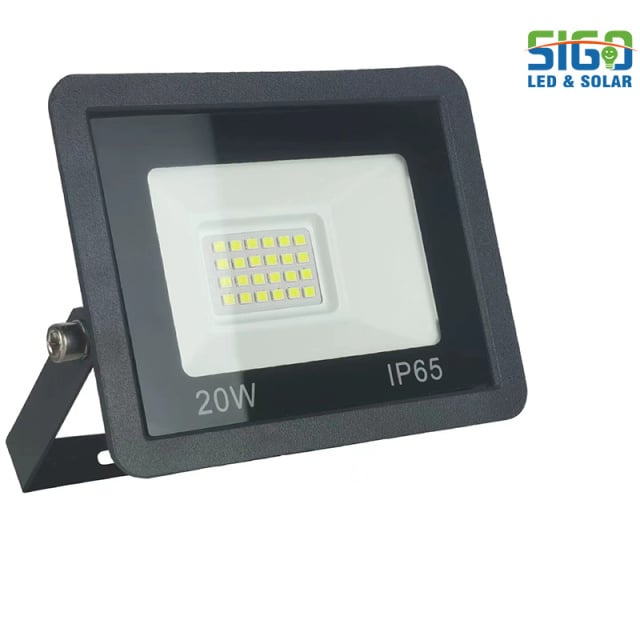
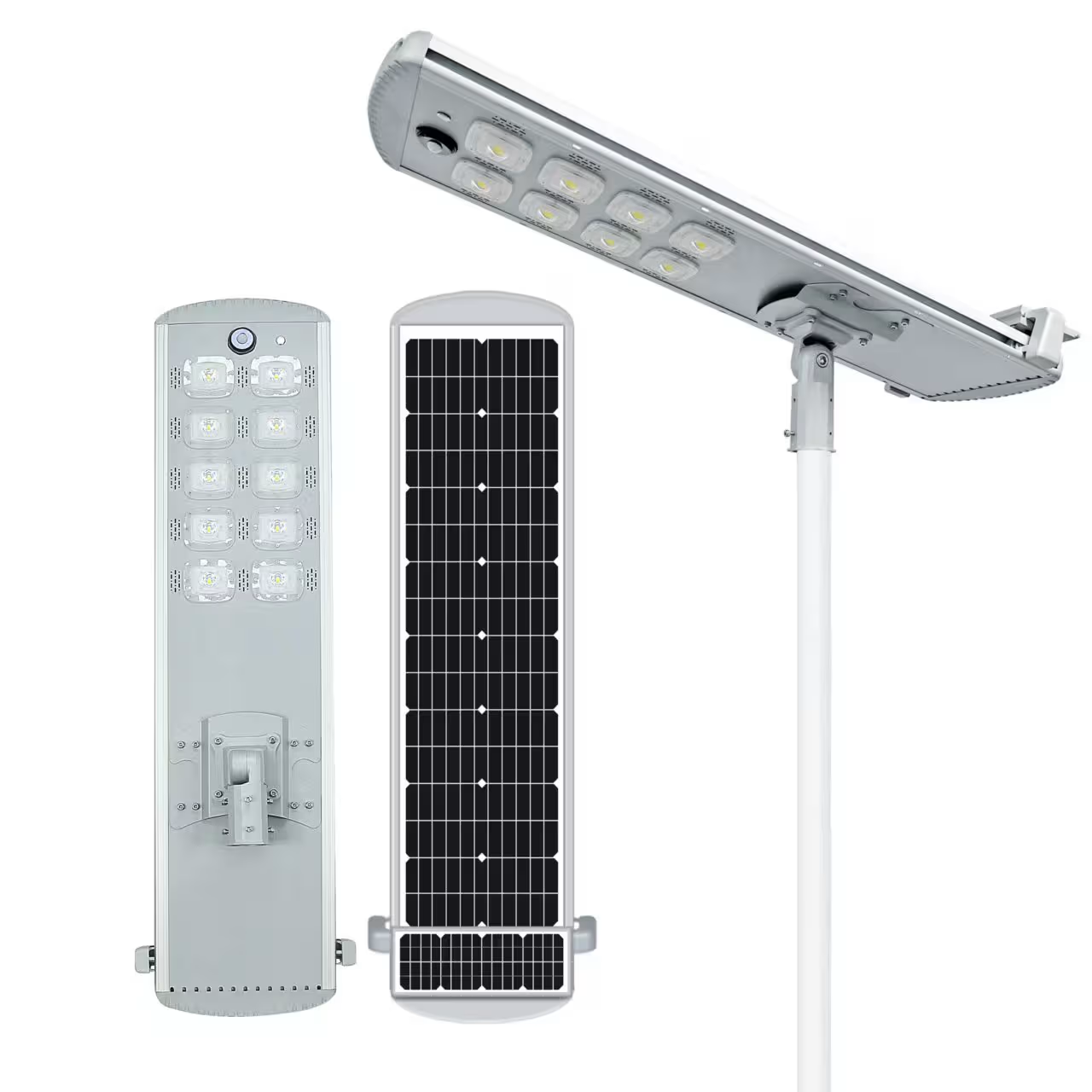
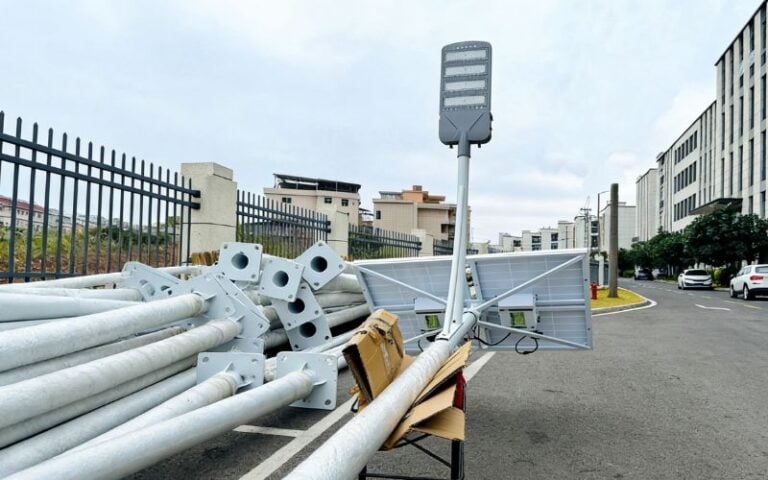
When we talk about lower-wattage systems, these usually use smaller panels to charge compact batteries. A 20W panel produces enough power to charge a small lithium pack. For 50W loads, the controller handles higher current, and the panel is often 80W or 100W. High-wattage systems, such as streetlights, use robust controllers and may require panels with about 150W. If we mismatch the wattage, the battery either does not charge or overcharges dangerously. This leads to damage or shortened life.
Standard wattage options and how they match
I have handled hundreds of custom projects in which clients choose different power levels. Below is a simple table showing typical wattage alignments:
|
System Voltage |
Battery Capacity |
Panel Wattage |
|---|---|---|
|
3.2V |
10Ah – 20Ah |
~15W to ~30W |
|
12.8V |
30Ah – 50Ah |
~60W to ~100W |
|
12.8V |
80Ah – 100Ah |
~120W to ~180W |
|
24V |
100Ah+ |
~200W to ~320W |
In my experience, sticking to these wattage matches keeps the system stable. If someone wants a 50Ah battery for a streetlight, they also use a suitable controller and around 80W or 100W panel. This keeps the charging process efficient. When we plan solar lighting projects, I always consider these wattage details first. Without correct alignment, the light fails. That is why I emphasize that wattage matters more than many people realize.
Can You Upgrade to a Higher Wattage Solar Panel?
I meet many clients who think a higher wattage panel is automatically better. They want maximum charging speed and all-day power. But we must also look at size, cost, and system voltage.
A higher wattage panel generates more power, so the battery charges faster. But it also raises costs. You must be sure your system can accommodate the bigger size and current.
Higher wattage solar panel
Why more power can help, but also cost more
As the co-founder of SIGOlight, I have managed hundreds of solar lighting projects. Every time I recommend a panel upgrade, I check the user’s daily energy needs. A higher wattage panel might boost charging efficiency, especially in areas with less sunlight. But it also means a larger panel and a higher price. If the solar controller cannot handle the extra current, a large panel may damage it. So, there must be a balance.
When the voltage stays the same, we can increase the wattage. The system runs the same voltage, so the battery is not affected. Yet we must ensure there is enough physical space for a bigger panel. For streetlights, we can usually mount a larger panel on the pole. For smaller garden lights, space is limited.
Weighing the pros and cons
Here is a table that shows the trade-offs when raising wattage within the same voltage:
|
Factor |
Advantage |
Disadvantage |
|---|---|---|
|
Charging |
Faster charging time each day |
Potentially excessive if not balanced with controller capacity |
|
Cost |
Greater panel cost |
May not be worth it for smaller projects |
|
Weight & Size |
Typically heavier and bigger |
Might not fit on existing mounting brackets |
|
Performance |
Better charging in low sunlight |
Could damage the controller if its current limit is exceeded |
From my experience, a higher wattage panel makes sense for projects that need reliable power in cloudy regions. It is also helpful for systems with large batteries that need to be recharged quickly. However, simply adding a bigger panel to a poorly matched system can lead to component failure. Clients often ask me for a recommendation. I usually provide multiple pricing options. Then I explain how each choice affects charging time, cost, and feasibility.
When I design custom solar lighting solutions, I look at the client’s environment. If they have many sunny days, a moderate panel size might suffice. If they live in a region with heavy cloud cover, a bigger panel might be the answer. I balance these variables to deliver the best outcome. That is how I have earned the trust of clients around the world.
Benefits and Drawbacks of Using a Higher Wattage Solar Panel
As the co-founder of Sigolight, I have managed hundreds of solar lighting projects. Every time I recommend a panel upgrade, I check the system’s controller limits and battery capacity. A higher wattage solar panel might boost charging, especially in areas with less sunlight. But it also means a larger panel and a higher price. If the solar controller can’t handle the extra current, a large panel may cause damage. So, there must be a balance.
When the system voltage stays the same, we can increase panel wattage. The controller receives a higher charging current, so the battery fills faster. Yet we must ensure there is enough physical space for a bigger panel. For streetlights, we can usually mount a larger panel on the pole. For smaller garden lights, space is limited.
Weighing the pros and cons
Here is a table that shows the trade-offs when raising panel wattage within the same voltage:
|
Factor |
Advantage |
Disadvantage |
|---|---|---|
|
Charging |
Faster charging time each day |
Potentially excessive if not balanced with controller capacity |
|
Cost |
Greater panel cost |
May not be worth it for smaller projects |
|
Weight & Size |
Typically heavier and bigger |
Might not fit on existing mounting brackets |
|
Performance |
Better charging in low sunlight |
Could damage the controller if its current limit is exceeded |
From my experience, a higher wattage panel makes sense for projects that need reliable power in cloudy regions. It is also helpful for systems with large batteries that need to be recharged quickly. However, simply adding a bigger panel to a poorly matched system can lead to component failure. Clients often ask me for a recommendation. I usually provide multiple pricing options. Then I explain how each choice affects charging time, cost, and feasibility.
When I design custom solar lighting solutions, I look at the client’s environment. If they have many sunny days, a moderate panel size might suffice. If they live in a region with heavy cloud cover, a bigger panel might be the answer. I balance these variables to deliver the best outcome. That is how I have earned the trust of clients around the world.
Practical Tips for Upgrading to a Higher Wattage Solar Panel
I remember a time when a client of mine tried to upgrade a solar panel without checking the controller. He installed a panel with double the wattage and overloaded the controller, causing it to fail.
Check panel voltage, controller capacity, and physical size before replacement. Then test everything to ensure system balance. A small detail can save a solar light from total failure.
What you need to take care of when you upgrade solar panels
I have learned to be thorough. That means looking at the panel’s open-circuit voltage (Voc), the controller’s max input current, the battery’s capacity, and physical dimensions. These details ensure compatibility and safe operation. Also, verifying the system’s performance after the upgrade is crucial to ensure the new panel delivers the expected benefits. Let’s go deeper into these considerations and see how we can make the process smooth.
Checking Voltage Compatibility
Solar lights operate on specific system voltages. Common configurations are 3.2V, 12.8V, or 24V. A new, higher-wattage panel must still match the system’s nominal voltage. If you install a 24V panel on a 12V system, the charge controller will likely be damaged or will fail to charge the battery. I always confirm the voltage before I proceed. This information is usually on the back of the panel or in the manufacturer’s spec sheet.
Below is a table that shows some common panel voltages and their typical system use:
|
Panel Voltage (Vmp) |
System Voltage |
Pros |
Cons |
|---|---|---|---|
|
~5V-6V |
3.2V |
Ideal for small lights, efficient |
Not suitable for larger systems |
|
~18V |
12.8V |
Common for streetlights, widely available |
Overkill for tiny devices |
|
~36V |
24V |
Powers high-capacity systems |
Requires a robust controller and battery |
For larger solar streetlights, I see more use of ~18V panels for 12.8V systems because of the balance between power and cost. For smaller decorative lights, ~5V panels are common. If a client asks me for guidance, I check the controller and battery voltages in the existing system. Often, we can find a higher-wattage panel with the correct voltage.
Evaluating Controller Capacity
A controller mismatch is a primary cause of failure during solar panel upgrades. If a system has a 10A controller and someone installs a panel that draws 15A, the controller will be overwhelmed. This can cause it to overheat, shut down, or fail permanently. Double-checking the controller’s maximum input current rating is essential.
Capacity is another factor. The controller must also be paired correctly with the battery capacity. If an extensive panel is connected to a small battery, even a compatible controller may struggle to prevent overcharging without proper settings. I usually recommend upgrading the controller if the new panel’s output current exceeds the old controller’s limit.
Assessing Physical Space
I often see installers buy a higher-wattage panel with the proper voltage but ignore the physical dimensions. The new panel might be too large for the existing mounting pole or bracket. Forcing it onto a weak structure can lead to instability or damage in high winds. That is why I measure the available space carefully or ask the client for dimension details.
Balancing Panel and Battery
Removing and replacing a solar panel is only half the job. The new panel must be balanced with the battery’s capacity. A 100W panel might fully charge a 30Ah battery in a few hours of good sun, which is great. But if that same 100W panel is paired with a tiny 10Ah battery, it could lead to rapid overcharging and shorten the battery’s life, even with a good controller. I make sure the panel-to-battery ratio remains sensible.
Conclusion
It is essential to match solar panel wattage and select a size carefully. A higher wattage panel can help, but it must fit the system and meet your budget.