
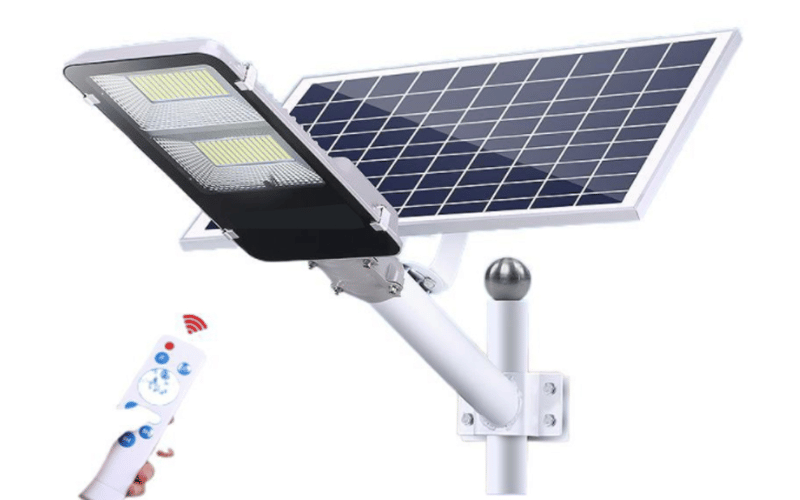
Selecting an effective all-in-one solar street light can transform an outdoor lighting project into a truly sustainable, cost-efficient, and streamlined undertaking. These systems conveniently consolidate solar panel, battery, LED fixture, and intelligent control circuitry into one compact assembly, thereby accelerating installation and reducing long-term upkeep. Whether the objective is to brighten a bustling city thoroughfare, a shaded footpath in a rural zone, or the periphery of a commercial complex, mastering the various functional, economic, and operational features of solar street lighting is essential for a judicious purchase. This comprehensive guide presents the core knowledge required, tracing the architecture of the light unit, comparing operational scenarios, and surveying the most recent technological breakthroughs.
Understanding Solar Street Lights
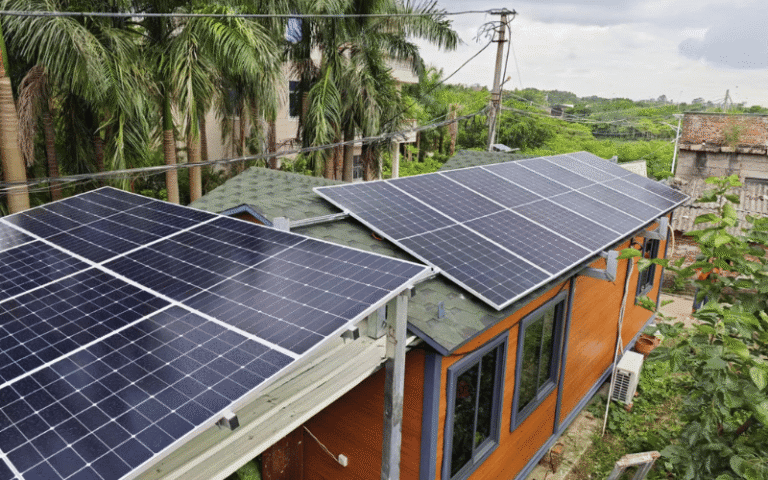
Solar street lights consist of autonomous lighting systems powered by renewable solar energy. Photovoltaic modules absorb sunlight throughout the day, converting it into electrical energy, which is then stored in sealed batteries. After sunset, the stored power drives highly efficient light-emitting diodes (LEDs), furnishing reliable illumination without any connection to conventional power networks. These systems represent a sustainable, financially prudent option for both institutional and private outdoor applications.
What is an All-in-One Solar Street Light?
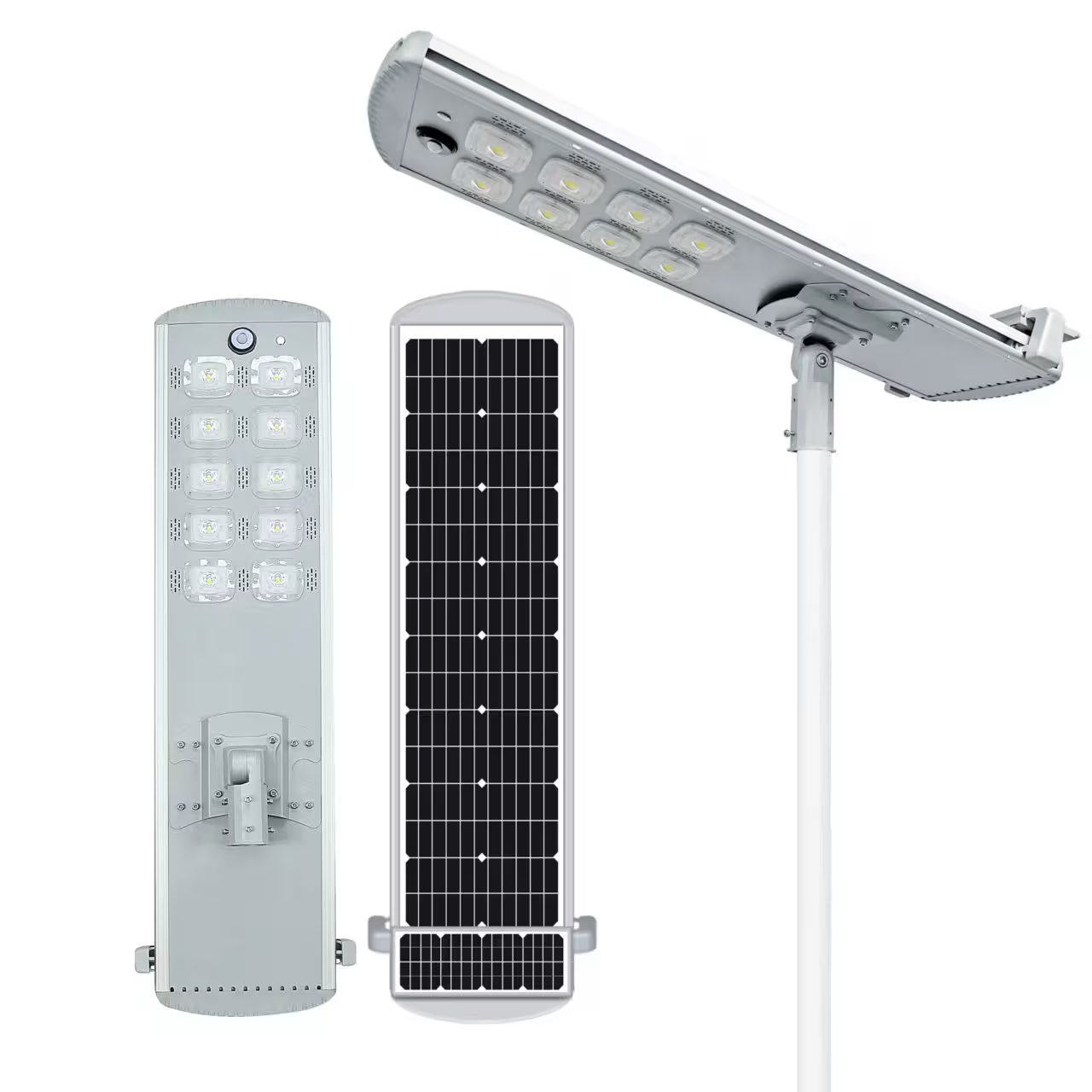
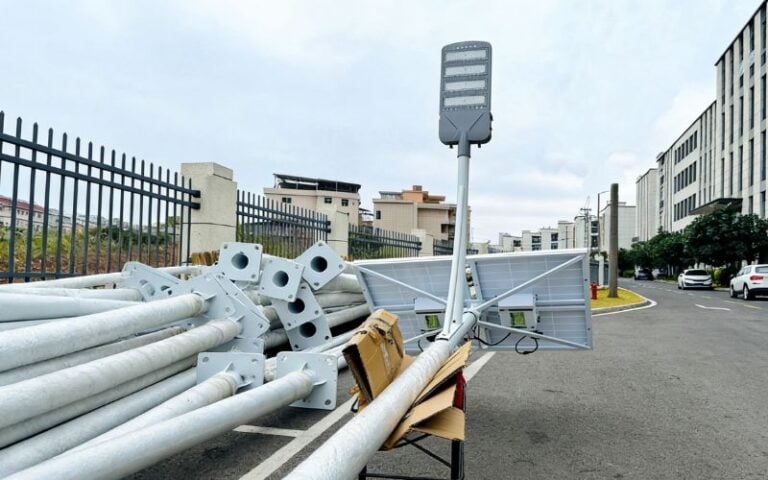
An all-in-one solar street light is a self-contained and user-friendly illumination device. In contrast to conventional solar street lighting, all-in-one variants integrate the entire power and lighting assembly—photovoltaic panel, energy storage, light source, and electronic controller—within a single, compact chassis. The consolidated architecture minimises installation, reduces required maintenance visits, and lends itself equally well to both densely populated metropolises and economically evolving rural districts.
Components of Integrated Solar Street Lights
- Solar Panel: Converts incident solar radiation into electrical power. State-of-the-art high-efficiency modules maximise energy yield across a wide range of insolation conditions.
- Battery: Accumulates the electrical charge generated during daylight for nocturnal operation. Lithium-ion and lithium iron phosphate chemistries are predominant owing to their impressive cycle life, high energy density, and thermal stability.
- LED Light: Delivers high-luminous-efficiency emission. Light-emitting diodes are characterised by extended service life, minimal ongoing power demand, and superior optical control in comparison to legacy incandescent or sodium vapour sources.
- Controller: Regulates battery life-cycle management by optimally timed charge and discharge cycles. The electronic interface supervises thresholds to prevent both overcharge damage and detrimental deep discharge, thereby safeguarding performance longevity and widening overall efficiency.
Motion Sensor (Optional) Automatically detects activity and modulates light output, lowering intensity to minimize power consumption during inactive intervals.
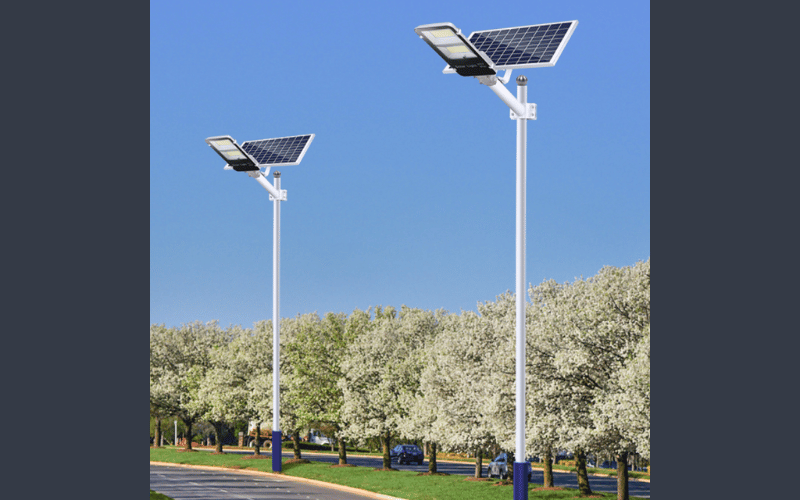
Advantages of Adopting Solar-Operated Lighting Solutions
Energy Efficiency Solar lights derive power from the sun, thereby minimizing reliance on the electrical grid and driving down monthly energy expenditures.
- Environmentally Sustainable: Harnessing solar energy cuts carbon dioxide emissions and lessens reliance on fossil fuels, promoting a greener power generation profile.
- Economic Reduction: Outcome The absence of ongoing power costs, coupled with simplified circuitry that evades the need for expensive trenching, renders solar lighting a financially prudent investment.
- Streamlined Installation: Systems with pre-assembled photovoltaic, storage, and light-emitting components allow rapid deployment without the invasiveness of standard electrical installations.
- Minimal Upkeep Robust design and self-charging circuitry curtail the frequency and need for preventive servicing and repair.
- Reliability in Off-Grid Environments: The independent power system accommodates deployment in zones lacking grid connectivity, guaranteeing continuous illumination in isolated settings.
Factors to Consider When Choosing Solar Street Lights
The choice of solar-powered street lighting systems hinges on a number of practical considerations. First, a thorough evaluation of solar insolation at the installation site is essential to estimate the energy that can be harvested. Second, the physical robustness of the luminaire warrants attention; guard against corrosive atmospheres by specifying aluminum alloys or stainless steel housings. Third, confirm that the battery bank possesses a storage capacity that guarantees continuous illumination through the entire night, with an additional buffer to compensate for protracted overcast periods.
The installation complexity also merits comparison; look for all-in-one fixtures, which integrate photovoltaic module and battery, as these typically require no more than basic hand tools and the absence of trenching for cabling. Finally, examine the incorporation of adaptive technologies, such as dimming profiles, occupancy detection, and wireless monitoring, all of which can substantially prolong autonomous operation and contribute to long-term energy savings.
Lighting Applications and Orientation
The patrimony of solar street lamps includes a broad array of application domains. In suburban or urban residential neighborhoods, these fixtures enhance pedestrian perception and deter unauthorized access along droveways and shared paths. Commercial properties deploy them to delineate traffic lanes and illuminate building perimeters, thereby increasing the perception of safety for both patrons and staff. In more isolated contexts, such as rural roads or off-grid development schemes, solar lighting offers an economically attractive alternative by bypassing the capital and recurring expenses of trenching, switchboards, or metering.
In the requirements-gathering phase, first clarify the functional role of the lighting. In corridors or plazas, the higher lumen output characteristic of security-grade fixtures will elevate visibility, while the softer output of decorative-grade luminaires suffices for accenting amenity gardens. Mapping the luminance task to lumen metrics guarantees the solar lighting design meets the operating environment without excess energy, thereby guiding the equipment selection toward the optimal system.
Solar LED technology remains the leading paradigm for energy-autonomous exterior illumination. By operating at a fraction of the wattage of competing filament or discharge fixtures, the integrated panel can accumulate more energy for nighttime operation. The spectral output of a white LED is maximally photopic, which delivers higher luminance values with restrained thermal generation; these thermal metrics further extend longevity when fixtures are exposed to harsh climatic gradients.
Contemporary solar LED lanterns are fitted with programmable dimming—historically a low-volume customisation—allowing project planners to modulate output according to evolving site usage profiles, thereby aligning energy harvest with anthropogenic demand. Moreover, the semiconductor architecture of new LEDs frequently exceeds the 50,000-hour benchmark, equating to a vendor-protected payback envelope within a single service interval. The resultant decline in intervention frequency will compound cumulative savings in both labour and component amortisation, thereby bolstering the whole-of-life prediction for the architectural project.
Area Coverage and Lumens Output
Coverage area for a solar street light is primarily determined by total lumens output and mounting height. Lumens quantify the full visible light emitted, so an increase in lumens corresponds to a proportional increase in perceived brightness. For example, 1,000 lumens effectively lights narrow pedestrian pathways, while 5,000 lumens or greater is necessary to adequately illuminate larger surfaces such as parking lots and roadways.
The mounting height must also be factored in. Elevated installation expands the illuminated footprint, yet the light appears less intense to the observer. To obtain even distribution, the lumens output must be precisely calibrated to the dimensions and required illuminance level of the area. Many commercial solar fixtures provide a mechanism to alter the fixture angle, enabling the operator to focus the beam in the desired direction and optimize efficacy.
Installation and Maintenance of Solar Street Lights
The effectiveness and durability of solar street lights hinge on meticulous installation and consistent upkeep. Employing proven methodologies will enhance overall performance and minimize annual upkeep costs.
Streamlined Installation Procedure
Installation of solar street lights is a seamless process requiring only basic tools and limited technical training. Select a mounting site that enjoys unobstructed solar exposure, ideally clear of overhanging branches and neighboring structures. Position the pole by setting it in a reinforced concrete footing to guarantee resistance against wind and vibration. Mount the solar light head onto the pole, orienting the photovoltaic module toward the equator to maximize irradiation absorption.
Contemporary solar fixtures typically employ module connectors, which avert the intricacies of hardwiring. Following pole installation, energize the system and verify operational integrity, confirming that the luminaire illuminates, and the photovoltaic cells are charging the integrated battery as specified by the manufacturer.
Maintenance Strategies for Extended System Life
Sustained peak performance of solar street lights hinges on systematic upkeep. Schedule panel cleansing every quarter to eliminate dust, organic debris, or bird waste that attenuates incident irradiation. A non-abrasive cloth or dish sponge, coupled with pure water, minimizes scratch risk. Evaluate battery integrity at six-month intervals; diminished storage capacity necessitates timely substitution.
Examine all terminal linkages, optical modules, and the solar charge controller for signs of wear, corrosion, or mechanical looseness, rectifying defaults without delay. Movement-detection assemblies that overlap the light path should be cleared of foliage or insects to guarantee customary trigger and stabilization sequences. Adhering to the recommended inspection protocol can double the expected operational horizon of the fixture.
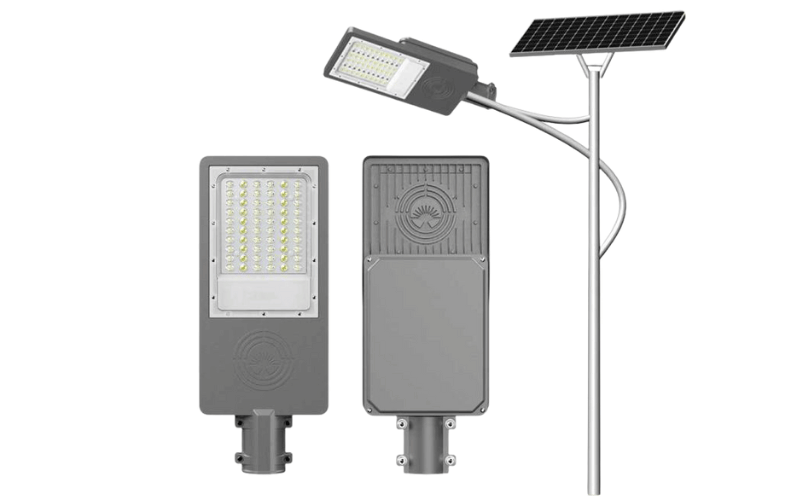
Probable Defects and Systematic Resolution
Even premium assemblies may yield performance anomalies. Dimming output, for example, typically originates from panel soiling or battery exhaustion; rectification entails effected manual or automated control cleaning and appropriate energy storage insertion. Should complete extinguishment occur, the investigation should target the integrity of interconnect wiring, fused links, or the microcontroller feedback, correcting loose, broken, or corroded connections.
The second notable technical hazard is fluctuating illumination levels, often traced to a malfunctioning lighting controller. Either a factory reset or, if necessary, a component replacement will restore stable output. With respect to motion sensing irregularities, inspection for dust accumulation or physical misalignment to the field of view is essential. Timely intervention with these routine discrepancies preserves the system’s intended operational continuity.
Comparing Different Solar Street Lights Manufacturers
Selecting an appropriate solar street light supplier is essential for securing durable, energy-efficient, and economically sensible illumination solutions. By examining product quality, cost structure, and client evaluations, stakeholders can arrive at a manufacturer that closely aligns with project parameters.
Assessing Quality and Performance
Start with product quality, determining whether the manufacturer holds pertinent certifications, such as ISO, CE, or UL. Conformance to recognized standards is a prerequisite for reliable, long-lasting fixtures. Examine the choice of materials: robust, corrosion-resistant aluminum or marine-grade stainless steel combined with IP66 or higher enclosures generally indicate superior resilience to extreme weather. Performance metrics warrant equal scrutiny. Request data sheets that specify solar panel efficiency, battery discharge-protection capabilities, and the lumens output-to-pack size ratio. Reputable firms disclose parameters such as discharge time at rated lumens, ambient temperature compensation, and actual versus rated charging hours.
Controlling Costs and Evaluating Features
Although initial price remains a decisive variable, prudent analysis relates cost to overall performance and feature sets. A superficially low quote may conceal inferior battery chemistry (e.g., sealed lead versus LiFePO4) or less durable LEDs, which inflate lifetime operating expenditures. Conversely, premium fixtures that incorporate adaptive lumen control, time-of-flight occupancy sensors, or networking capabilities might yield demonstrable energy and maintenance savings. Perform a cost-benefit appraisal that considers projected energy-payback periods alongside warranties and whether the supply agreement offers on-site component replacement versus full unit shipment.
Feature Prioritization and Cross-Maker Comparison
Enumerate and rank the characteristics most relevant to your application—surge protection, IP rating, user interface, data retention, and mobile control are common examples. When assessing multiple brands, let the highest operational demands dictate your selection: an intermittent or unattended location may tolerate less, while an assembly corridor cannot compromise on immediate notification prowess. Any selected model should offer the highest warranty, the densest flash-memory architecture, and at least the same or fewer operating cycles on the most-life site. Document each manufacturer’s reported lumen, battery-MAH, and thermal-declamp rating, then evaluate the price-per-point across the panel. True, stronger specifications may remove the entry-level savings, yet net present value computations reveal smaller price jumps at the podium tier. Your acquisition decision should therefore trace the path that plots both utility and depreciation under your anticipated cycle count.
Collecting and Cross-Referencing User Opinions
Systematic extraction of user testimonies offers an auxiliary layer of evidence regarding longevity, well-documented failure modes, and post-deployment assistance. Utilize curated aggregation services that invite only verified purchases; posted evidence confirmed by timestamped enterprises invariably carries more significance than aggregate sterility. Itemizing locations where appliance stresses recede— temperatures outside the manufacturer’s claimed tolerance, repeated carpet trips through FO accumulation, or thermal-coupled tax—may also surface durability weaknesses the data sheet omits. Support reactions, lead-time for part orders, and authorization trail observation, without camouflaging jargon, are worth coding. Cumulative thematic frequency serves as an orientation map. Simultaneously, seek endorsement from domain engineers, paneling citations that preapproximate your conditions. Lasting benefit accrues to vendors committed to transparent firmware road map timelines, and peer lore consistently upholds stakeholders with internal parts commitment. By triangulating aggregate deposits with credentialed allegiance, accomplishment settles to patterns.
Future Directions for All-in-One Solar Lighting Technologies
The trajectory of all-in-one solar lighting technologies remains promising, propelled by ongoing technological refinement that enhances efficiency, longevity, and adaptability. With the escalating global commitment to sustainable infrastructure, industry actors are prioritising breakthroughs that satisfy an increasingly heterogeneous suite of lighting requirements.
Enhancements in Solar LED Street Lights
Contemporary solar LED street lighting units achieve notable efficiency gains through the application of advanced materials and miniaturised devices. Newly designed photovoltaic collectors, characterised by multijunction cells and advanced anti-soiling coatings, harvest a broader solar spectrum, thereby sustaining energy production even under diffuse or twilight solar exposure. Complementary energy storage components are likewise evolving; high-performance lithium-sulphur and next-generation lithium iron titanate cells promise extended cycle stability and quantum improvements in both discharge and charge kinetics.
Driven by the LED light engine itself, luminous efficacy continues to rise, minimising thermal losses and enabling extraordinary lumen outputs per watt. Embedded control surfaces that employ adaptive photometric modulation, occupancy detection, and remote telemetry deliver hemispherical light patterns that vary in intensity according to real-time demand, thereby conferring pronounced operational economy and minimising the frequency of proactive maintenance interventions.
Innovations in Fully Integrated Solar Street Lighting
The next generation of fully integrated solar street lighting increasingly leverages heterogeneous networking and federated sensing paradigms. Microcontroller-embedded luminaires form distributed, self-configuring mesh ecosystems that transmit vectorised telemetry data—collecting, analysing, and relaying parameters such as spectral solar index, residual energy storage state, and thermal behaviour. Using machine learning algorithms, the collective system anticipates performance degradation thresholds, thereby enabling targeted corrective interventions before failures manifest, hence appreciably compressing operational outages and maximising system availability.
Design innovations continue to refine photovoltaic systems, yielding both reduced footprint and enhanced visual appeal. Advances in lightweight, flexible solar substrates, coupled with modular architecture, facilitate rapid, site-specific deployment across both metropolitan and rural terrains. Collectively, these developments are establishing ever-higher standards for energy capture, system responsiveness, and end-user simplicity.
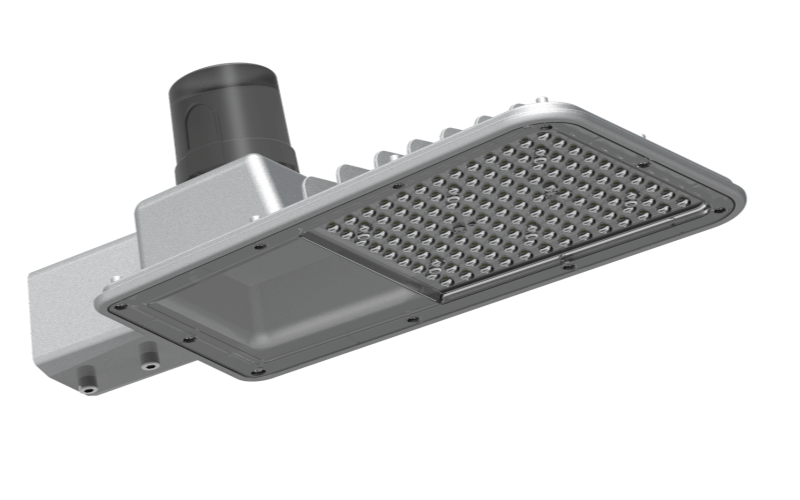
Recent Direction in Solar-Powered Outdoor Illumination
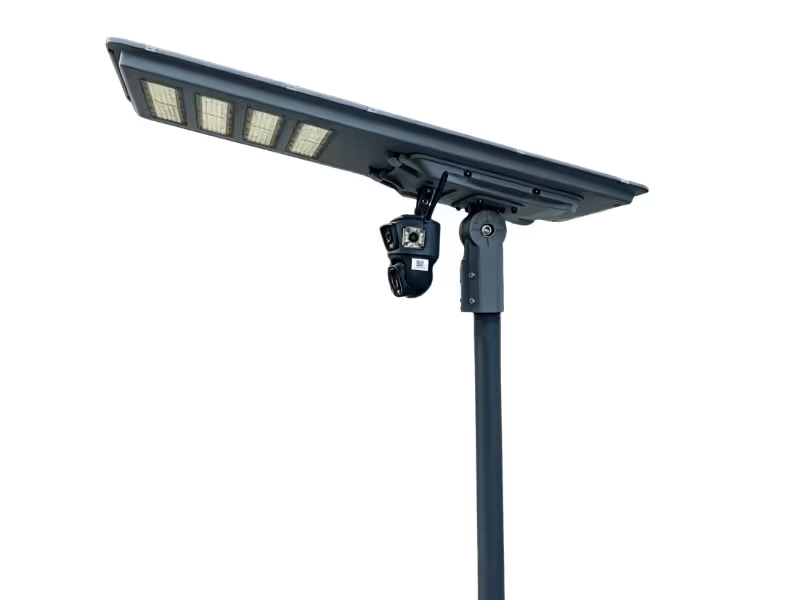
Deployment of solar-powered outdoor lighting is now advancing beyond linear street installations into integrated solutions for gardens, pathways, and aesthetic lighting in public landscapes. Current priorities emphasize multifunctionality, with new products consolidating energy generation, illumination, surveillance, and mobile-device charging into single, cohesive units. Concurrently, producers are prioritizing circular sustainability, employing biodegradable and recyclable constituents throughout the manufacturing cycle. Applications in regions susceptible to recurrent catastrophes or lacking grid connectivity are expanding, offering persistent, hush energy independence. Collectively, these trajectories underscore solar lighting’s increasing relevance and flexible capacity as an organizing element in contemporary urban and rural infrastructure.
Frequently Asked Questions
Q: What characterizes a typical all-in-one solar street light?
A: The all-in-one solar street light integrates all necessary components—solar photovoltaic panel, light-emitting-diode (LED) source, high-capacity lithium-ion battery, and microprocessor-based controller—within a single sealed and weatherproof chassis. This consolidation facilitates rapid deployment and minimal ongoing upkeep, positioning the device as a cost-effective and scalable option for illuminating transit corridors, public terraces, and auxiliary vehicular areas.
Q: Describe the operational principle of a solar street light.
A: The fixture harvests solar radiation via the photovoltaic panel, converting it to electrical energy and routing the output to the lithium-ion battery for storage. Once ambient light levels decline, the battery autonomously governs the LED, typically employing a pre-programmed dimming regime that responds to the presence of pedestrians or vehicles, thereby optimizing both luminous performance and energy conservation over the prescribed duty cycle.
Q: What advantages do solar street lights confer when compared to conventional grid-powered alternatives?
A: Materia advantages include substantially lower peak and peak-demand electrical loads, dramatically reduced cycle and periodic restorability expenditures, and a measurable decrease in lifetime carbon-dioxide emissions from lamp and ballast components. From an infrastructural perspective, the absence of underground or overhead electrical cabling expedites site reconnaissance and installation, making the lights especially capable of serving peripheral or liberated energy zones beyond the reach of conventional grid architecture.
Q: What specifications are critical when evaluating solar street lights?
A: Focus on high-efficiency crystalline or bifacial solar panels, premium-grade LED emitters with lumens-per-watt ratios exceeding 100, programmable dimming profiles, and housings rated IP65 or higher. Integrated solar, battery, and control systems eliminate interconnect failures and improve resilience across temperature fluctuations.
Q: Are solar street lights adaptable to multiple site conditions?
A: Indeed. Their modular footprint and absence of trenching or grid works permit placement on university precincts, transport centers, and amenity greenspaces. Self-sufficient power permits operation in remote or environmentally sensitive zones.
Q: What is the typical operational lifetime of solar street lights?
A: Engineer-grade systems can achieve 12 to 15 years of operation with annual battery cycling and prudent design thermal management. Lithium iron phosphate cells, when rated for 3000-5000 cycles, may be serviced at the 5- to 7-year threshold, depending on thermal and charge integrity.
Q: What is the maintenance frequency for solar street lights?
A: The systems are engineered for low-touch operation. Semi-annual panel cleaning, periodic tightening of mechanical grounds, and software self-diagnostics reduce the need for on-site labor to a fraction of that for hard-wired fixtures. Network-controlled lamps can be interrogated and reconfigured remotely, further minimizing interventions.
Q: What types of solar lighting applications are available?
A: Solar street lighting fixtures are broadly adaptable; they are equally effective for roadway delineation, illuminating academic quadrangles, and providing ambient light in park and civic plazas. This inherent flexibility accommodates varied architectural and environmental contexts.
Q: How does the use of solar energy impact the environment?
A: Solar power diminishes dependence on hydrocarbon resources, thereby mitigating carbon-dioxide and ancillary pollutant emissions. Deployment of solar street lighting systems enables municipalities to contract their emissions profile, aligning operational practices with recognized sustainability objectives.
Q: What is the role of motion sensors in solar street lights?
A: Motion detectors optimize the energy performance of solar street lighting by dynamically regulating luminous output according to detected traffic levels. This strategy not only prolongs the operational interval of stored energy but also reinforces surveillance capabilities and elevates safety in communal thoroughfares.
Concluding Summary:
All-in-one solar street lighting constitutes a paradigm shift in outdoor illumination, offering a remarkable fusion of energy efficiency, environmental stewardship, and user convenience packaged within a pre-assemblé fixture. An thorough examination of constituent parts, evaluation criteria, and measurable parameters—such as enclosure robustness, battery runtime, and effective lumen output—enables the prudent Mexico City civic authorities or rural healthcare camp administrator alike to identify the optimum fit. Driven by constant refinement in photovoltaic and LED research, the modern variant of these luminaires is acquiring enhanced cognitive control, greater environmental adaptability, and extended operational scope, thereby fulfilling roles as diverse as deep urban retrofits or micro-grid-deficient countryside installations. As the societal appetite for low-carbon lighting continues to escalate, these compact solar assemblies are steadily illuminating the path toward a sustainable, illuminated tomorrow.